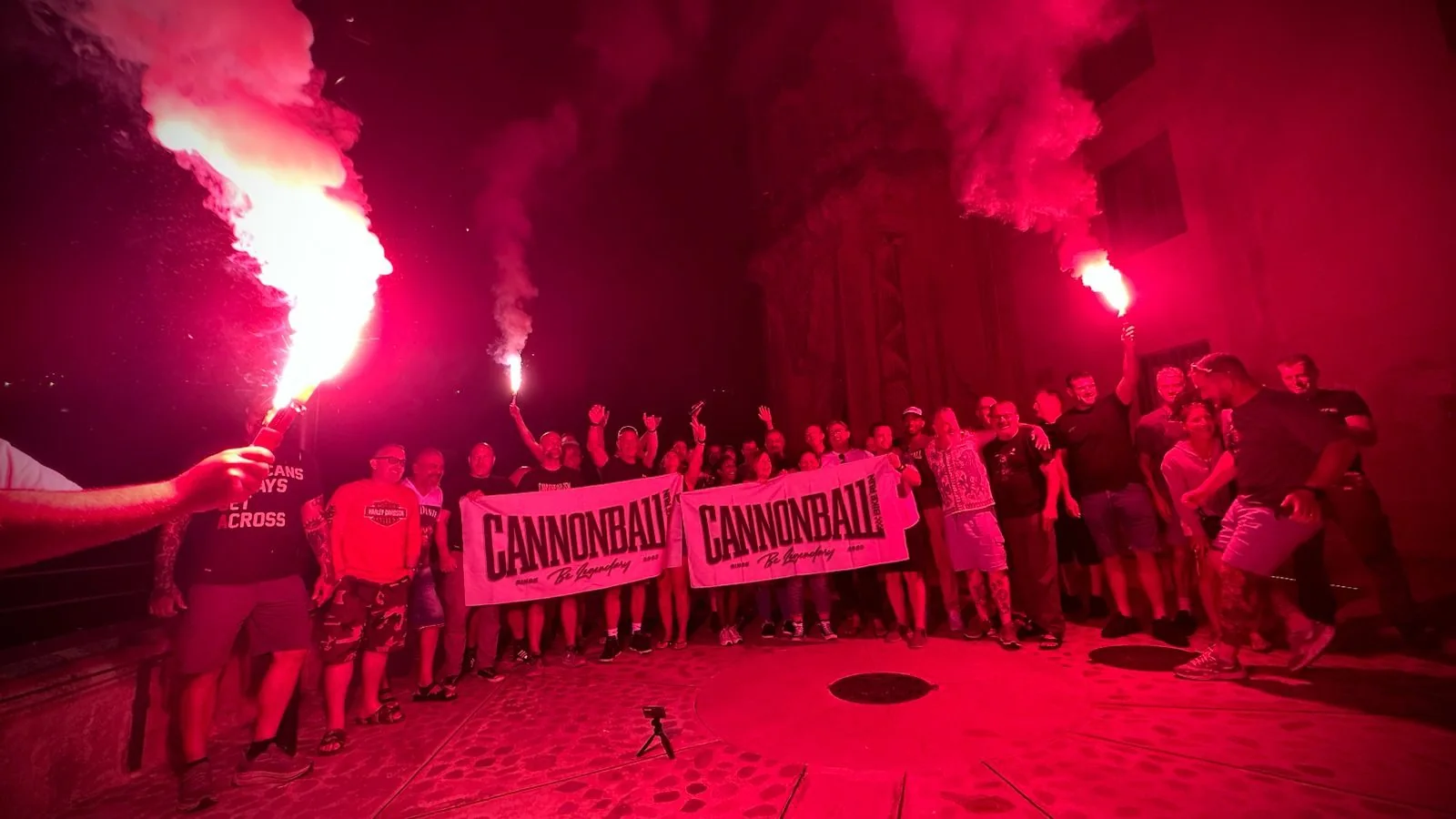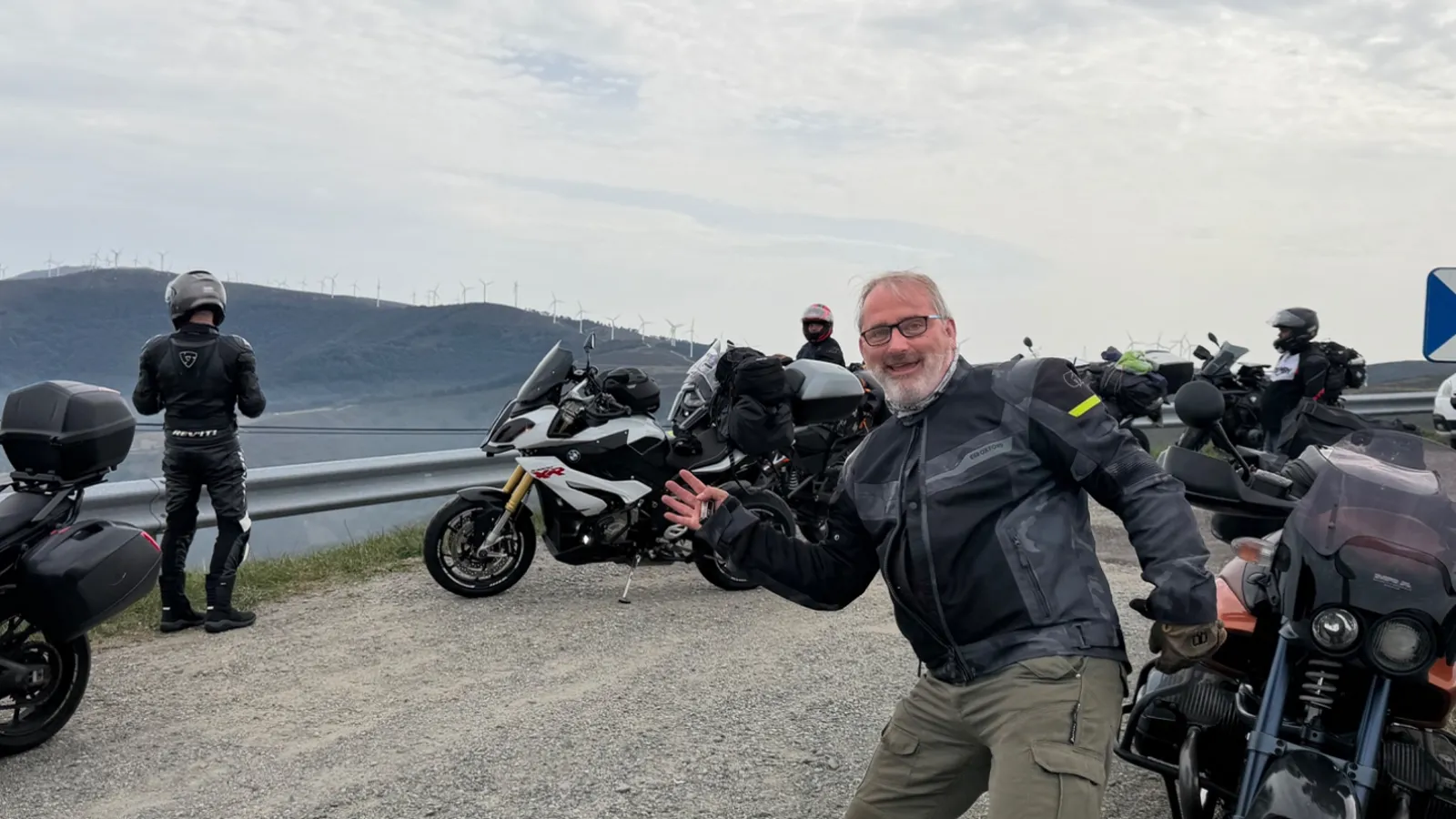
Every big ride starts long before the official start line. For me, the Cannonball Bike Run began at home in Limburg in the south of the Netherlands, with the bike loaded, the tank full and a long journey ahead to reach the start in Santander, Spain.
The journey at a glance
- From: Limburg, the Netherlands
- To: Santander, Spain, start of the Cannonball Bike Run
- Route: motorway to Calais, Le Shuttle to Folkestone, ride to Portsmouth, ferry to Bilbao
- Weather: a short spell of rain around Brussels, then dry
- Warm-up: a mountain loop from Bilbao into Santander
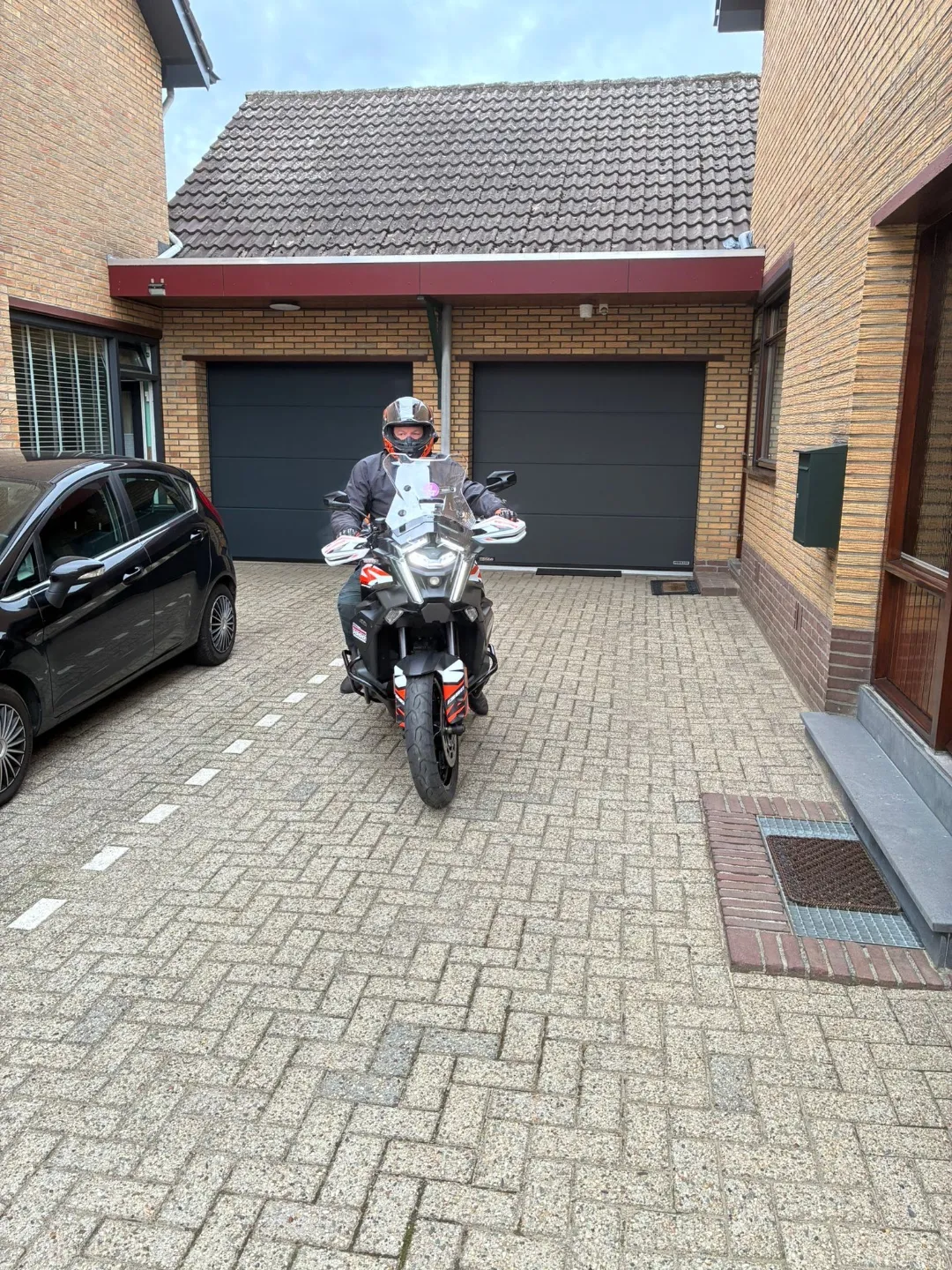
Rolling off the driveway in Limburg. The Cannonball journey begins here.
Limburg to Calais
The first leg was simple: motorway all the way to the Channel Tunnel in Calais. It isn’t the most exciting riding, but it covers the distance, and you spend those kilometres thinking about the week ahead.
The weather held until Brussels, where we had a short spell of rain. It was enough to remind us we were properly on our way, and it cleared up soon after, so we reached Calais dry and in good spirits.
A near miss at the tunnel
At the Le Shuttle terminal we were offered an earlier train. We decided we had plenty of time for a coffee first. We didn’t. Between the coffee stop and a very slow border control, the earlier train left without us.
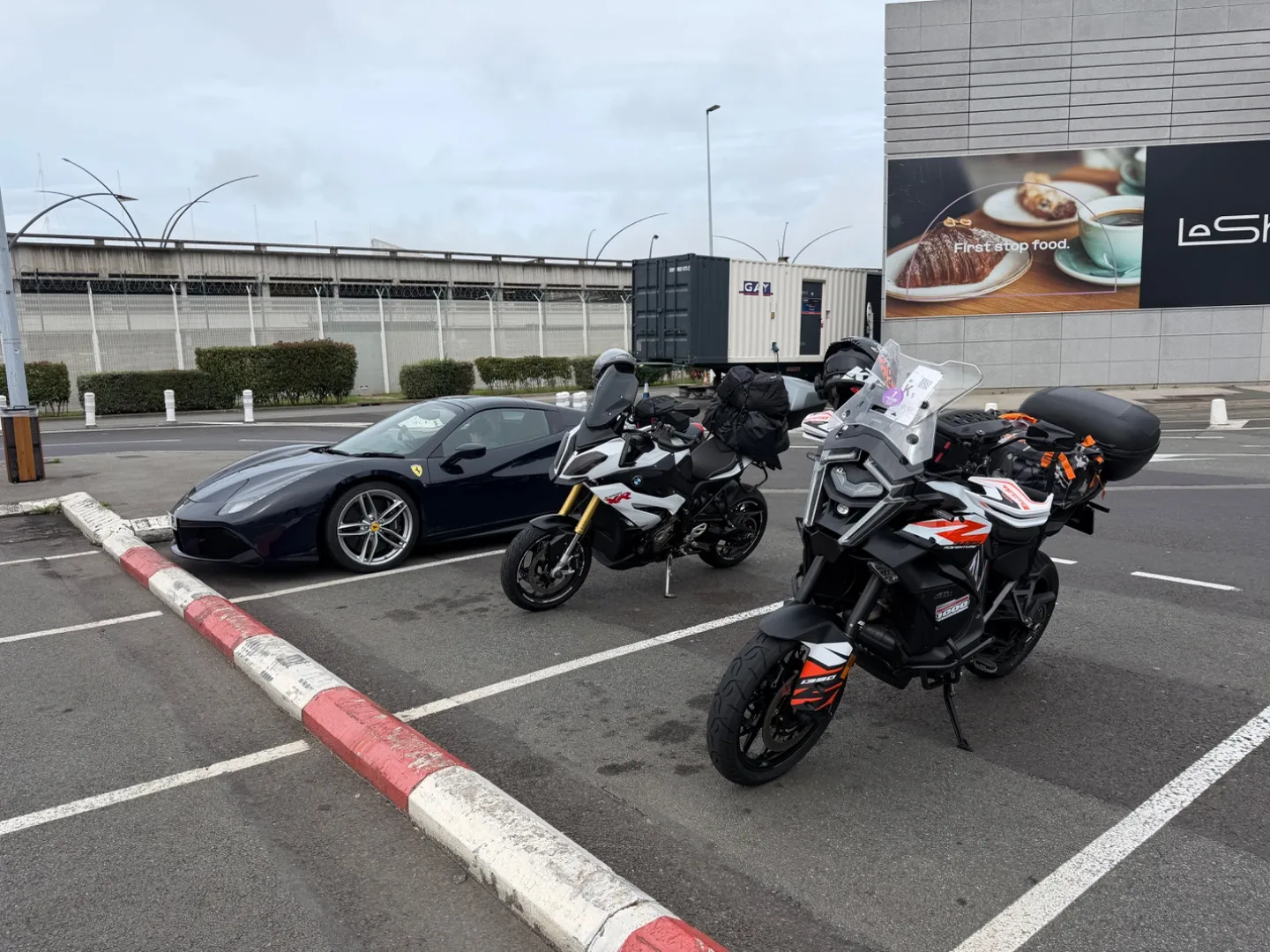
Coffee stop at the Le Shuttle terminal in Calais. We thought we had time. We didn’t.
There’s no point getting stressed about that sort of thing on a bike trip. We waited it out, got on the train we had booked in the first place, and from then on everything went smoothly.
Folkestone to Portsmouth
We came off the train in Folkestone and switched to riding on the left for the run down to Portsmouth, where the ferry to Bilbao was waiting.
The group comes together
Portsmouth is where it started to feel like the Cannonball. At the port we met the rest of our group, who had come down from Scotland. Team England had also turned up in full force just before us, with several Cannonball legends and regulars plus a few new riders on their first run.
Because the Scottish team had booked the ferry together, we had to wait for all the Scots to arrive before anyone could check in. They were coming in from different places, so it took a little longer than usual. We queued under the canopies at the terminal and swapped stories until the last of them rolled in.
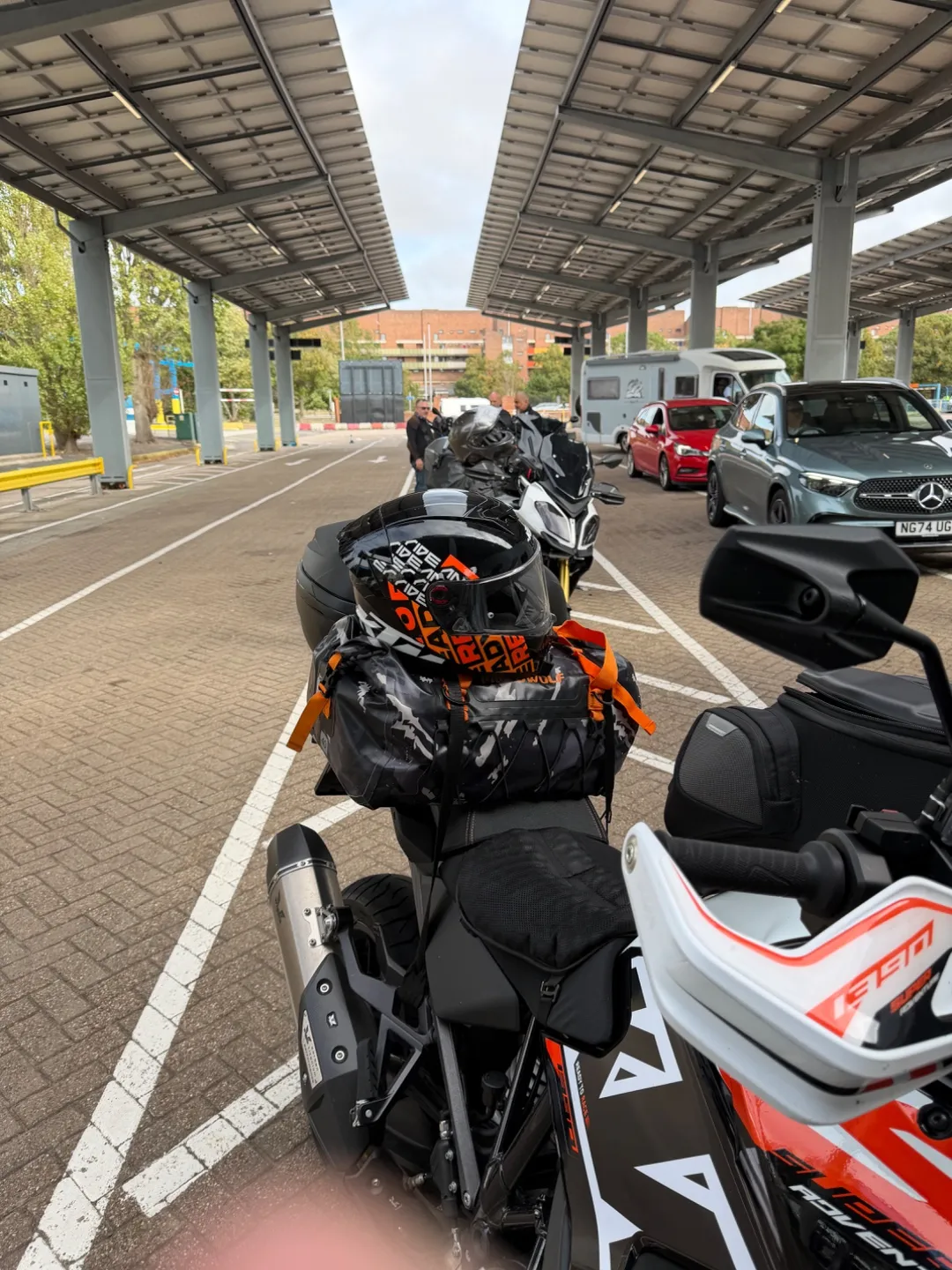
Queuing under the canopies at the Portsmouth ferry terminal, waiting for the last of the Scots to arrive.
With that many bikes and riders in one place, we knew the crossing would be a good one. It turned out exactly that way: plenty of banter, lots of energy, and stories being traded long before we landed in Spain.
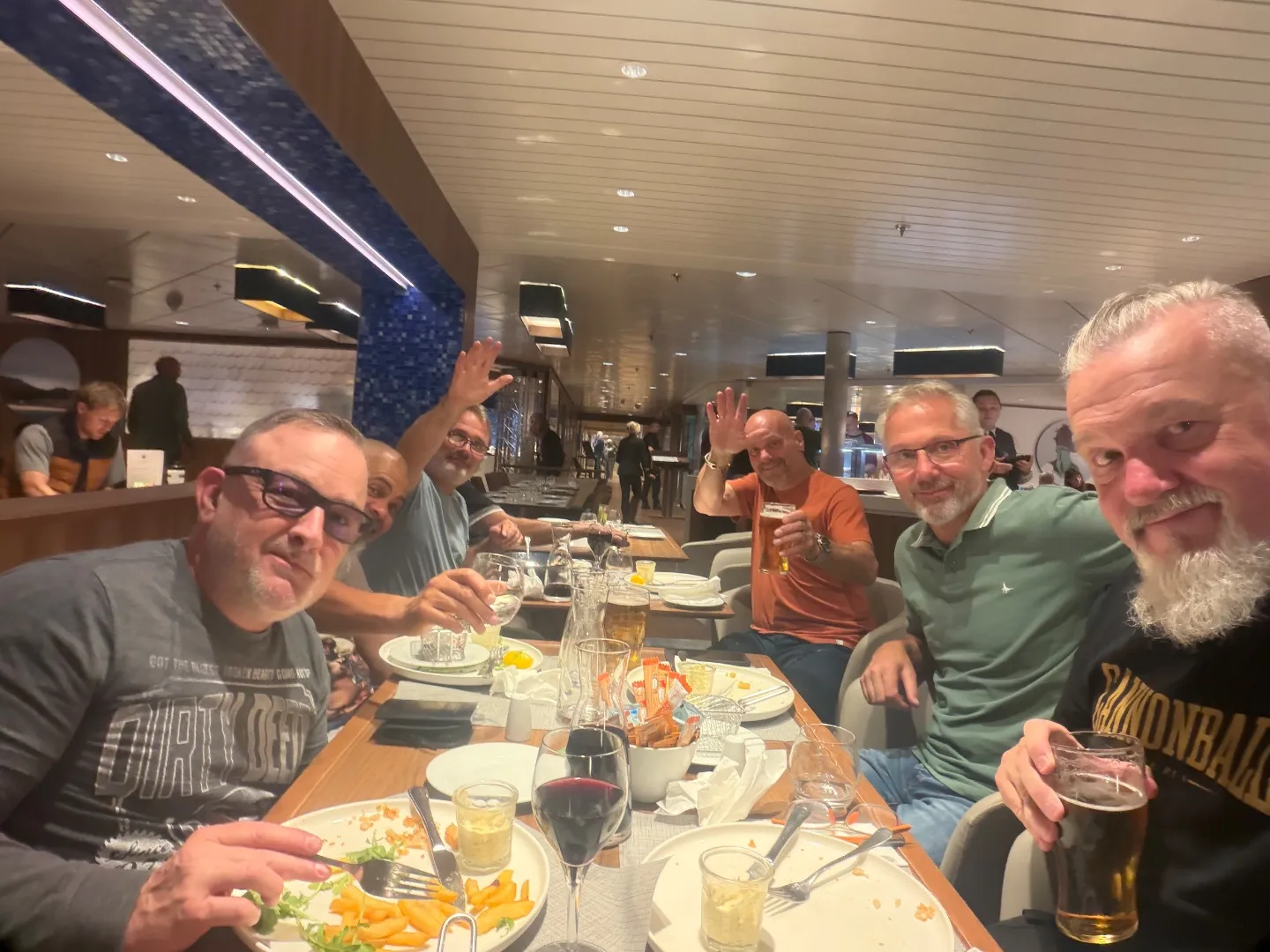
Food, drinks and banter on the overnight ferry to Bilbao.
Bilbao to Santander: the perfect warm-up
We couldn’t check in early in Santander, so there was no reason to ride straight there when we got off the ferry in Bilbao. Instead we had a route planned that climbed up into the hills and mountains before dropping back down into Santander. Most of the group rode it, and you can download it below.
Route at a glance
- Start: Bilbao ferry port (Santurtzi/Zierbena)
- Finish: Santander
- Distance: about 270 km
- Climbing: roughly 3,700 m
- Highest point: Puerto del Escudo, 1,011 m
- Moving time: around 5 to 6 hours, plus stops
- Regions: Bizkaia, Álava, Burgos and Cantabria
- Surface: paved throughout; narrow back roads, open main roads and tight mountain passes
- Built in: Kurviger, “Adventurous” curvy-road setting
How it rides
You don’t head west along the coast. The route goes south, away from the motorway, and makes a big loop inland through four regions before coming back down to the sea. It works well as a first day. It starts gently on the back roads out of the port, opens up across the high plateau of northern Burgos, and saves the tightest, steepest roads for the Cantabrian mountains at the end.
Las Encartaciones. From the port, the route leaves Muskiz on small country roads through Sopuerta, Galdames and Gordexola. These are narrow, green, wooded valleys, and the traffic dies away almost immediately. Car fans might want to stop at the Torre Loizaga classic car museum in Galdames, which has a big Rolls-Royce collection.
Artziniega and the Valle de Losa. The route crosses into Álava past the medieval hill town of Artziniega, then climbs on the A-3630 up to around 745 m and onto the open uplands of the Valle de Losa, under Sierra Salvada. This is where the wind turbines line the ridge.
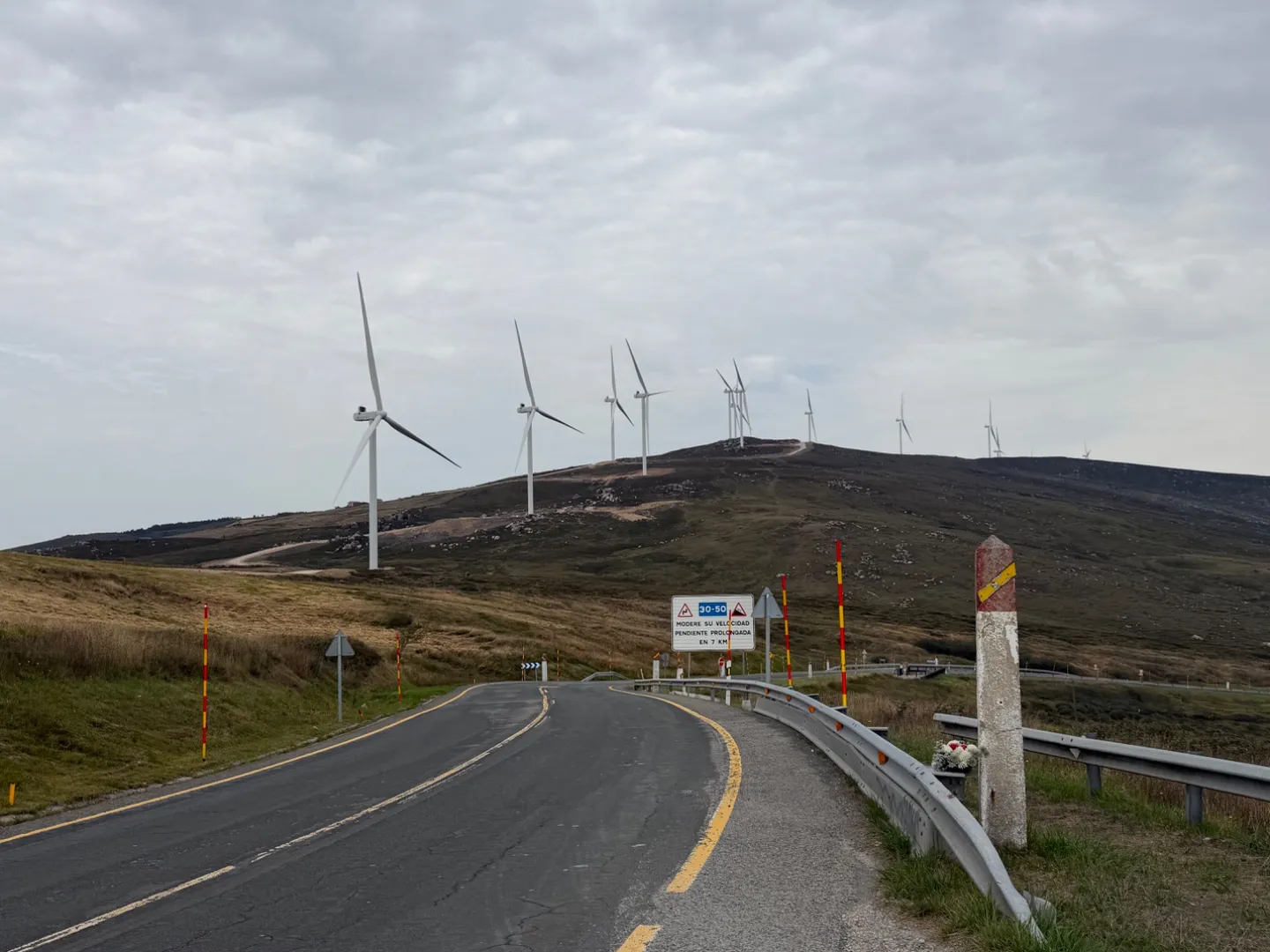
Wind turbines along the ridge on the warm-up route.
Las Merindades: two river gorges. The road drops through Medina de Pomar into the Ebro country of northern Burgos and rides two gorges. First is the Horadada gorge between Trespaderne and Oña, and Oña itself is worth a coffee stop for the Monastery of San Salvador, founded in 1011. The N-232 then follows the Valle de Valdivielso and the Desfiladero de los Hocinos, a deep, leafy cut the Ebro has carved with just enough room left for the road. Just beyond it, Villarcayo made a good spot for a coffee stop.
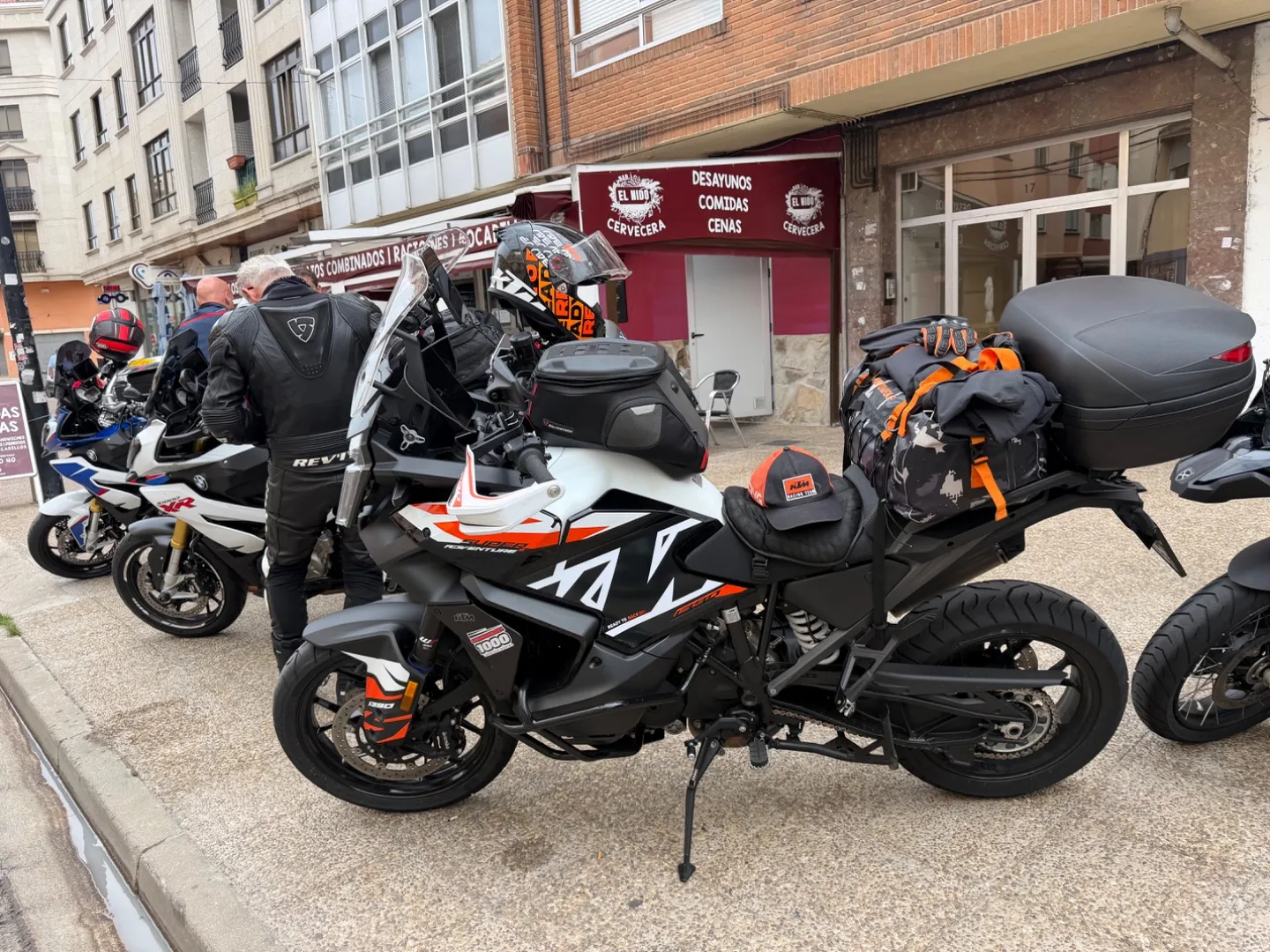
Coffee stop in Villarcayo, in the heart of Las Merindades.
Valdeporres and the Puerto del Escudo. Quiet roads through Valdeporres and Soncillo lead to the N-623 and the Puerto del Escudo. At 1,011 m it is the highest point of the day and the border between Burgos and Cantabria. From there it drops into the Luena valley.
The Pas valleys: Braguía and El Caracol. This is the best part of the day. The route passes through Vega de Pas, home of the sobao pasiego (a buttery Cantabrian sponge cake), which makes it the obvious place for cake. It then climbs the Puerto de la Braguía (712 m) towards Selaya, and turns up the CA-264 over the Alto del Caracol (about 815 m) to San Roque de Riomiera. These roads are narrow and twisting and climb hard, with huge views over the green Pas valleys.
Liérganes and into Santander. Coming down the Miera valley, you pass the historic village of Liérganes, home of the legend of the Fish-Man. The last stretch is a short run along the A-8 and S-10 into Santander.
It was the ideal warm-up. We got a feel for the bikes on Spanish roads, some proper bends after all those motorway miles, and a first look at the kind of scenery we’d be riding through for the rest of the week.
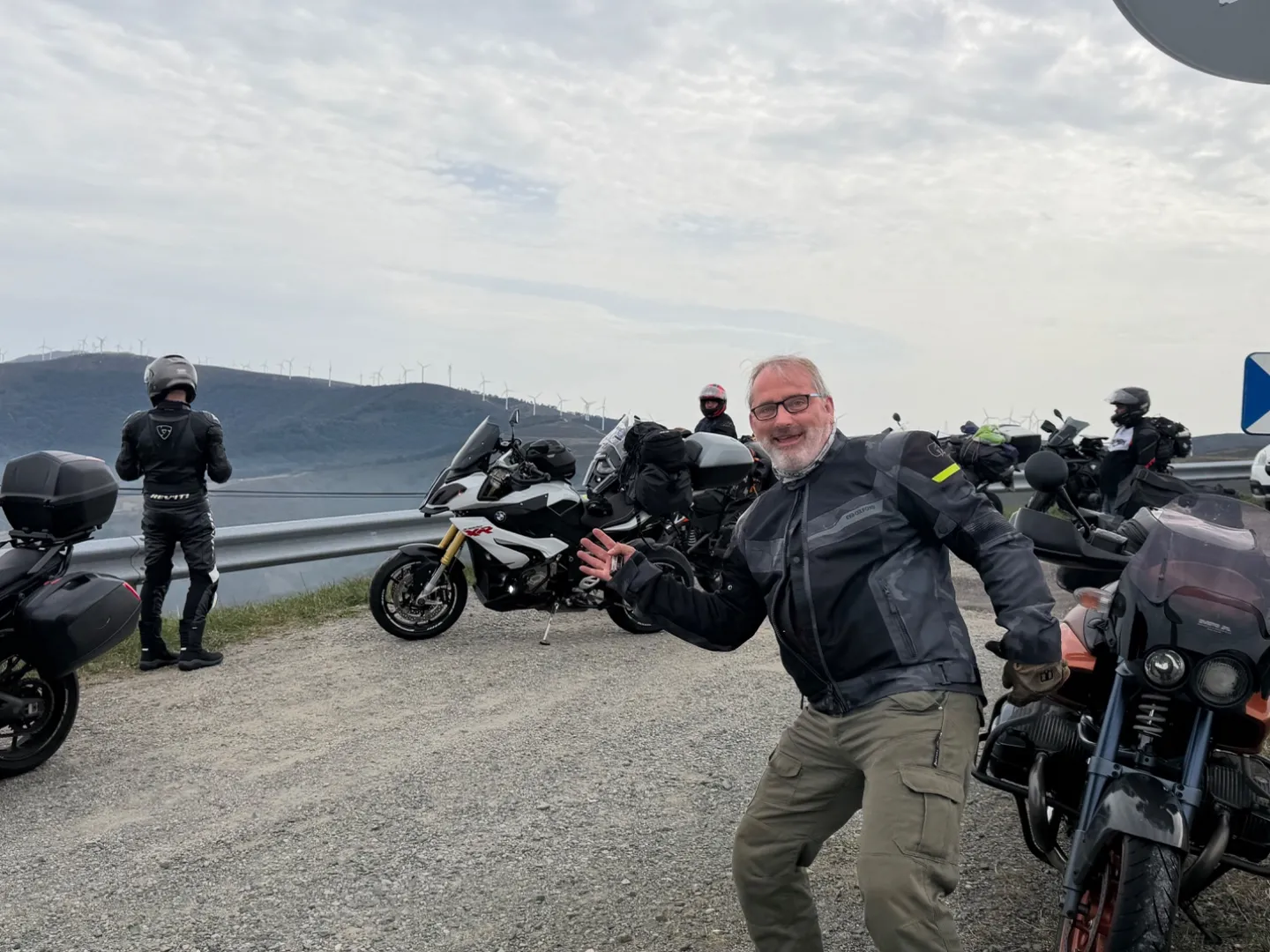
Regrouping at a mountain viewpoint.
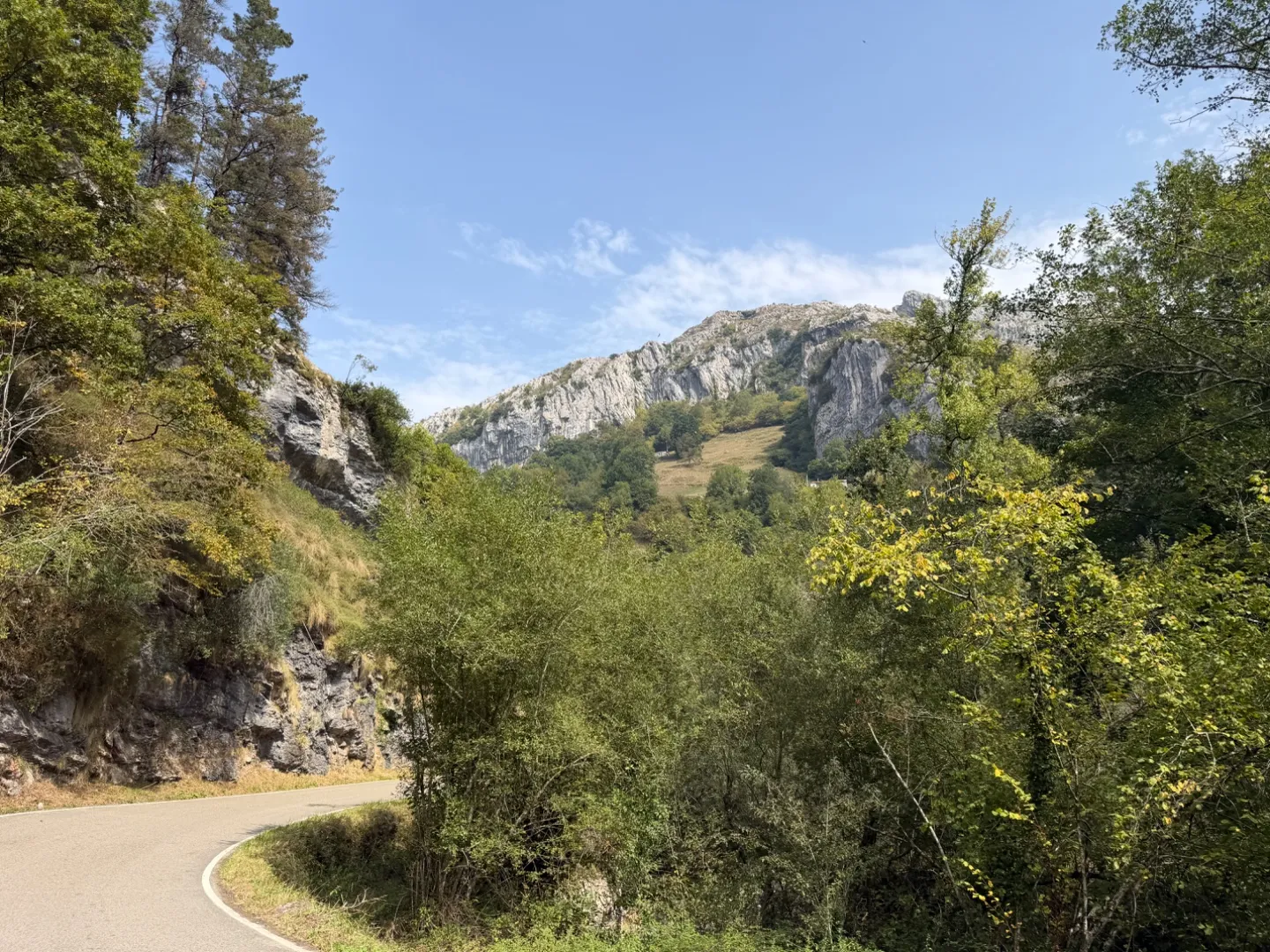
Winding down through the green valleys towards Santander.
When we rolled into Santander, everyone was ready for what was coming.
Once we could finally check in, the hotel garage started to fill up fast. Bike after bike rolled down the ramp, and it quickly turned into a showroom of everything from loaded adventure tourers to full-on sportsbikes, including one wearing proper Cannonball livery.
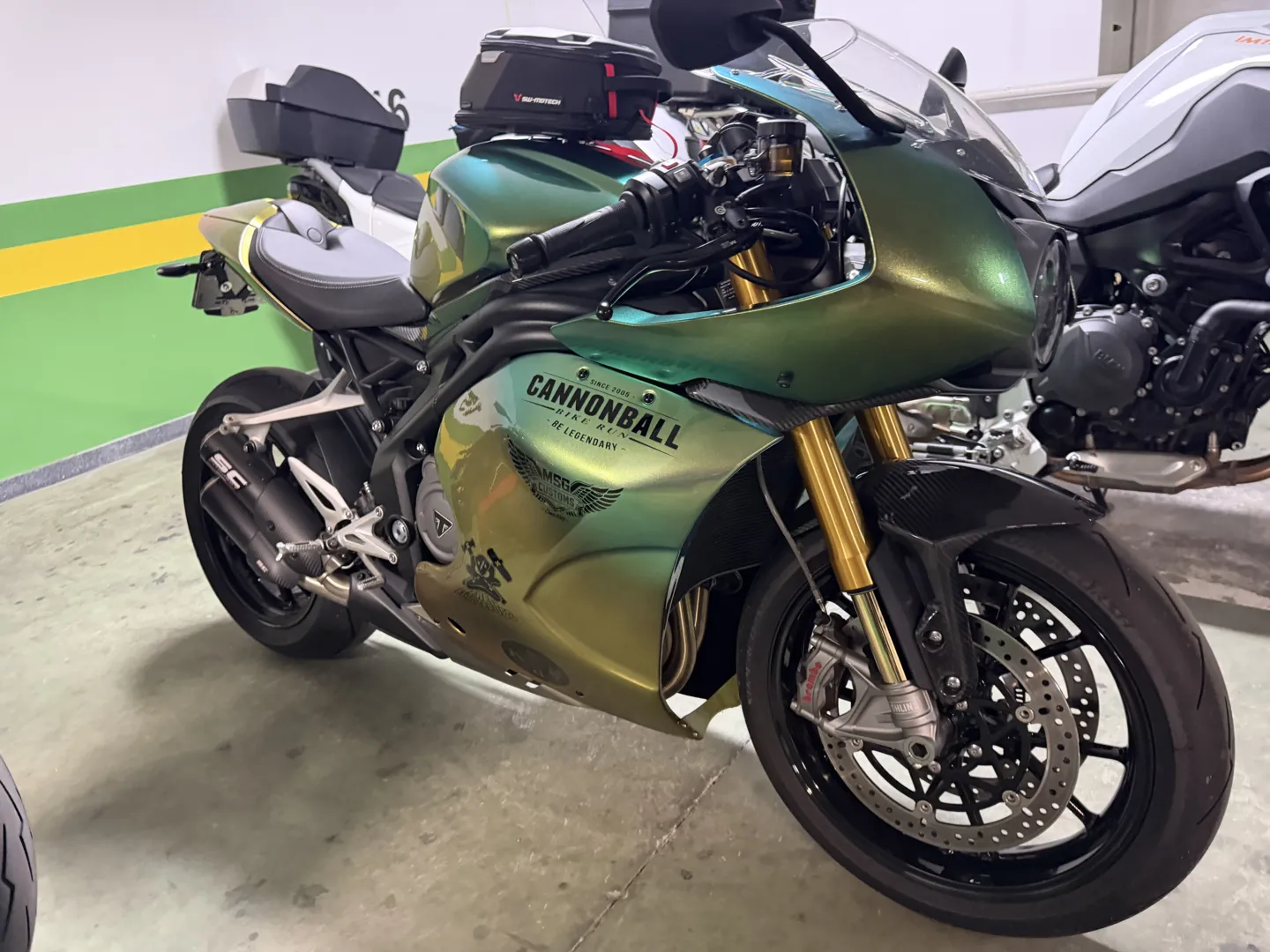
Cannonball livery in the hotel garage. Some bikes arrive dressed for the occasion.
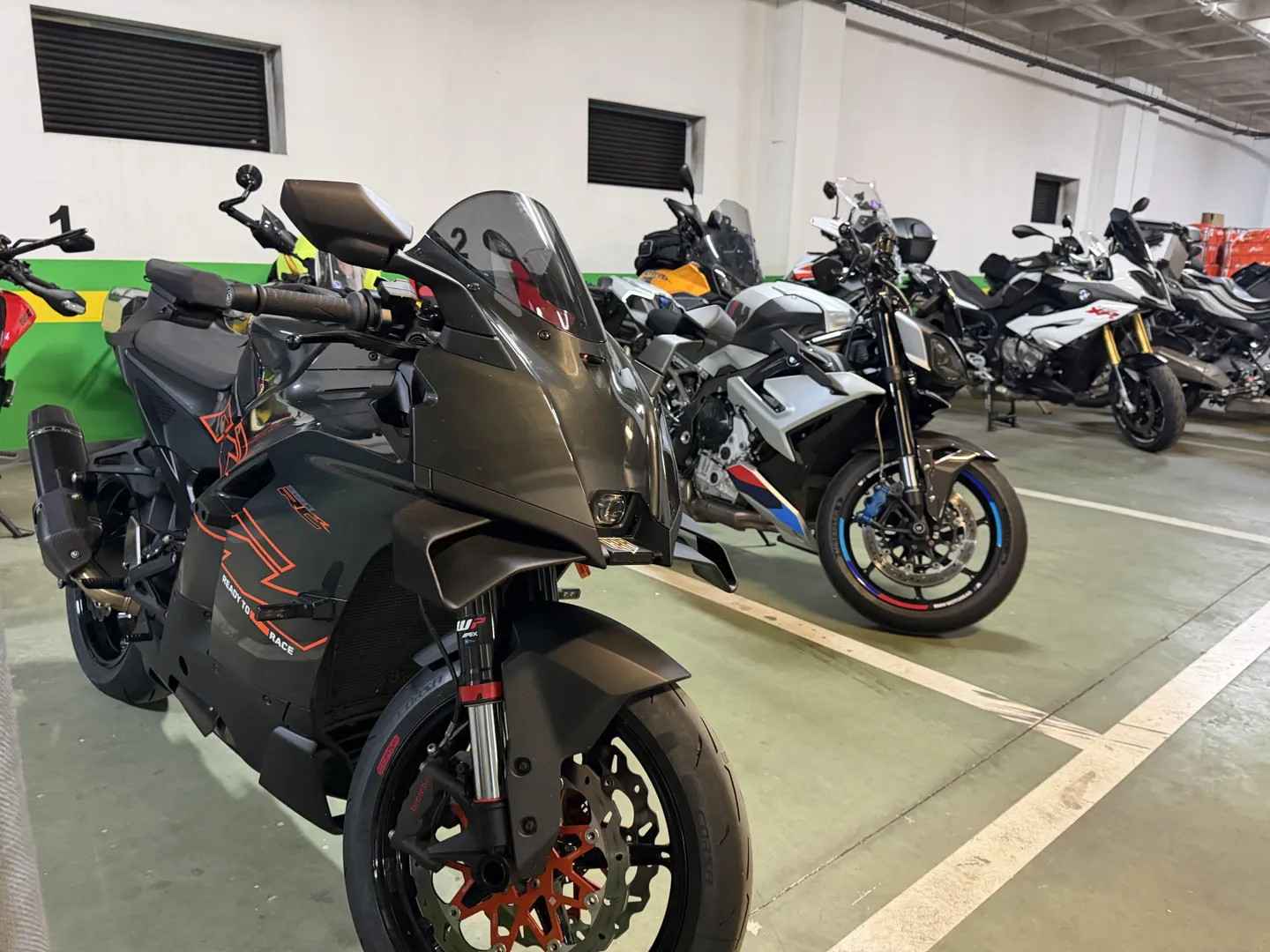
The hotel garage starting to fill up as the riders arrived in Santander.
Bilbao to Santander: practical notes
- Fill up before you leave the Bilbao area or in Medina de Pomar. Fuel stations are sparse over Valdeporres and in the Pas valleys.
- The Cantabrian passes are narrow, with livestock, cyclists and loose gravel on some bends, so ride them at a steady pace.
- Mountain weather changes fast here, and cloud can sit on the Escudo and El Caracol even on a sunny day at the coast.
- For a shorter day, stay on the N-623 at the Escudo all the way to Santander and skip the Pas valleys.
The distance, climbing and time are calculated from the GPX file, so your own figures may vary a little depending on your navigation app.
Download the Bilbao to Santander GPX
Next up: the Cannonball begins
So that was the trip to the start: two countries on the motorway, a train under the Channel, a ferry full of friends old and new, and a mountain warm-up in northern Spain. For how the week itself played out, read my Cannonball Bike Run 2026 review.