Ardennes Tank Tour
314 km from Maastricht down through the Belgian Ardennes and into Luxembourg, linking seven tanks that have been sitting more or less where they stopped since the winter of 1944.
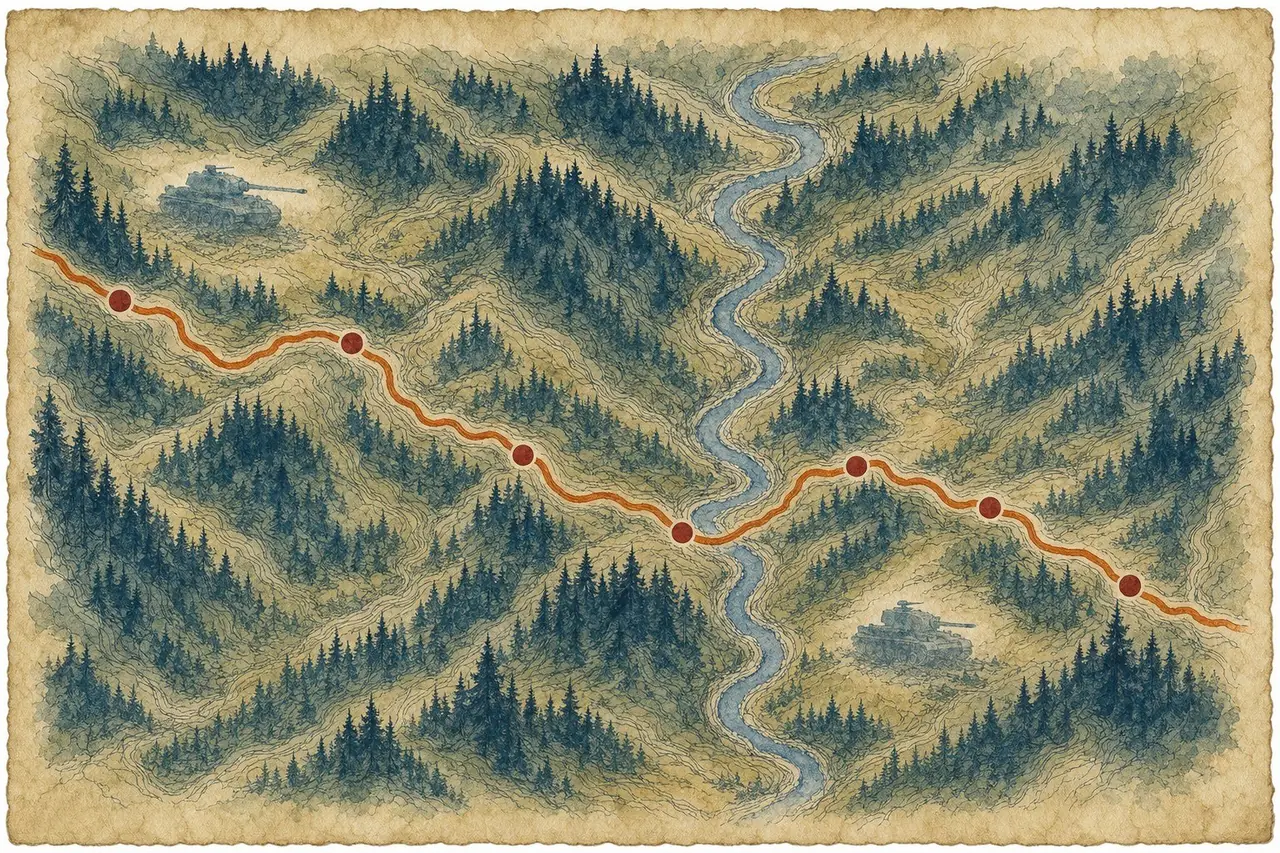
Seven tanks, one day, three countries
Mariadorp near Maastricht down to Aubel the long way round, with the middle of the day spent on Ardennes back roads — La Gleize, Grandménil, La Roche-en-Ardenne, Wibrin, Bastogne, Houffalize, then over the border to Clervaux. Point-to-point, not a loop. All paved, nothing technical. The riding is easy; it's the stops that make it a full day.
Moving time only — it excludes stops. Fuel, coffee breaks and lunch easily add a couple of hours to the day, so plan accordingly.

"You don't need to be a war historian for this one. You park up, look at the holes in the armour, and it lands."
— Alan Jones, on the Ardennes Tank TourElevation profile
How it rides
Every tank on this route is a real one. Not a museum piece trucked in for display — these were knocked out or abandoned within a few hundred metres of where they stand today, and most of them still carry the damage that stopped them.
The route itself is straightforward: N-roads and back roads through forest and river valleys, roughly 5 hours 45 of moving time. Add seven stops and a couple of museums and you've filled a day comfortably. Do it in seven hours and you've rushed it.
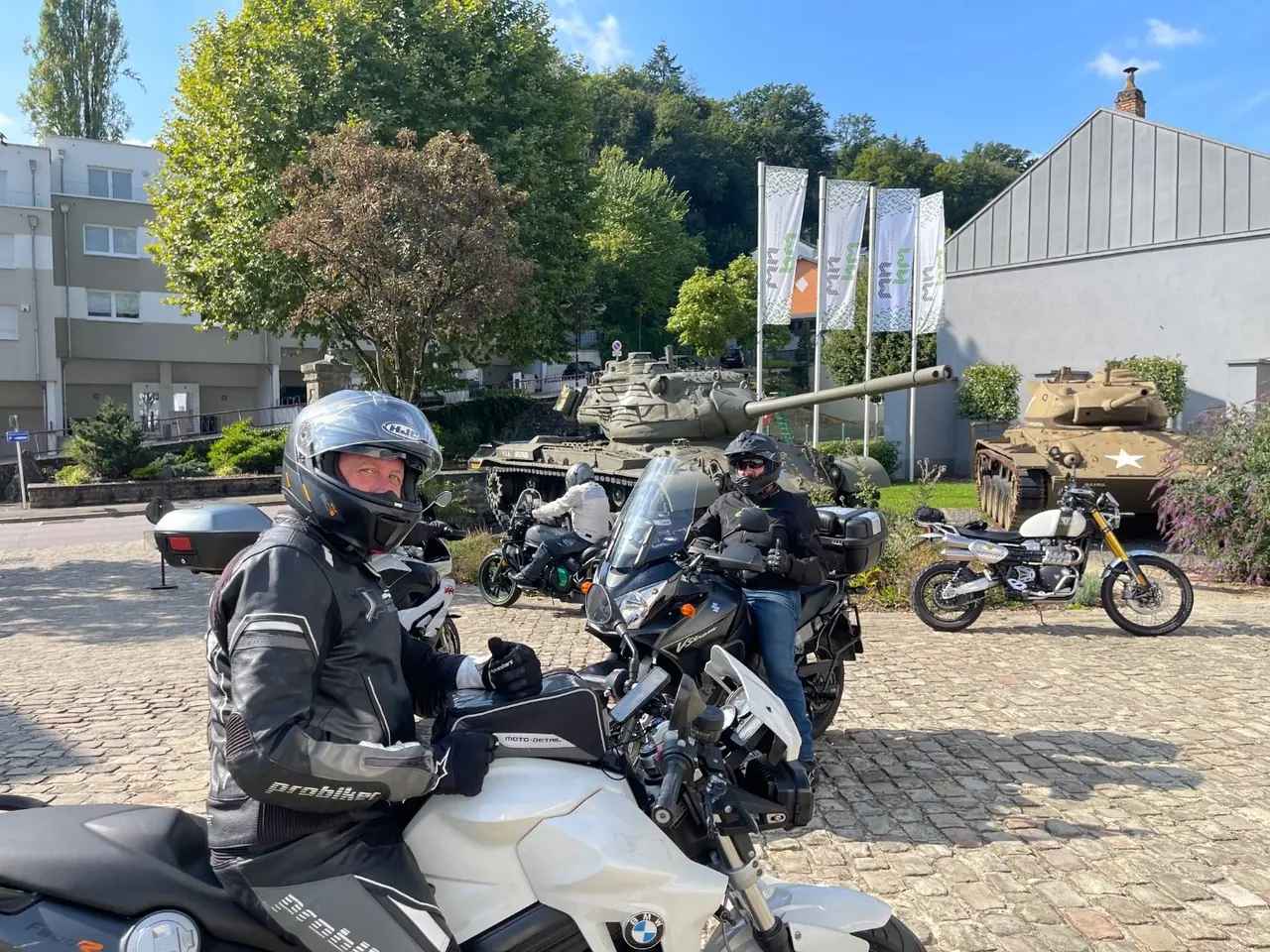
Half the day is spent stood next to armour rather than sat on the bike. Plan for that.
Stop 1 — La Gleize: King Tiger 213
This is where Kampfgruppe Peiper ran out of road. Tiger II number 213 of the 501st SS Heavy Panzer Battalion was disabled on 22 December 1944 defending Werimont Farm — US 3rd Armored blew the front third off its 88 and the commander, SS-Obersturmführer Helmut Dollinger, bailed out wounded. Two days later Peiper's 800 surviving men walked out on foot and left around 135 vehicles behind them (December 44 Museum).
It's still standing because a local woman, Mme Jenny Geenen-Dewez, bought it off the scrap men for a bottle of cognac. The barrel looks stubby because the repair welded a Panther gun onto it. It is the only King Tiger left on the ground it actually fought over (Wikipedia).
Village square, opposite the church, with the December 44 Museum directly behind it.
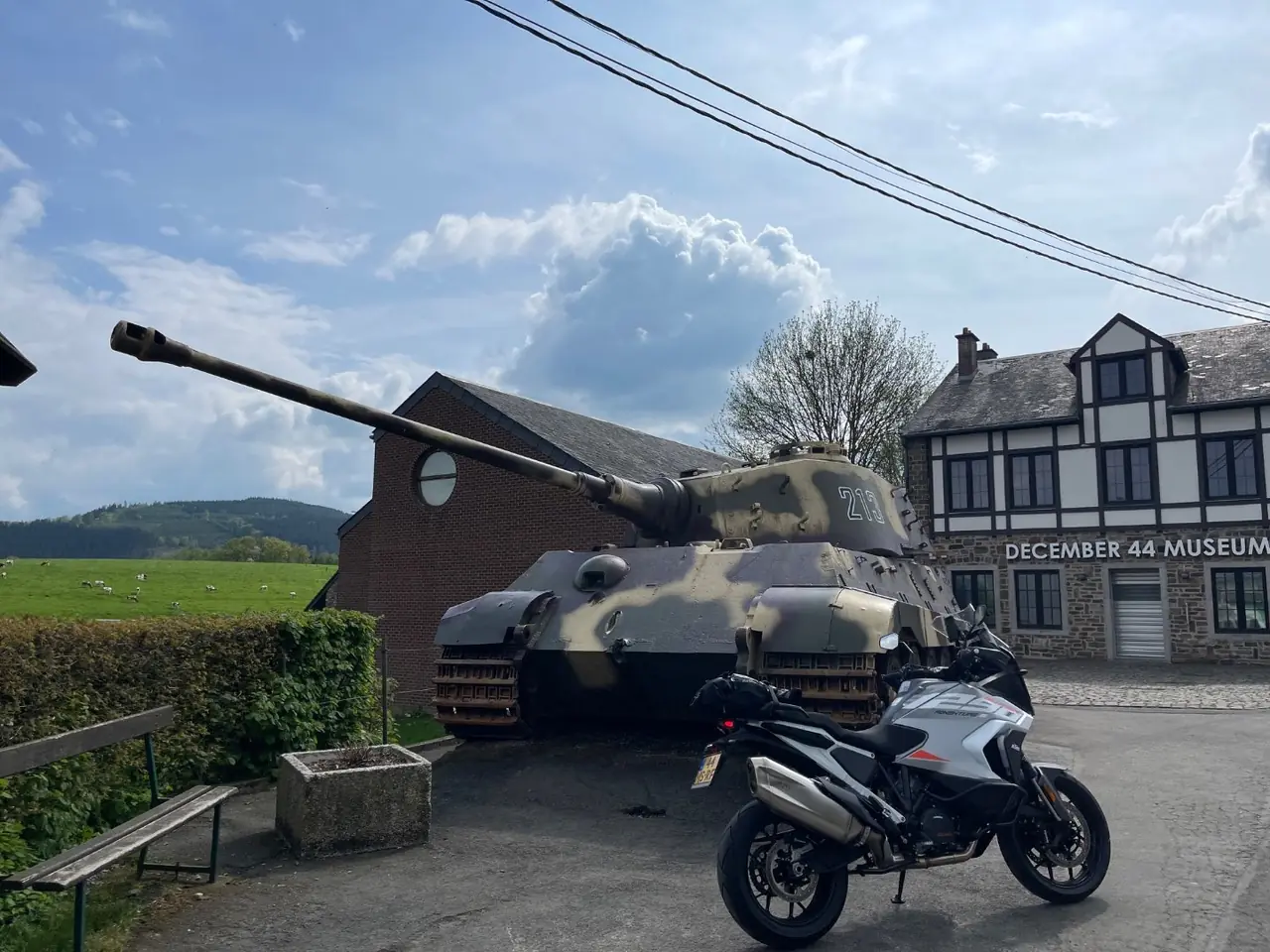
Photo op: park side-on to the left flank and the museum sign lands in the same frame.
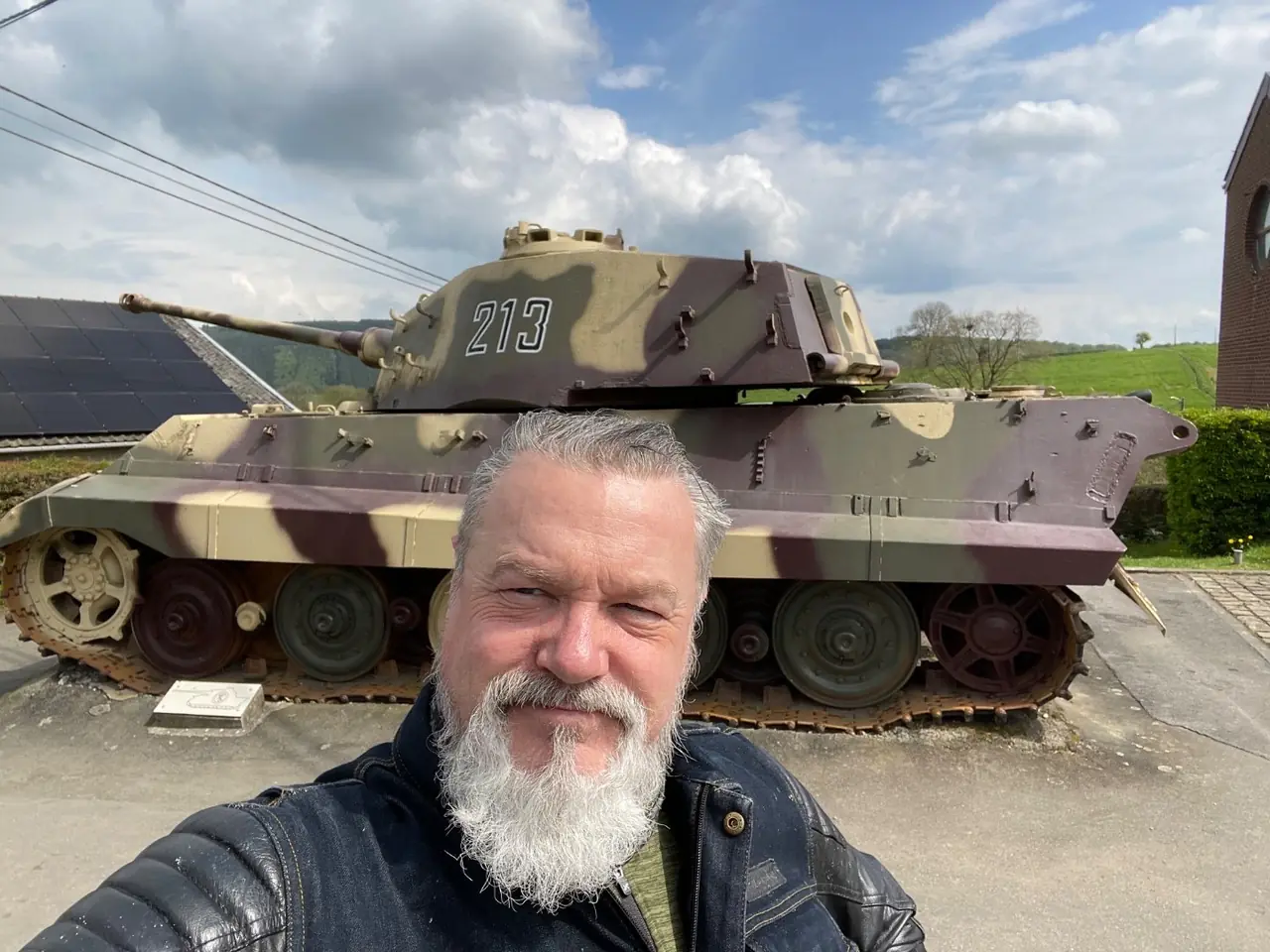
Turret number 213. Sixty-nine tonnes of it, parked on a village square.
Stop 2 — Grandménil: Panther Ausf. G
A Panther of the 2nd SS Panzer Division "Das Reich", out of the fight around Christmas 1944 after being abandoned in a meadow nearby — most accounts say it simply ran out of fuel. It now sits on the N807 crossroads with the Manhay History 44 museum directly opposite (Bulge1944).
Small thing worth knowing before someone corrects you: the 407 painted on the turret is wrong. A wartime photograph of the same tank shows 214 (The Battle of Grandménil).
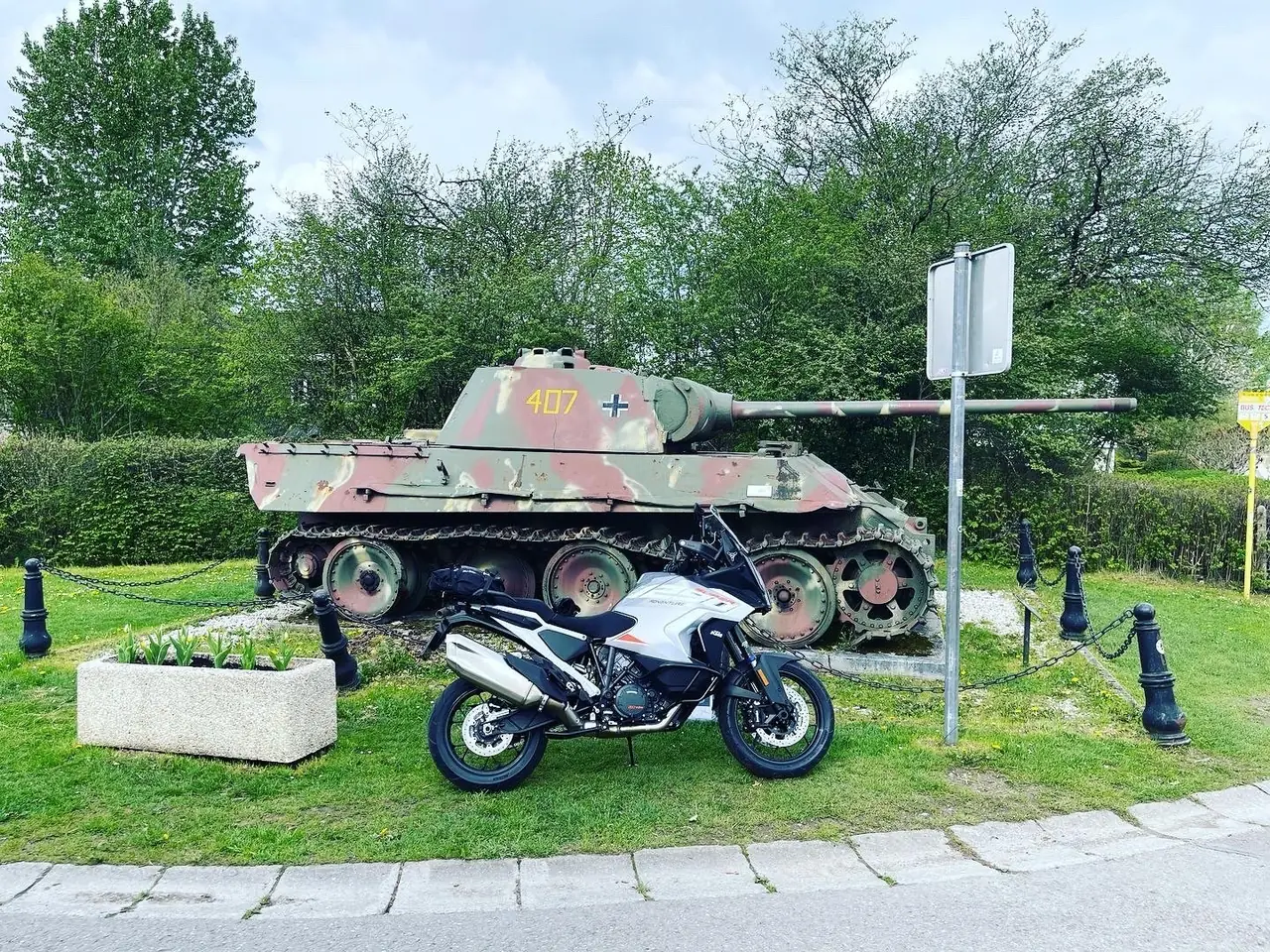
Unrestored and patchy with primer — which is exactly why it photographs better than the tidy ones.
Stop 3 — La Roche-en-Ardenne: Sherman "AMBOY"
An M4A1 Sherman with the 76mm gun, on the car park by the Quai de l'Ourthe, honouring the 2nd and 3rd US Armored Divisions. It was placed here in 2004, replacing an old M46 Patton. There's a shell penetration in the front plate; the crew didn't get out (Liberation Route).
The town itself was flattened and 116 residents were killed. The Musée de la Bataille des Ardennes is in the centre, and there's a British 17pdr Achilles up on Avenue du Hadja if you want the second one (Wikipedia).
Best food and coffee stop of the day, and the ride in along the Ourthe is the nicest stretch on the route. Time your lunch here.
Stop 4 — Wibrin: half a Sherman
The one most people skip, and the one I'd tell you not to. It's beside the church on Rue du Tilleul, and only the front section of the tank is left — scrap dealers had already cut the rear and right side away before the local priest and the villagers stopped them (Europe Remembers).
Which is why it's worth the stop. You can stand at ground level and look straight into it: real armour thickness, two roughly 10 cm penetrations in the front plate, and a burst gun barrel. Knocked out on 14 January 1945, US 2nd Armored against Panthers and a StuG III of the 116th Panzer Division (Bulge1944).
Photo op: get low, front three-quarter, and you'll have the holes and the open rear in one frame.
Stop 5 — Bastogne: "Barracuda"
McAuliffe Square. A Sherman with a clean cylindrical 75mm hole punched through the left side and a ragged panzerfaust wound in the stern, carrying 4th Armored, 705th Tank Destroyer Battalion and 11th Armored markings. It came back from restoration at Rocourt with a new turret (11th Armored Division).
The square is named after Brigadier General Anthony McAuliffe, whose entire written reply to a German surrender demand was "Nuts!". His bust is a few metres away.
The other stop here is Bastogne Barracks — a working vehicle restoration centre rather than a static display. Book ahead (Bastogne Barracks).
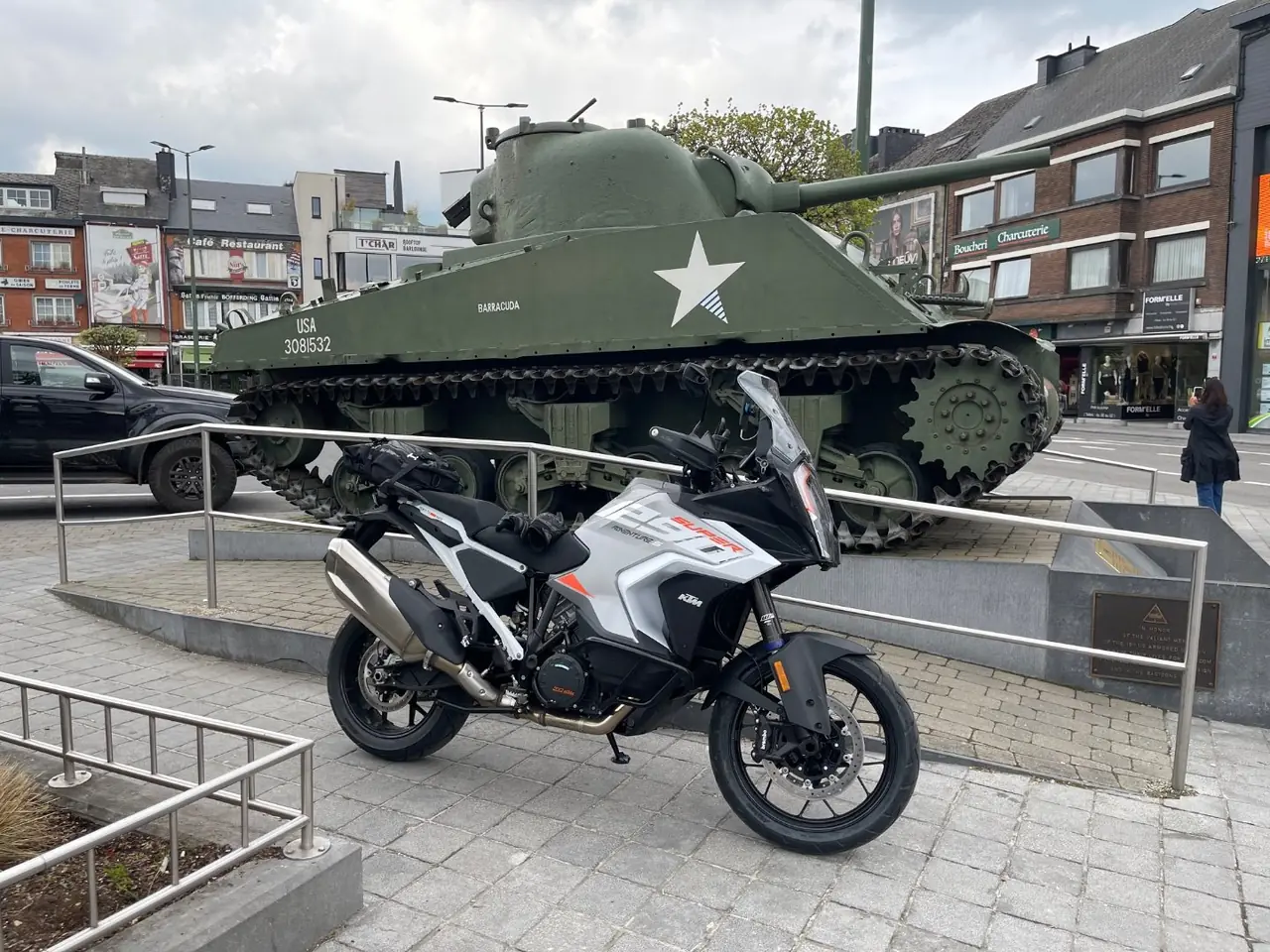
"BARRACUDA", USA 3081532. Busy square, so you'll be sharing it.
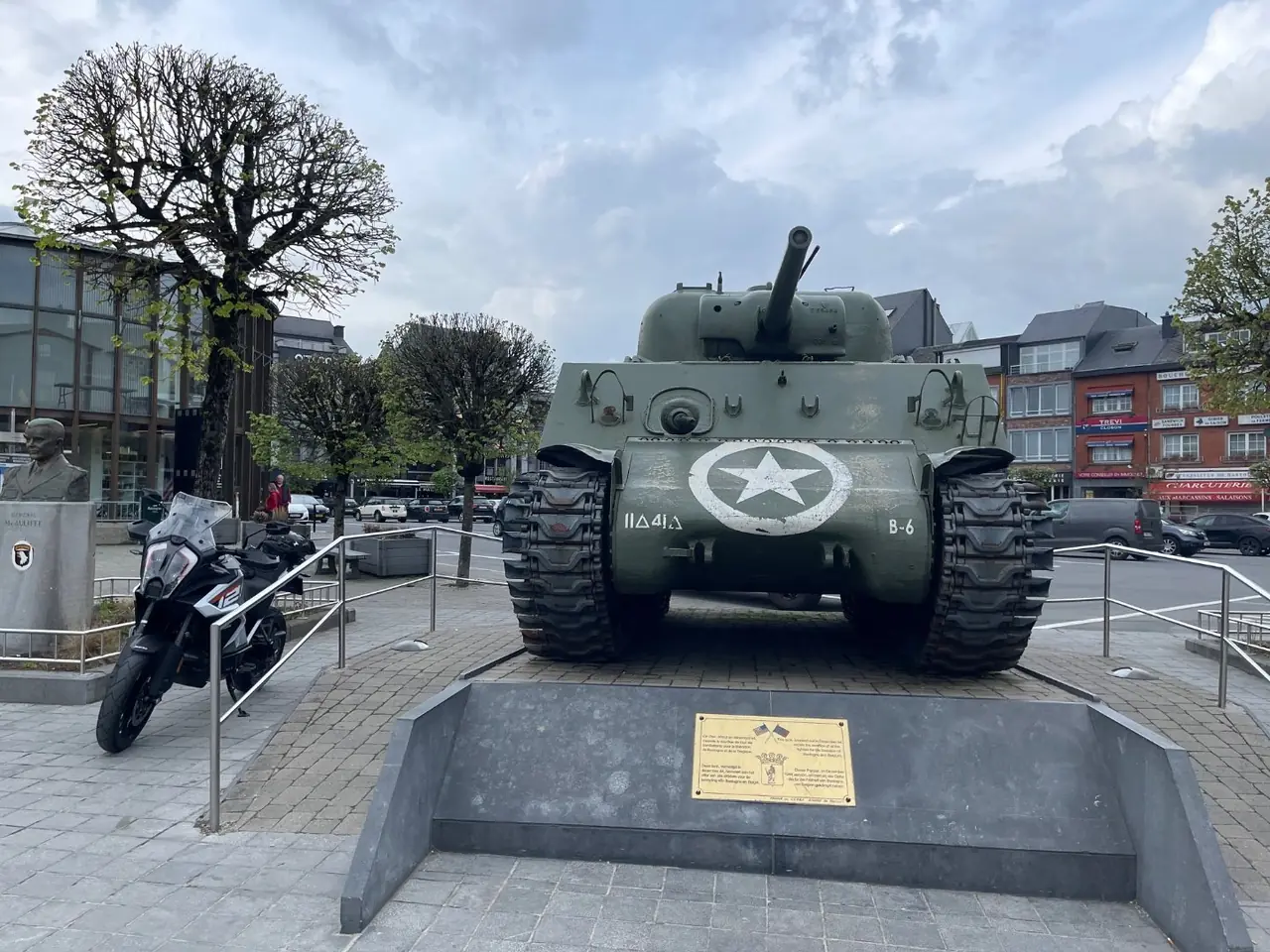
Head-on, with the McAuliffe bust just off to the left.
Stop 6 — Houffalize: Panther 111
The one that ended up upside down in the river. Panther Ausf. G, turret number 111, 116th Panzer Division "Windhund" — it took the town on 19 December 1944 and finished inverted in the Ourthe, either from bomb blast overpressure or a bridge giving way. The crew were still inside when engineers from Namur recovered it on 20 September 1948 (Wikipedia).
Dismantled in 2017 for a two-year restoration and back in place since 2023, under a new roof next to a small free museum. One of only three surviving Ardennes Panthers, alongside Grandménil and Celles (Bulge1944).
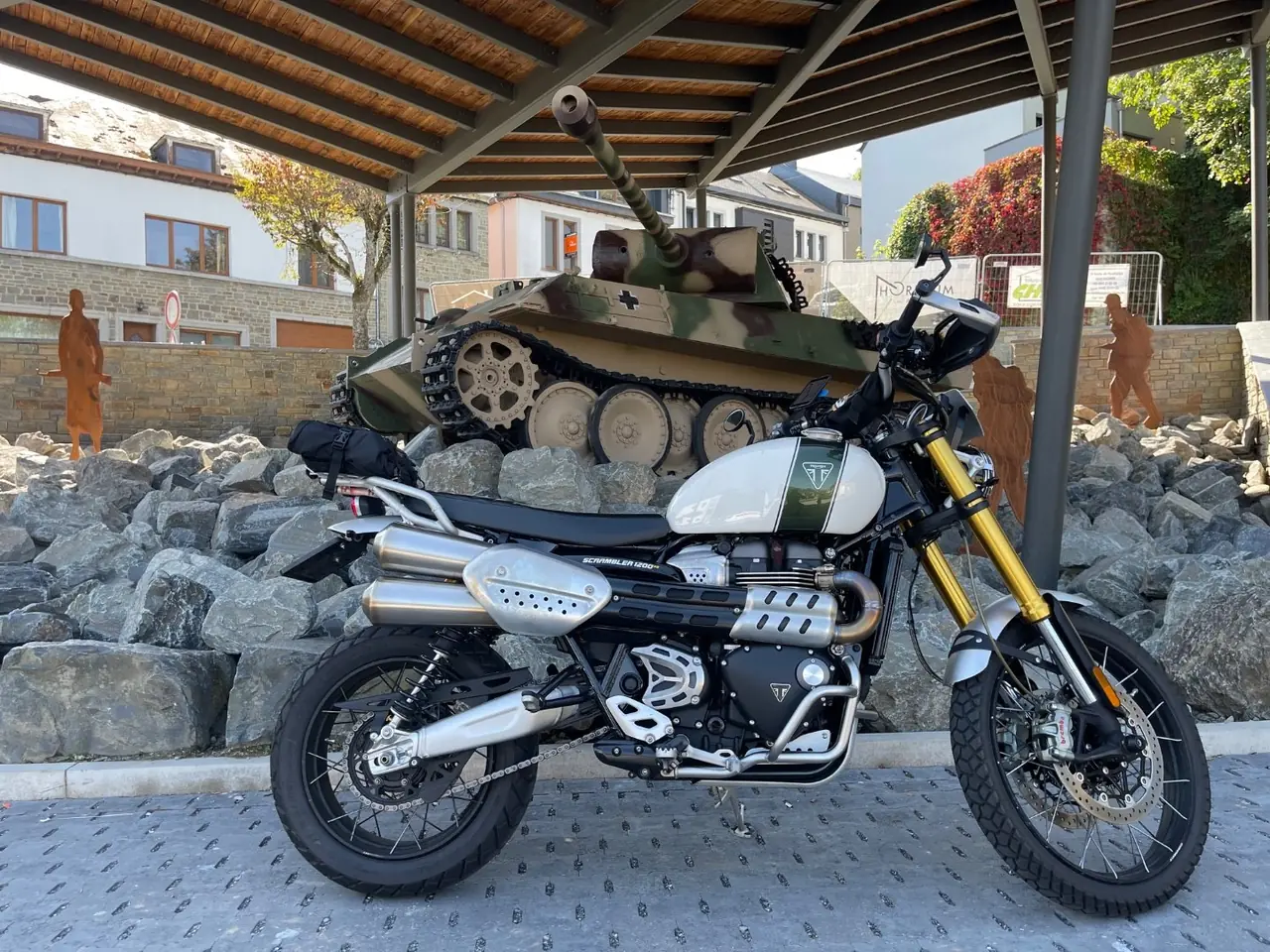
Photo op: it's up on a rock plinth with steel soldier silhouettes behind it. Put the bike in front and you've got the shot.
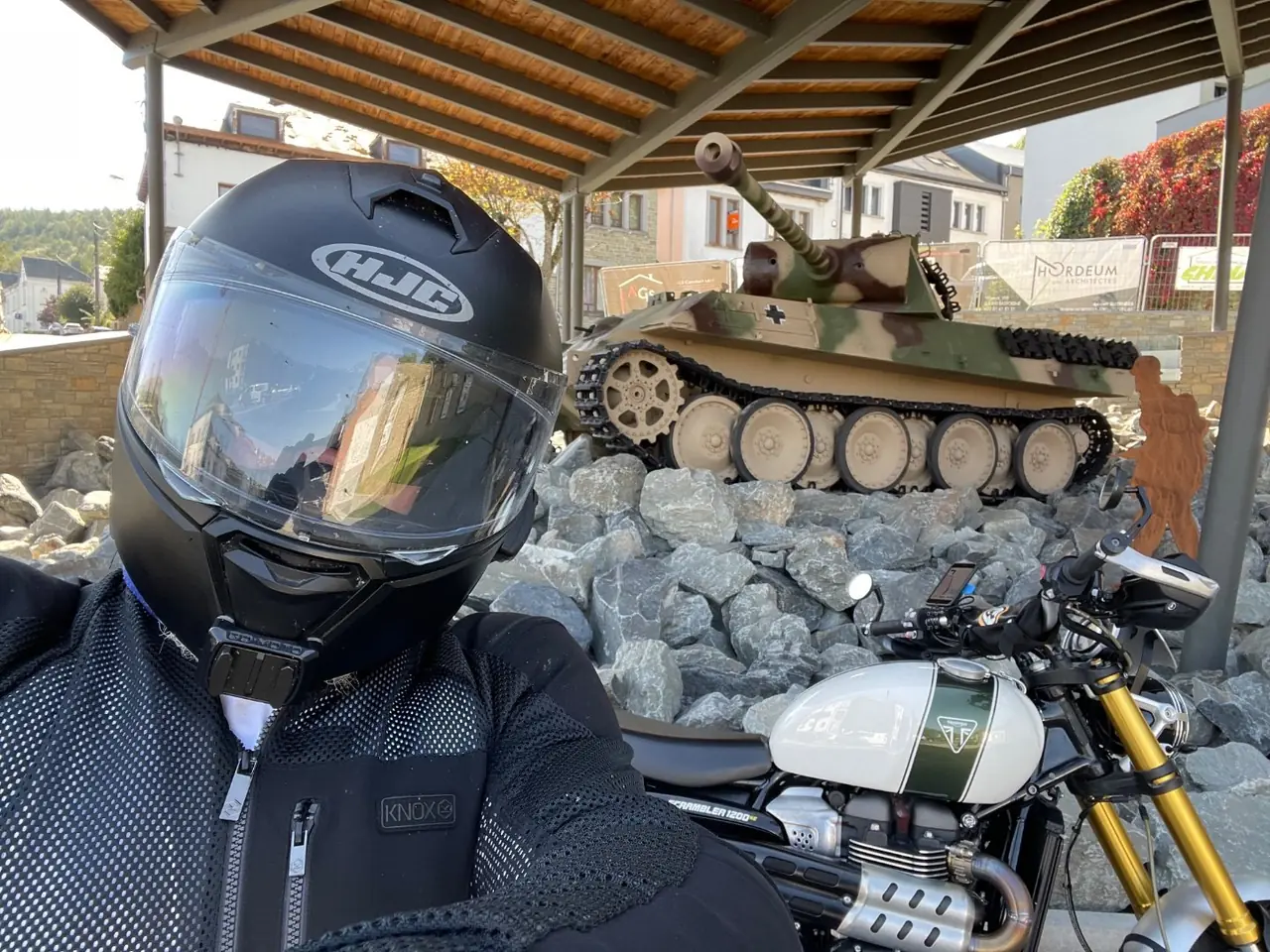
Freshly restored camouflage. It looked a lot rougher the last time I came through.
Stop 7 — Clervaux: Sherman M4A3
Over the border into Luxembourg for the last one. Place du Marché, below the 12th-century castle. The tank defended the castle on 17 December 1944 and was abandoned after a shell ricochet; a German 88mm Pak 43 sits nearby (Europe Remembers).
The Museum of the Ardennes Counteroffensive is inside the castle walls, dioramas and all. Worth the entry if you've still got an hour in you.
Worth adding: Fort de Tancrémont
Not on the GPX, but it's a short detour near the start at Pepinster and it's open to visitors. An interwar Belgian fort with hardware parked outside — a good warm-up stop if you set off early.
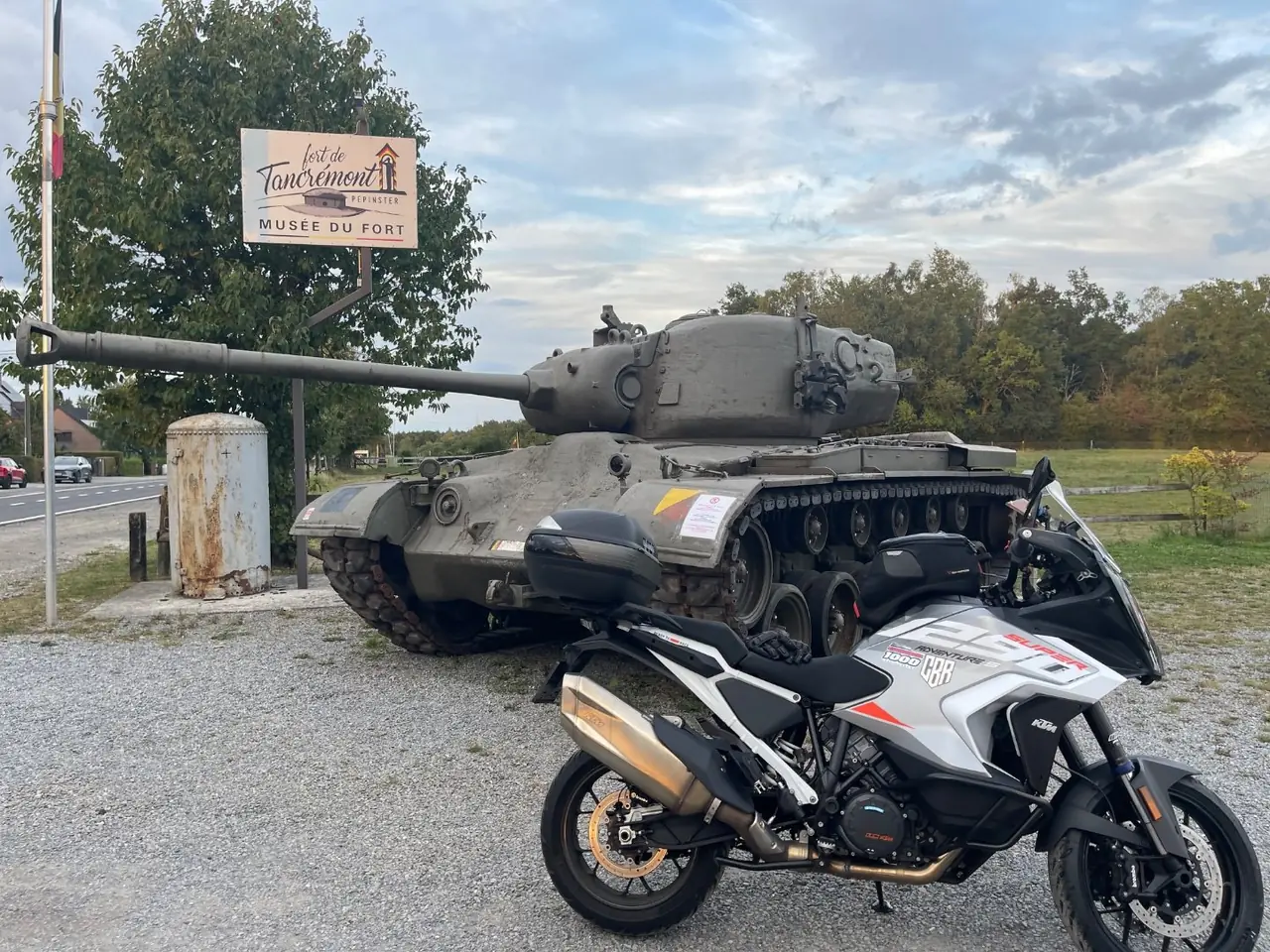
Fort de Tancrémont, just off the early part of the route.
Practical notes
The tanks are all free and none of them are behind a fence you can't get a bike alongside. The museums are the only thing you'll pay for, and most of them shut on Mondays and take a lunch break — check opening hours before you set off if a specific one matters to you.
Ride it out of season if you can. April, May or September: the roads are empty, the light is better, and Bastogne is bearable. Nothing on this route is technical, so take whatever bike you've got.