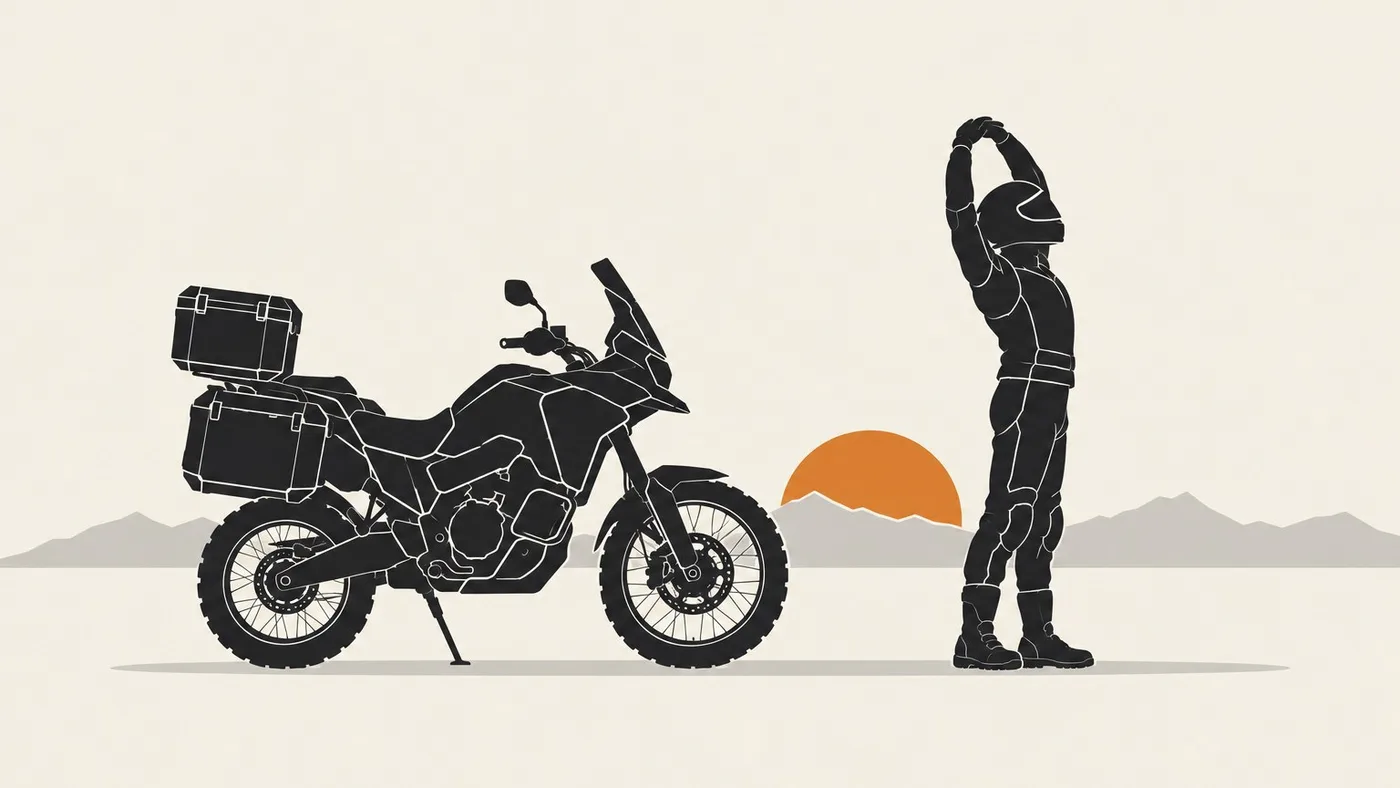
My tips for keeping your body happy in the saddle, with a little yoga, a few simple exercises and plenty of walking. No gym required.
We spend hours preparing our motorcycles for a big tour. We check the tyres, plan the route and work out how to fit everything into the luggage. But how much thought do we give to preparing ourselves?
Long days in the saddle can leave your back stiff, your hips tight and your shoulders aching. Getting off the bike in the evening might not feel quite as effortless as climbing on that morning.
For me, looking after my body is part of enjoying the journey. If I’ve travelled somewhere special, I want enough energy and freedom of movement to explore it, not just find the nearest chair.
That doesn’t mean turning a motorcycle holiday into a fitness boot camp. A little yoga, some simple exercises and a walk around somewhere new can fit into a tour without taking it over.
It’s not just about the motorcycle
If you’re away for a long weekend, I completely understand wanting a break from the gym and your usual routine. Getting away from schedules is part of the attraction.
But on a longer trip, I prefer to keep moving and pay a little attention to my flexibility. Days spent riding, followed by evenings spent sitting, aren’t the balance I’m looking for.
My approach is simple: do enough to feel good, adapt to the day and leave plenty of time to enjoy the holiday. Here are the things I’d recommend.
01Make a little time for yoga and mobility
If there’s one activity I’d put at the top of my list for a longer motorcycle tour, it’s yoga.
Even when you’re shifting your weight and moving around on the bike, you’re still spending hours in a fairly limited range of positions. A short, gentle routine gives you a chance to move differently.
You don’t need complicated poses or an hour to spare. I’d aim for five to ten minutes in the morning, then a slightly longer session in the evening if time and energy allow.
5–10 minutes
In the morning
The idea is to wake the body up, not push into deep stretches before breakfast. Choose a few of these:
01
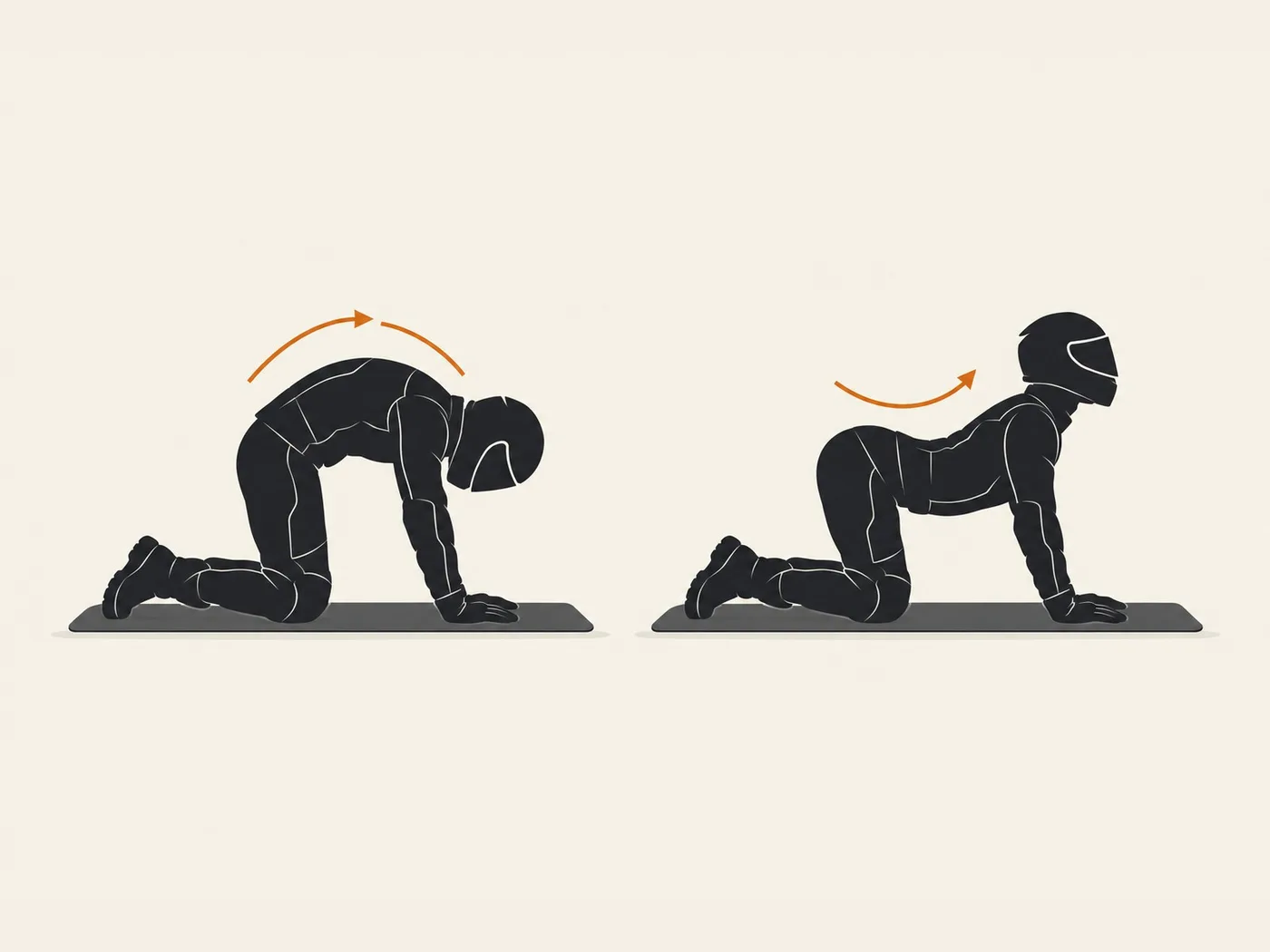
Cat–Cow
On your hands and knees, gently alternate between rounding and arching your back within a comfortable range.
02
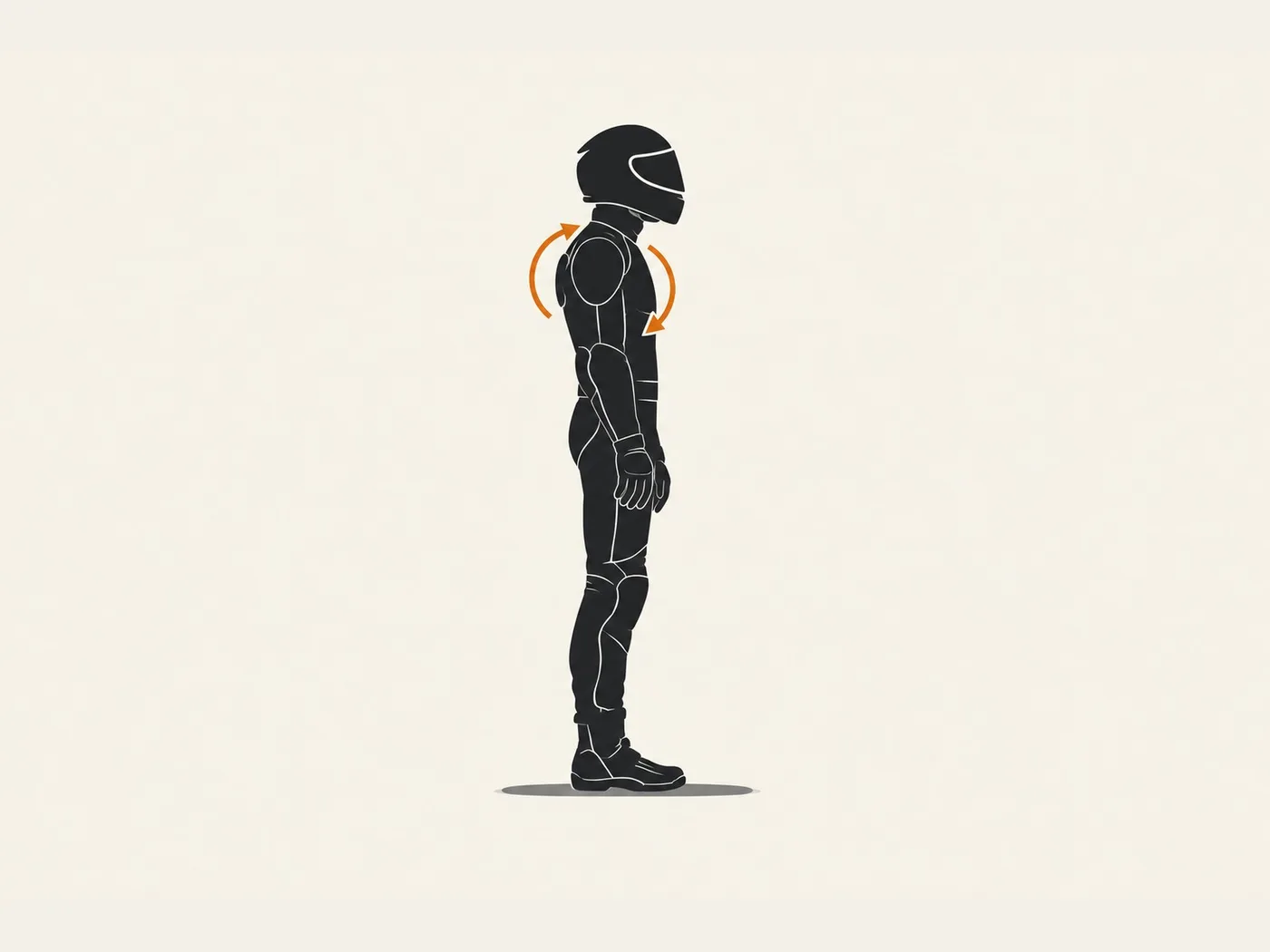
Shoulder rolls
Slowly roll your shoulders backwards and forwards.
03
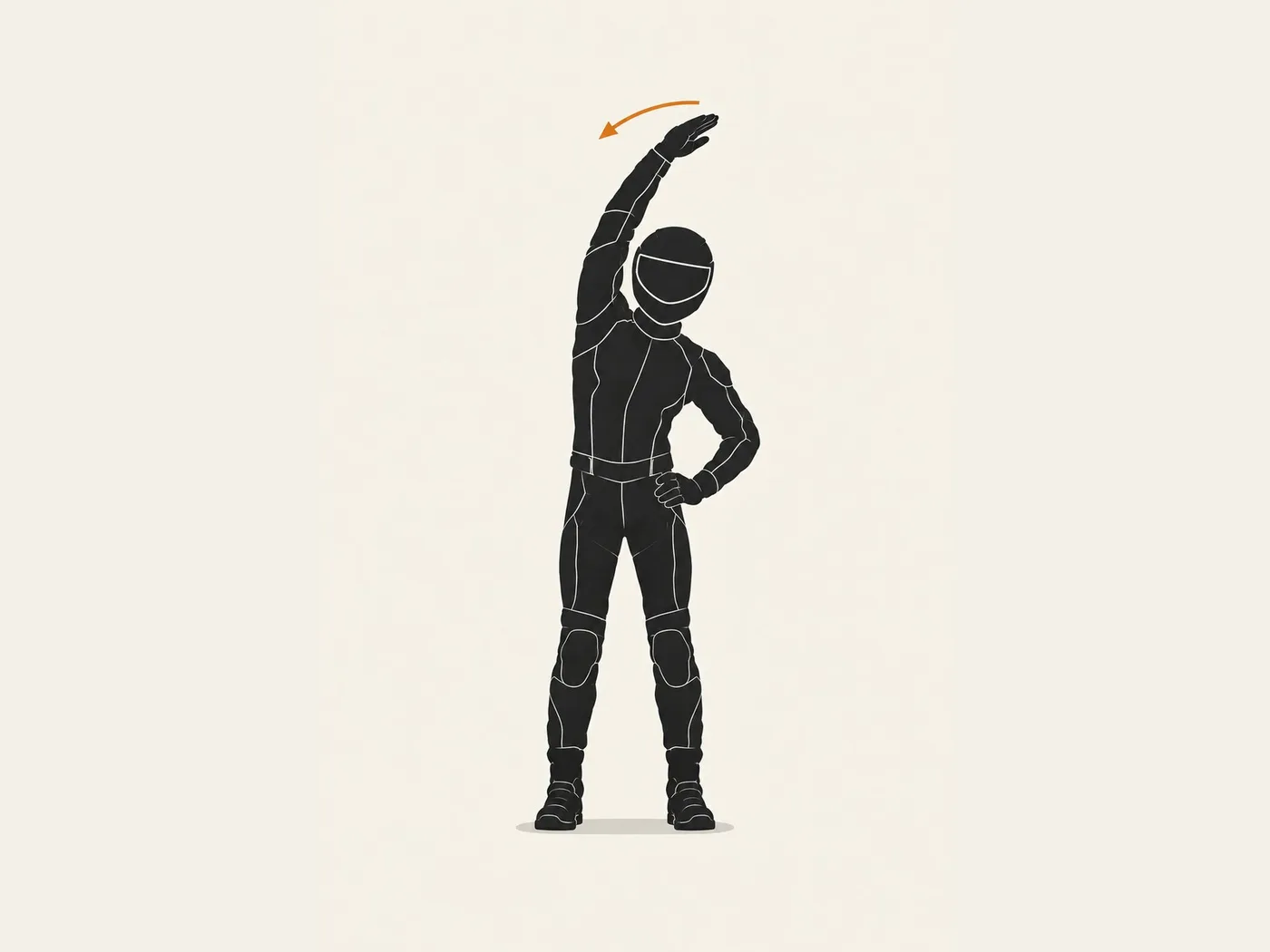
Standing side stretch
Raise one arm overhead and gently lean to the opposite side, then swap.
04
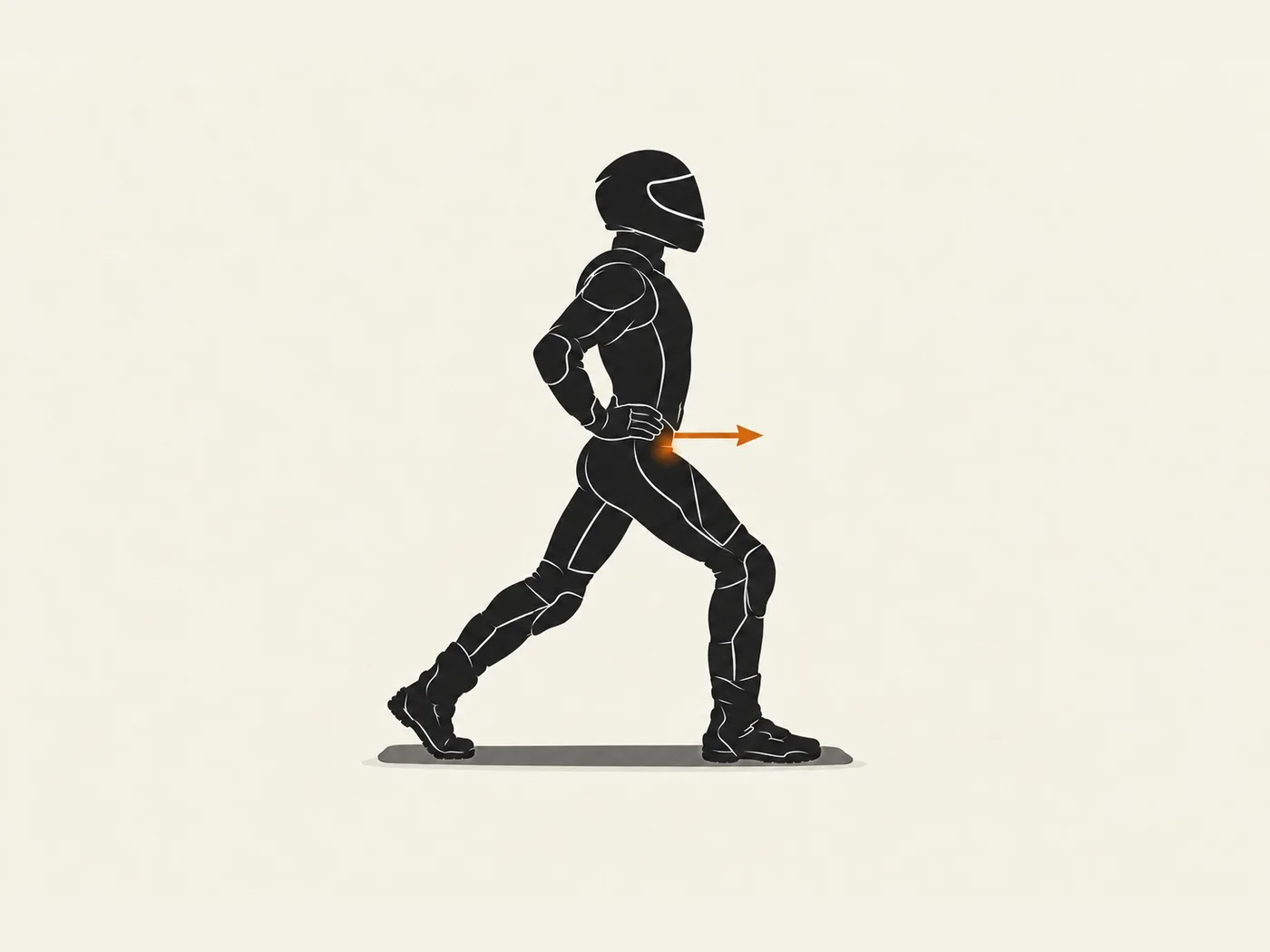
Hip-flexor stretch
In a comfortable split stance, gently move your hips forward to stretch the front of the rear hip.
05
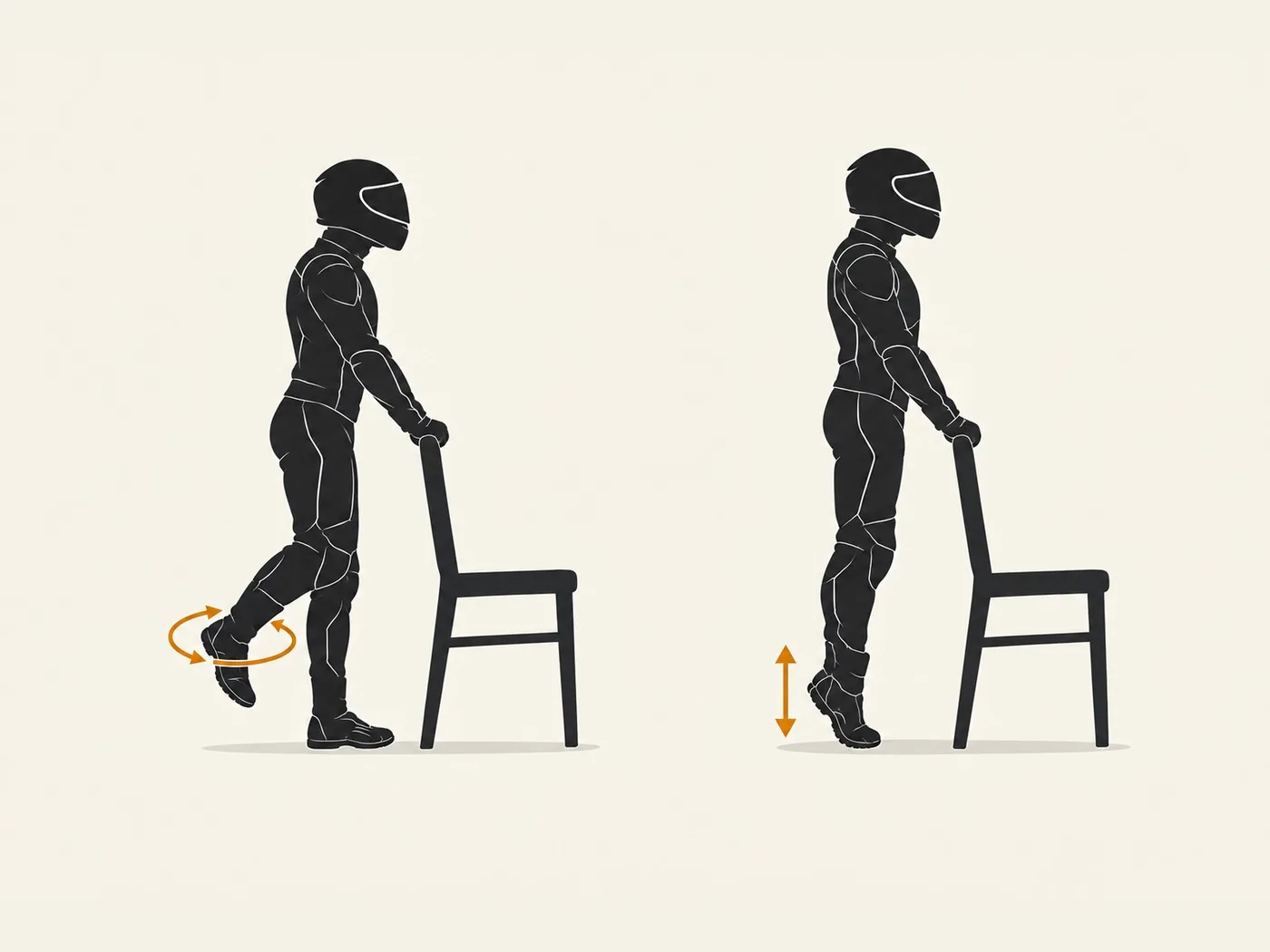
Ankle circles and calf raises
Circle your ankles, then slowly raise and lower your heels, using a stable support if needed.
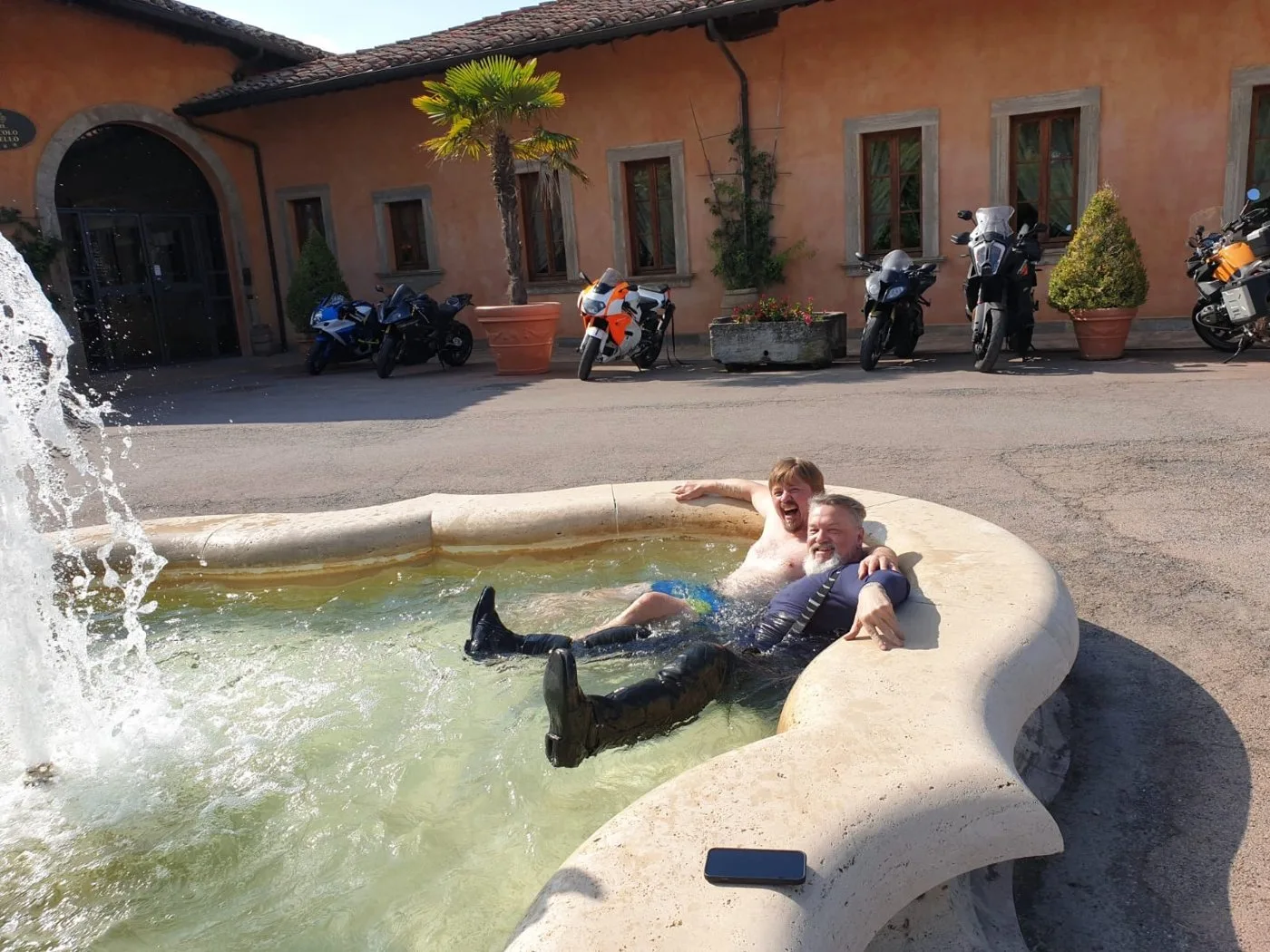
Illustrations show full riding gear for effect only. Your hip flexors will thank you for changing into shorts first.
You don’t have to do everything. A few comfortable movements are enough to give the morning a different start.
10–15 minutes
In the evening
After riding, I’d focus on gentle movements for the areas that feel stiff.
06
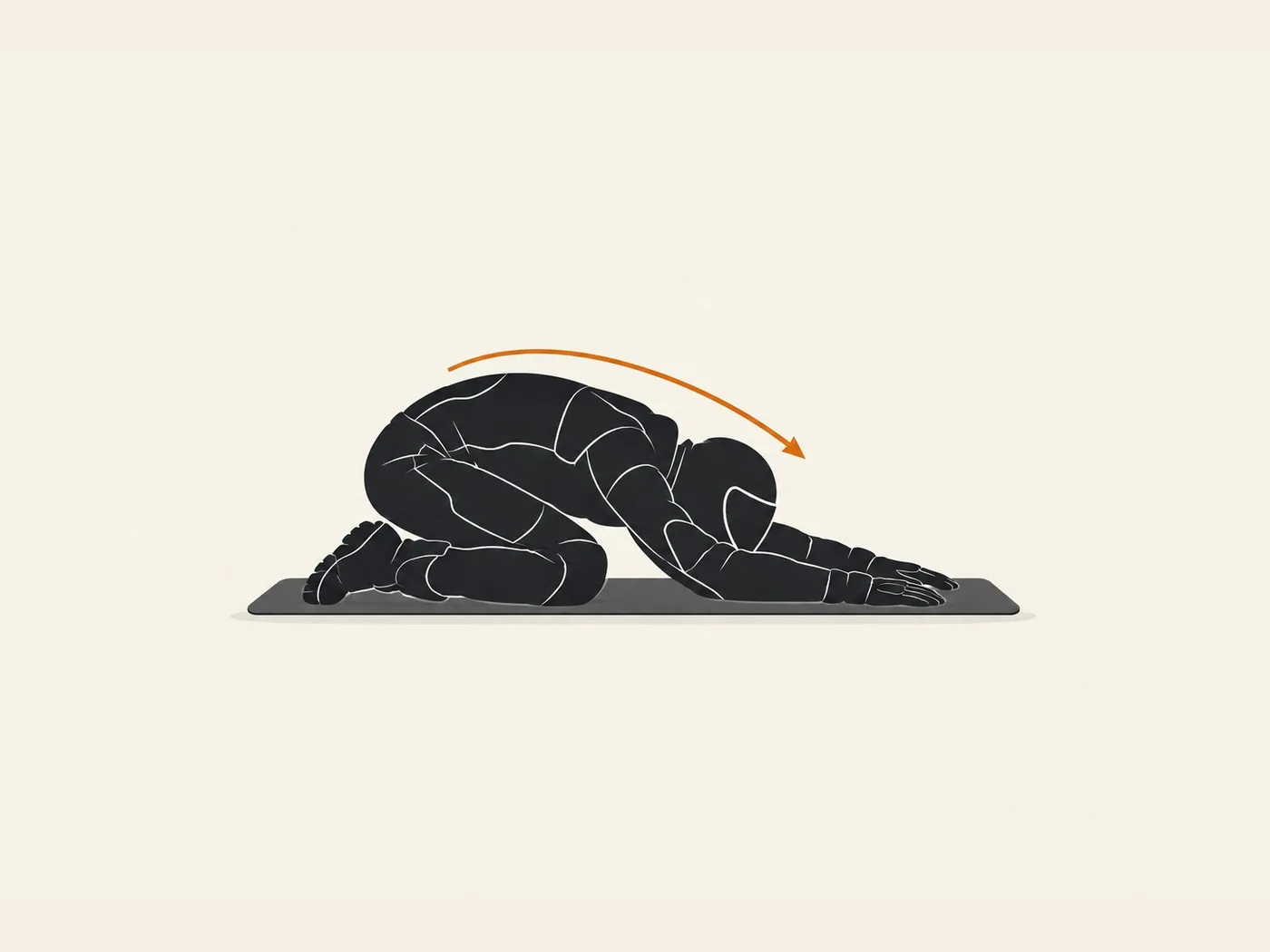
Child’s Pose
A gentle stretch for the back and shoulders, provided your knees and hips are comfortable in the position.
07
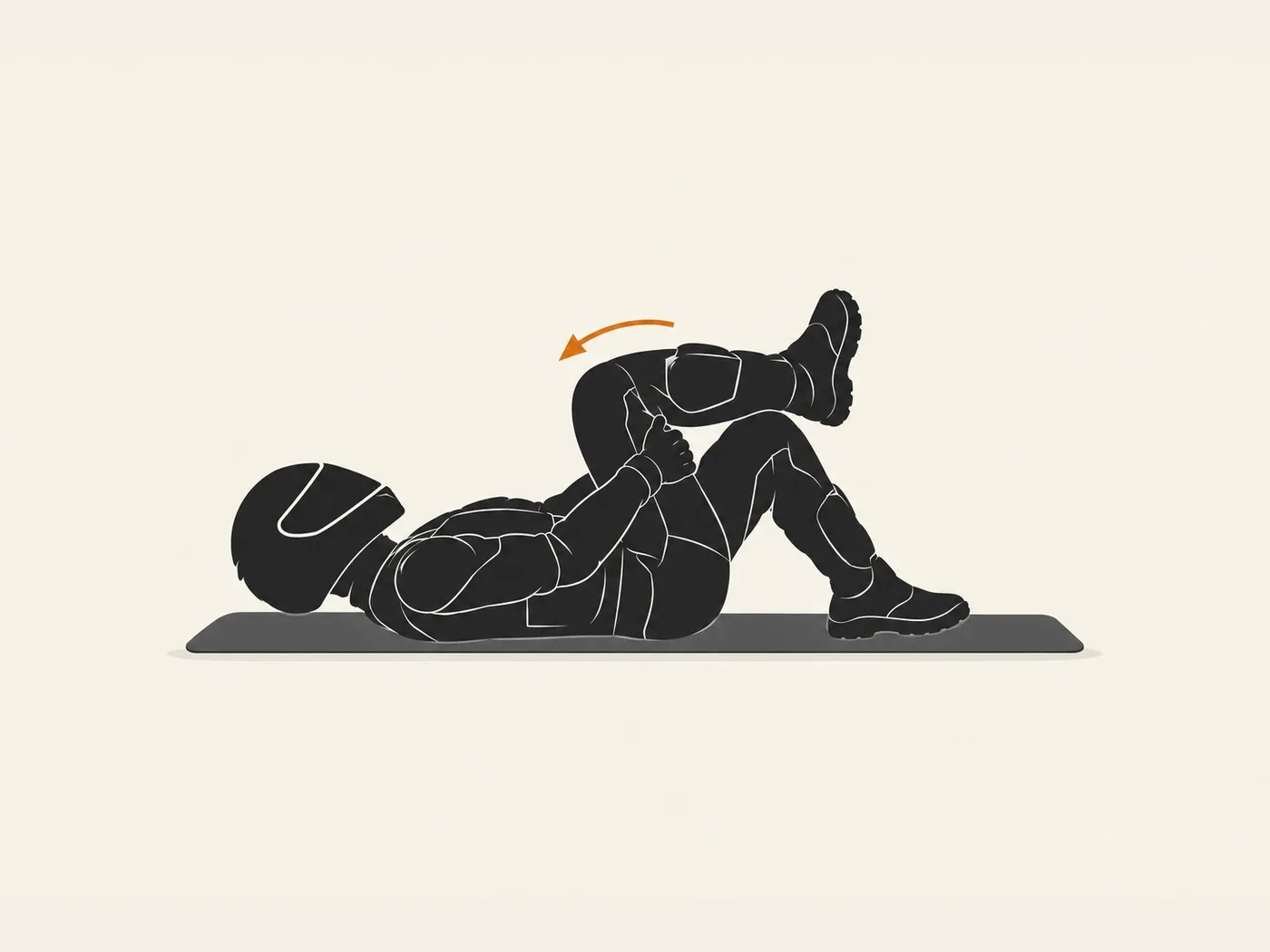
Figure-four hip stretch
Lie on your back, cross one ankle over the opposite thigh and gently draw the supporting leg towards you. This targets the outer hip and buttock.
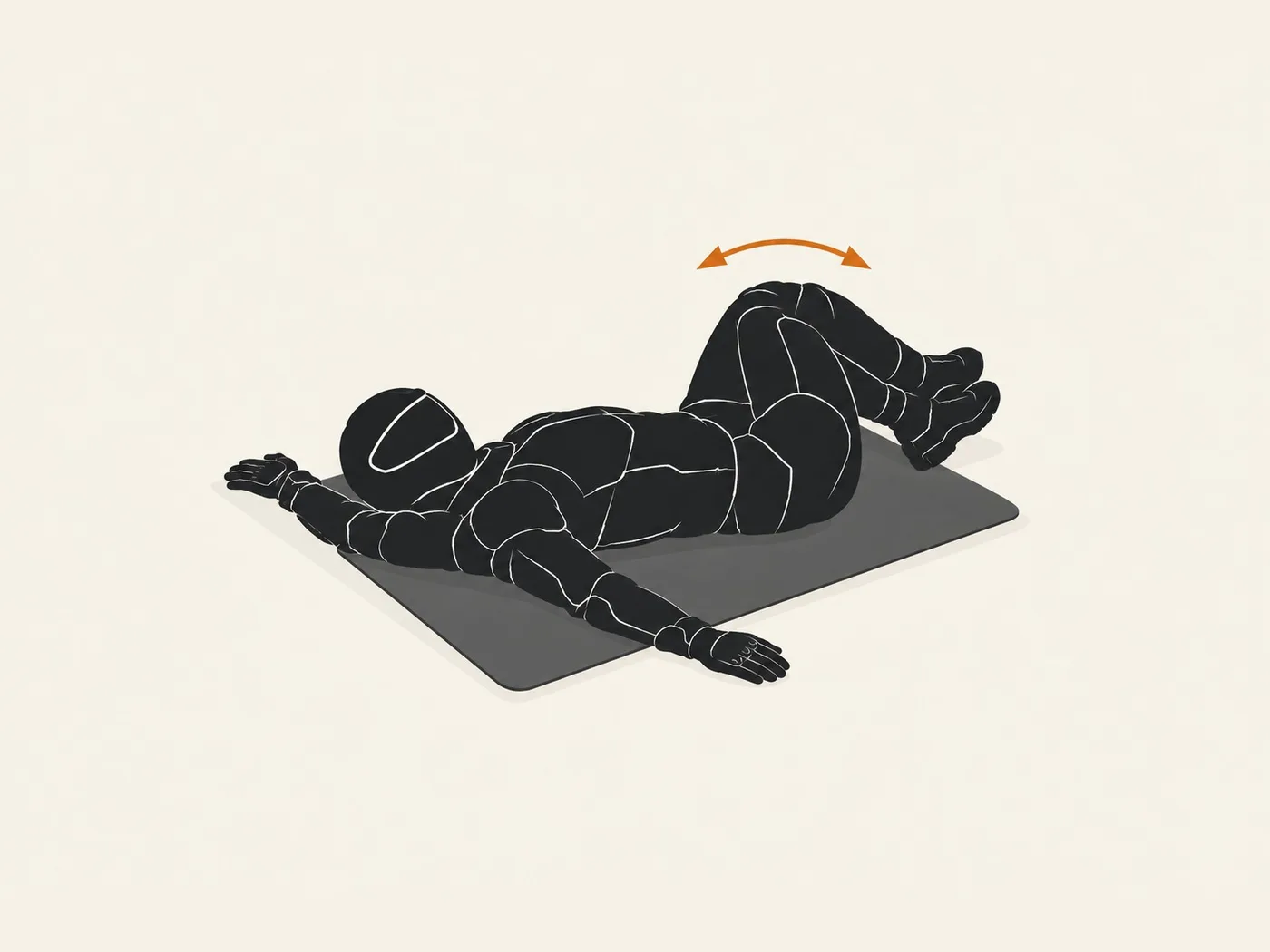
08
Lying spinal rotation
With your knees bent, let them move a short distance from side to side, keeping the movement small and comfortable.
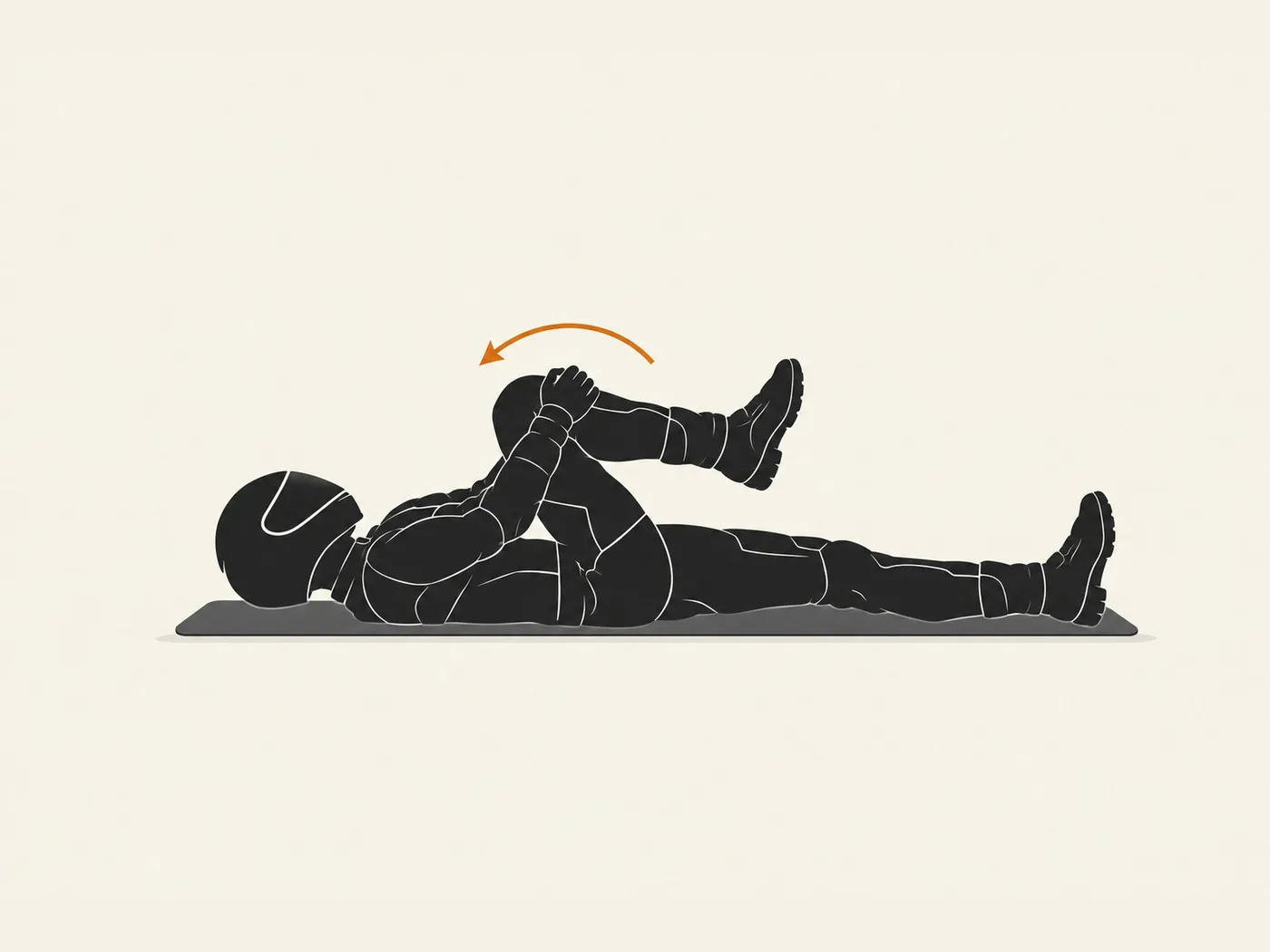
09
Knee-to-chest stretch
Gently bring one knee towards your chest at a time, provided it feels comfortable for your back and hips.
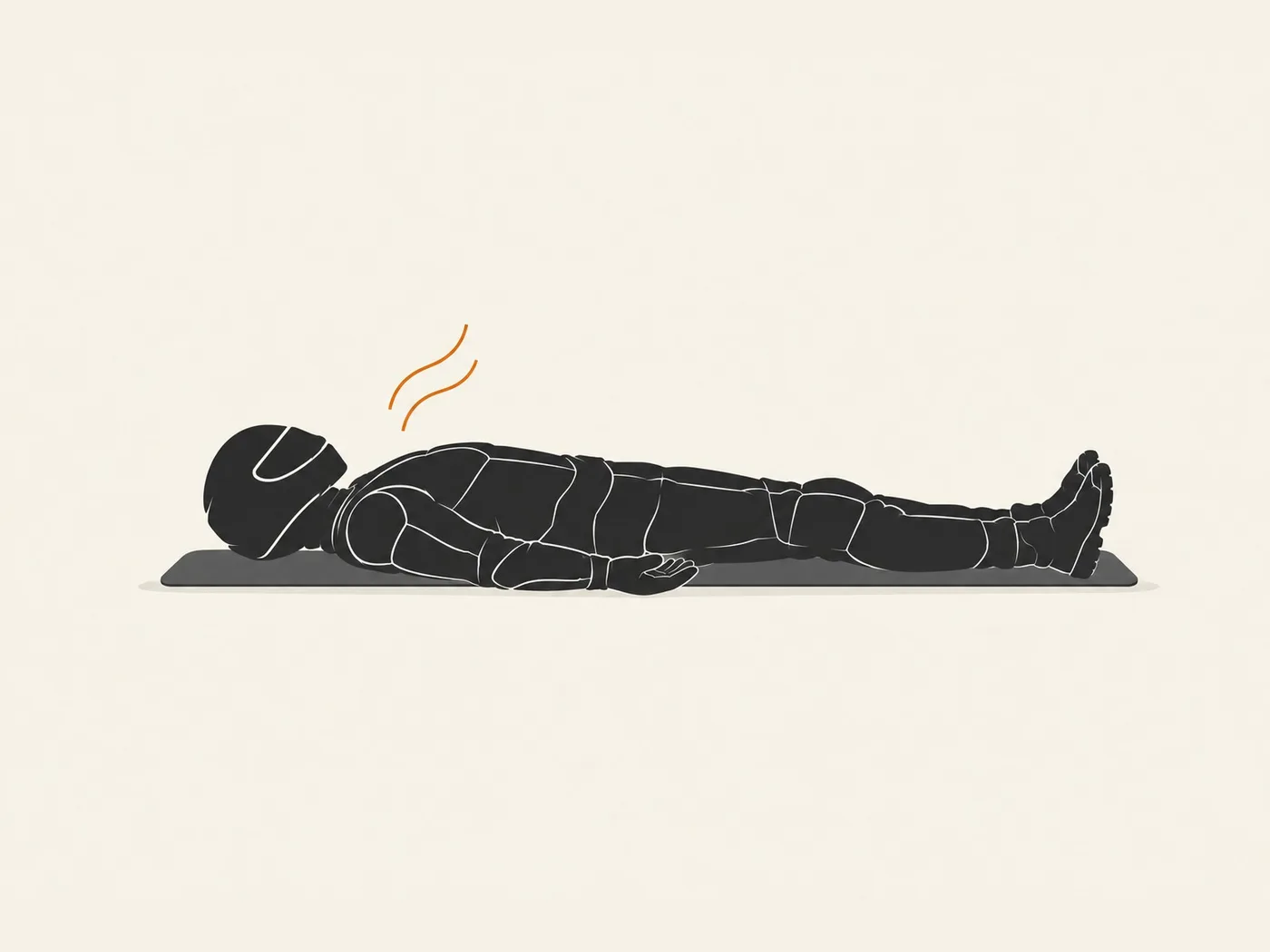
10
Relaxation
Finish by lying comfortably on your back and breathing slowly for a minute or two.
Ten to fifteen minutes is a reasonable target, but it isn’t a requirement. Choose the movements that suit you rather than working through a checklist.
Listen to your bodyNever force a stretch or push through pain. If you have an existing injury or back, knee or hip condition, get advice about which movements are appropriate for you.
02Keep strength exercises simple
I also like the idea of maintaining a little basic strength while touring. Nothing ambitious, just a few exercises that don’t require a gym. Depending on the space available, you could try:
- Wall push-ups.
- Controlled sit-to-stands from a sturdy chair.
- Calf raises while holding a stable support.
- Standing side leg raises, again using support if needed.
Start with a small number of comfortable repetitions. The aim is to keep active, not leave yourself exhausted or sore before tomorrow’s ride. A hotel room, apartment or suitable spot at a campsite can be enough.
03Take a tip from my partner: pack resistance bands
My partner takes elastic fitness bands on our trips, and I think that’s a sensible addition to the luggage.
They take up very little space, always a consideration on a motorcycle, and give you more exercise options without carrying weights or finding a gym. Depending on the band, you can use them for exercises involving your arms, shoulders, back and legs.
On a shorter riding day, you might feel like doing a few light exercises. After a demanding day, they can stay in the bag. That flexibility is the attraction: they’re an option, not another obligation.
Safety firstUse bands according to their instructions, and don’t improvise anchors with furniture or railings that aren’t suitable. A band that slips or snaps back can cause an injury.
04Pack your trainers and shorts
This is one of the simplest tips, but it’s easy to overlook when the panniers are filling up. Make room for comfortable trainers and lightweight shorts.
Riding boots do an important job on the motorcycle, but they’re not always what you want for an evening exploring on foot. Having something comfortable to change into makes a walk much more appealing.
It also gives you options: a morning stroll, a wander along the waterfront or an easy run if running is already part of your routine.
Sometimes the most useful bit of exercise starts with changing out of your riding kit.
05Let sightseeing do some of the work
One of the pleasures of motorcycle touring is discovering places you might never otherwise visit. Once you’ve arrived, leave the bike parked and have a look around on foot. Explore the old town. Walk through a park. Take the longer route to dinner.
I’d aim for around 20–30 minutes when circumstances allow, but I wouldn’t treat that as a rule. Some places invite a whole evening of wandering; some riding days leave you ready for only a short stroll.
If you already run, an easy run might appeal too. But there’s no need to start a running programme halfway through a motorcycle holiday.
06Make use of a swimming pool
A swimming pool is a welcome bonus at a hotel or campsite, particularly during a summer tour. After a hot day on the motorcycle, a relaxed swim can be an enjoyable way to move and unwind.
Swimming offers low-impact exercise, but it doesn’t have to become a serious session. A few easy lengths, or gentle movement in the water, may be all you want.
Be realistic about your energy levels and swimming ability. Don’t get in when you’re too fatigued to swim safely, and take care on slippery poolside surfaces.
One more piece of advice, learned the hard way: make sure it actually is the pool. And remember that note about the illustrations? It applies to water too.
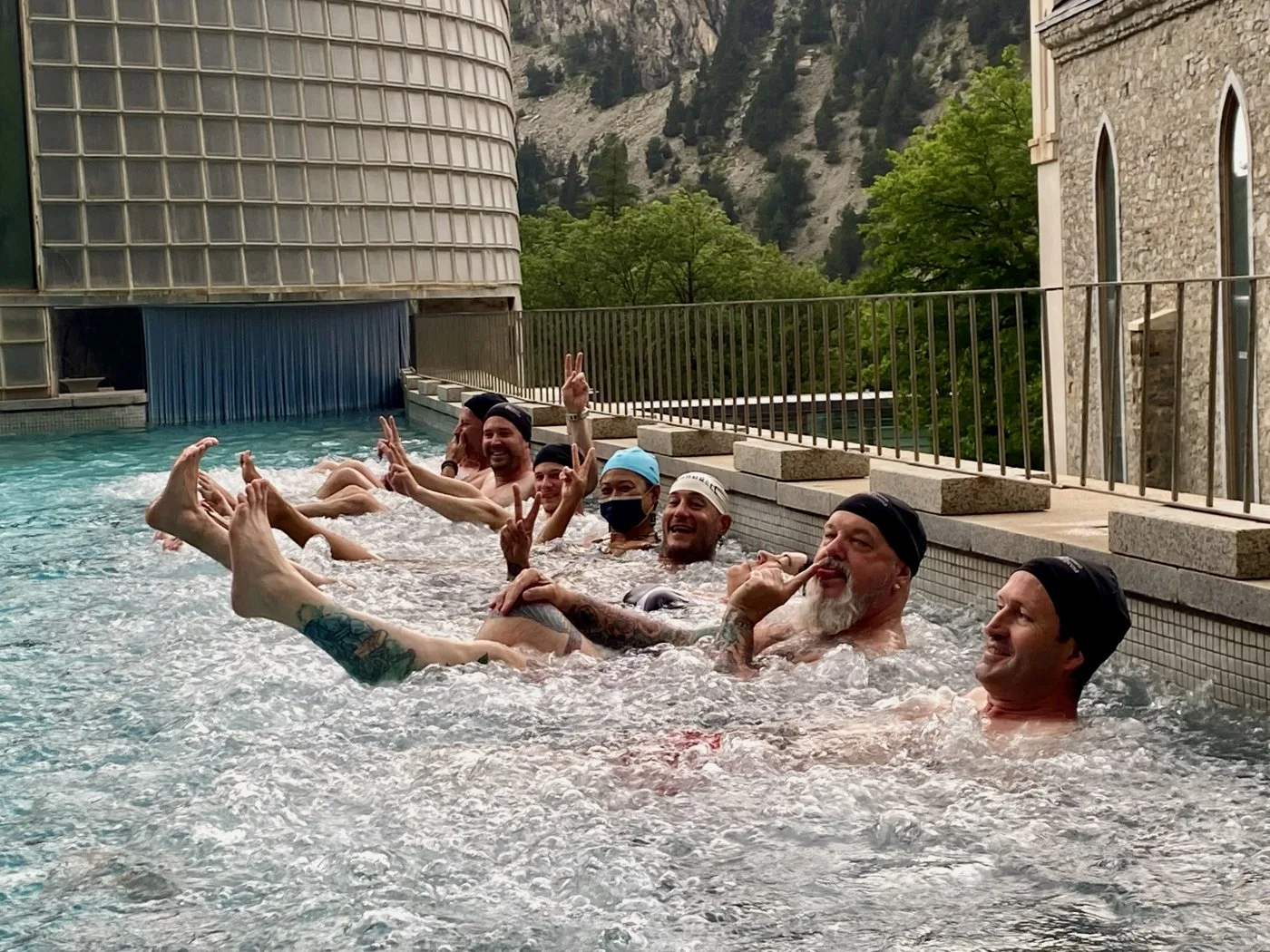
07Build breaks into the riding day
What you do before and after riding matters, but so does breaking up the hours in the saddle.
I’d use roughly 60–90 minutes as a starting point for planning stops, not as a rule to ride by. The roads, weather, fatigue and how you feel should decide when you stop. If you need a break sooner, take one.
Get off the bike, walk around for a few minutes and gently move your shoulders, legs and ankles. Have some water and give yourself time to rest.
Don’t feel obliged to keep going simply because the route says you have another hundred kilometres to cover. Sometimes the better decision is a longer stop, a shorter route or an earlier finish.
The itinerary should work for you, not the other way round.
08Don’t overlook food, water and sleep
Exercise is only one part of looking after yourself. It’s easy to get absorbed in the riding, put off a meal or forget to drink regularly, especially when you’re trying to reach somewhere before the end of the day.
Make room for regular, balanced meals, water and enough sleep. And remember that not every day needs to involve a huge distance. A shorter riding day can leave time for a walk, a swim, a look around town or simply a proper rest.
A beer or two, and plenty of water
Let’s be honest: for a lot of us, the best part of a long day in the saddle is that first cold beer once the bike is parked up for the night. One or two. Ish. I’m not here to judge, and I’m certainly not here to count.
But beer is not a hydration strategy, however convincingly you argue it at the bar. Keep sipping water while you ride, at every stop and again before bed. Your future self, the one pulling damp boots on at eight the next morning, will be very grateful.
Dehydration is sneaky. It doesn’t announce itself; it just makes you tired, hands you a headache and quietly steals your focus, usually somewhere around the fourteenth hairpin. Focus is the one thing you really can’t leave at the hotel.
In the warmer weather we’ve been having, I’d also pack a few sachets of oral rehydration salts (ORS). Don’t let the word “salts” put you off; they don’t taste salty. If you look around you can find them in nice flavours like orange, so it’s basically fancy flavoured water with a job to do. If you’re starting to feel the heat, they put back the salts and minerals you’ve sweated into your jacket far better than plain water alone. They weigh next to nothing and fit in a tank bag, which is more than can be said for a crate of beer.
Good to knowMix ORS exactly as the packet says. If you have a heart or kidney condition, or you’re on a low-salt diet, check with a pharmacist or doctor first. And if you feel dizzy, confused or really unwell in the heat, stop riding, get into the shade and get help.
Look after yourself as well as your motorcycle
I don’t want a motorcycle tour to feel like another schedule I have to follow. But on a longer trip, I do want to keep moving and give my body some attention.
For me, that means a little yoga or gentle mobility work, a few simple strength exercises and my partner’s idea of packing resistance bands. Add comfortable trainers, some exploring on foot and an occasional swim, and there are plenty of ways to stay active without finding a gym.
Some days, I might do more. Other days, a short walk and a few gentle stretches will be enough.
Motorcycle touring is about the roads, the scenery, the people and the places you discover. Looking after yourself is there to help you enjoy those things, not compete with them.
Prepare your body with a little of the care you give your motorcycle, then leave yourself free to enjoy the journey.
Over to you
Got a health tip that keeps you going on tour? A stretch that saves your back, a trick for remembering to drink water, or a snack that actually survives a day in the tank bag? I’d love to hear it.
Even better, send me your story about a time staying fit helped you out on the bike. Picking up a fully loaded bike on a gravel hairpin. Pushing it the last kilometre to a petrol station after being a bit too optimistic about the fuel range. Or simply being the only one in the group who could still walk to dinner on day five.
The best tips and stories might make it into a future article or newsletter, with your permission, of course.
Ride safe, keep moving, and enjoy every kilometre.
— Alan | Motorcycles & Legends
The exercises in this article are general suggestions, not medical advice.