For the site, I really wanted a few great routes from the States. I've been to America many times, but for tattooing rather than riding, and nearly always in a car. Along the way, though, I've been lucky enough to meet some great people who happen to be keen motorcyclists from every corner of the sport.
This route comes from one of them: Jeremy Simmons. Jeremy has a long riding background in motocross, road racing, supermoto and stunt riding. Basically, if it has two wheels, he wants to ride it as fast as it will go.
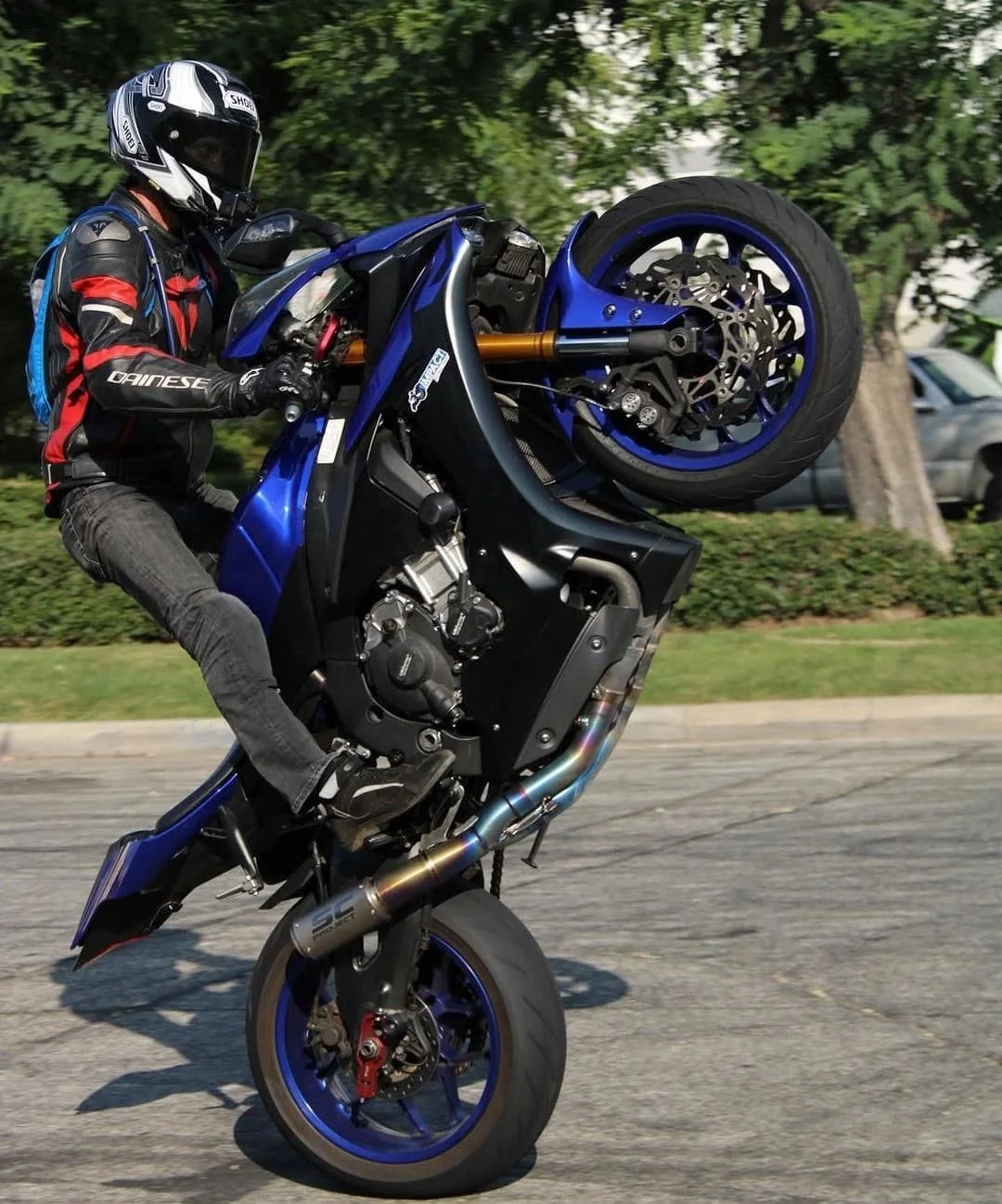
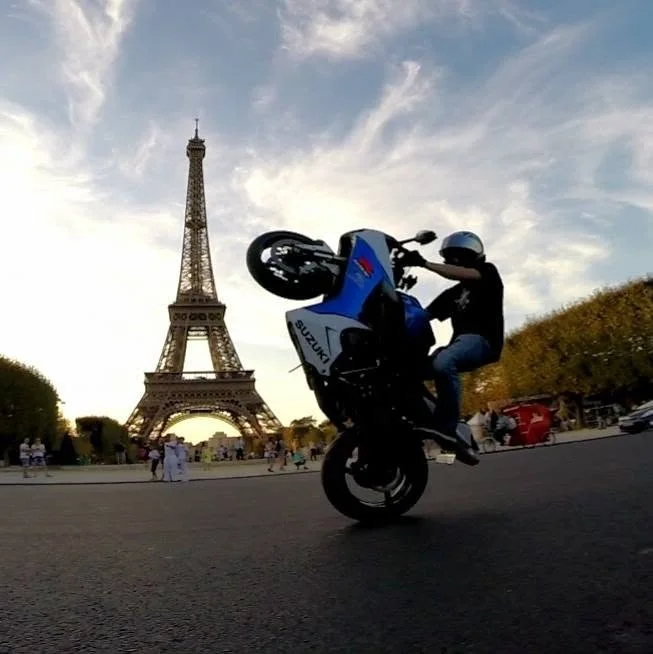
Jeremy stunt riding · A little stunt riding in Paris
We met on my first Cannonball, in Morocco, which started in Spain. There was a real buzz about the event, and I didn't know anyone. Then a group of Americans turned up on rental bikes and started swapping the exhausts for louder, lighter ones. That was Jeremy. Within a few minutes his exhaust was on, and it was definitely one of the loudest there. Whether it was louder than Thomas "the Thomanator" and his Honda X-11 streetfighter with Supertrapps is still up for debate, but that was the trend back then, and they both deafened me in the tunnels.
Jeremy's lust for motorcycle travel around the world is matched only by his love of the back wheel. Yes, Jeremy likes a wheelie, as you'll see in the photos, and he entertains the locals everywhere we go. Slippery roads that make some of us cautious are just a chance for a fun rolling burnout for Jeremy, which makes me appreciate the skill he's built up through years of practice.
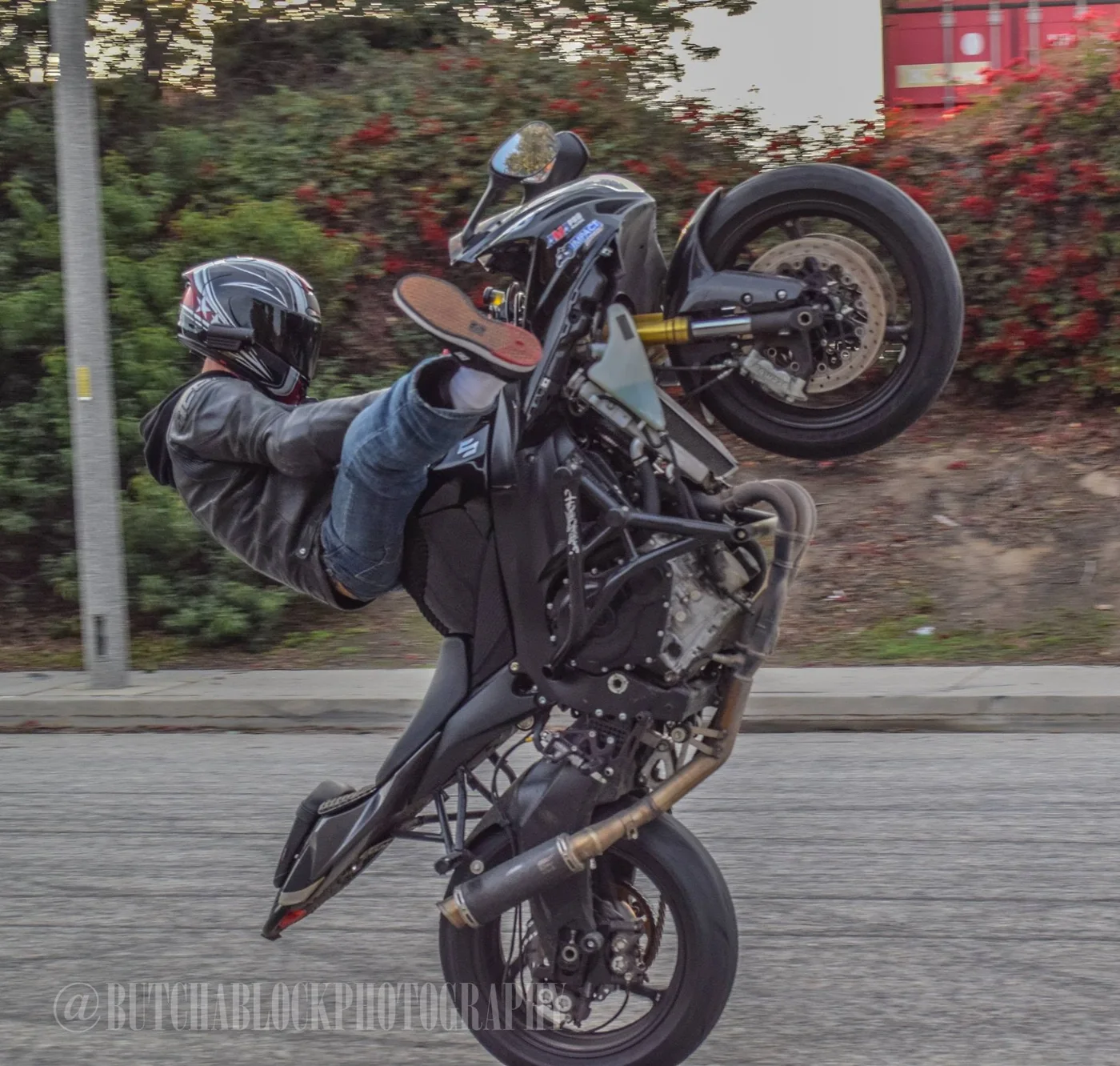
Wheelies wherever he goes
Many years and many kilometres later, I thought I'd ask him for a route and a few questions. Enjoy the read, the route and the Q&A.
Q&A with Jeremy Simmons
1. How it all started
Alan: Jeremy, we've known each other since the Cannonball Bike Run in Morocco back in 2011, but readers don't know your story yet. How did you first get hooked on bikes, and how did that lead to motocross and then MotoAmerica?
Jeremy: Someday, I will probably write a whole book answering just this one question. I think as with most riders, it started when I was maybe 5 or 6 years old and couldn't help but stare out the back windows of the family car when I saw a motorcycle. Another 5 or 6 years later, I lived in a small town and a couple of my friends in the neighbourhood got dirt bikes one Christmas and would ride on the trails and fields near the house. From that point on, there was never anything I wanted more in life than a motorcycle.
I didn't end up getting my first bike until I graduated high school. It was a 1991 KX250. I would later learn that a 250 two-stroke was way too much bike for a new rider, but I rode it down the power lines in the neighbourhood until I got in trouble, then found some open land people would ride in, and I got in trouble with the police for that.
When I got that first bike, I was all in. I subscribed to all the motocross magazines and read each one front to back. That summer, I learned there was a big national motocross race just a few hours away and went to watch. During the event there were announcements for the amateur races the day after the national and I thought, “No way, I can actually race a dirt bike?” About a month later there was another national a few hours away, and I signed up for the amateur day. Just three months after getting my first dirt bike, I was racing on a national motocross track.
I think I raced one more amateur day after a national before I learned there were actually small local tracks and a local racing series. That is when it all started. Over the next five years, I quickly moved up through the ranks. I ended up moving to Southern California, since it was the centre of the motocross universe, I could ride and train year round, and I intended to turn pro.
My first real job was at a dot-com in their heyday, only for them all to crash a year later. It took me a long time to find another job, and even longer to recover financially to afford to race motocross. I'd had a street bike for a couple of years and got much more involved in that scene in California. The racing bug hit me again and I started road racing, because somehow I thought I could afford road racing when I couldn't afford to race motocross. But I made it work and again quickly moved up through the ranks. Just two years into road racing, I entered my first pro national race and actually finished within the payout and won some money. That has been my life, more or less, ever since.
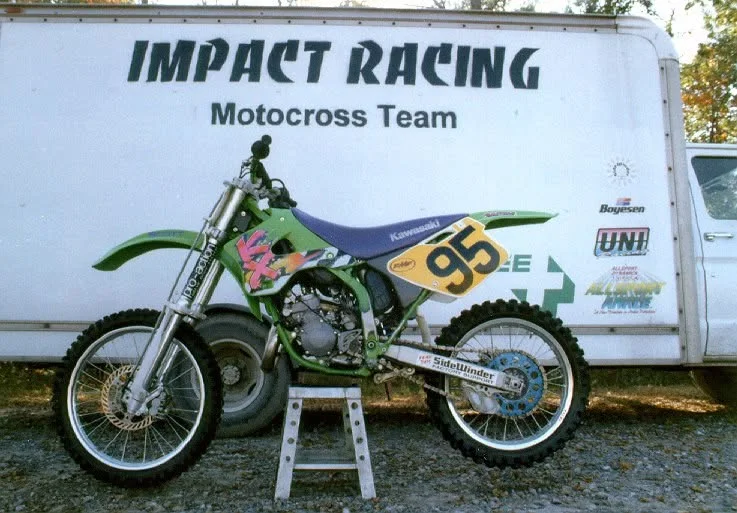
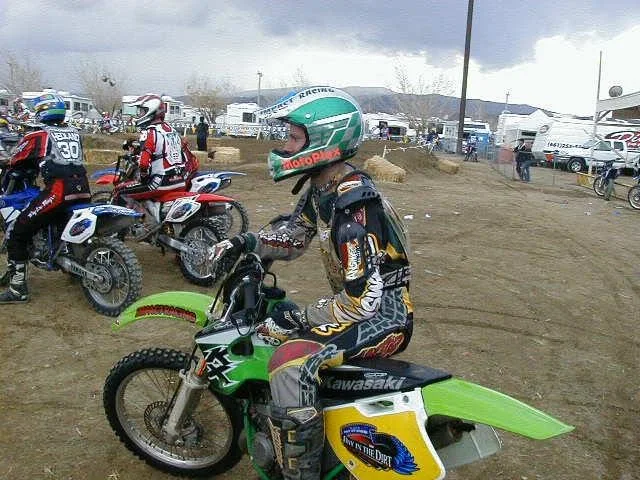
One of Jeremy's early motocross bikes · Preparing to start a motocross race
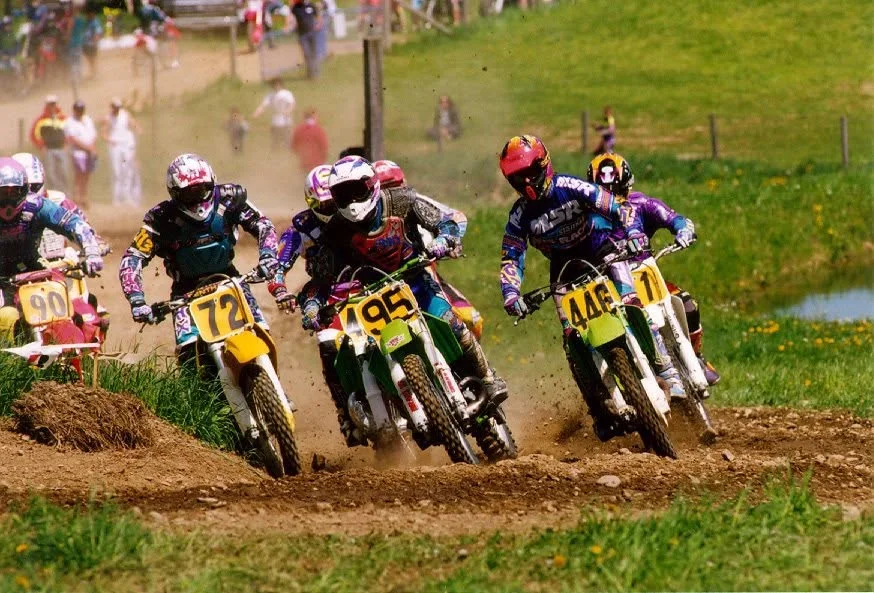
Jeremy, number 95, going for the holeshot
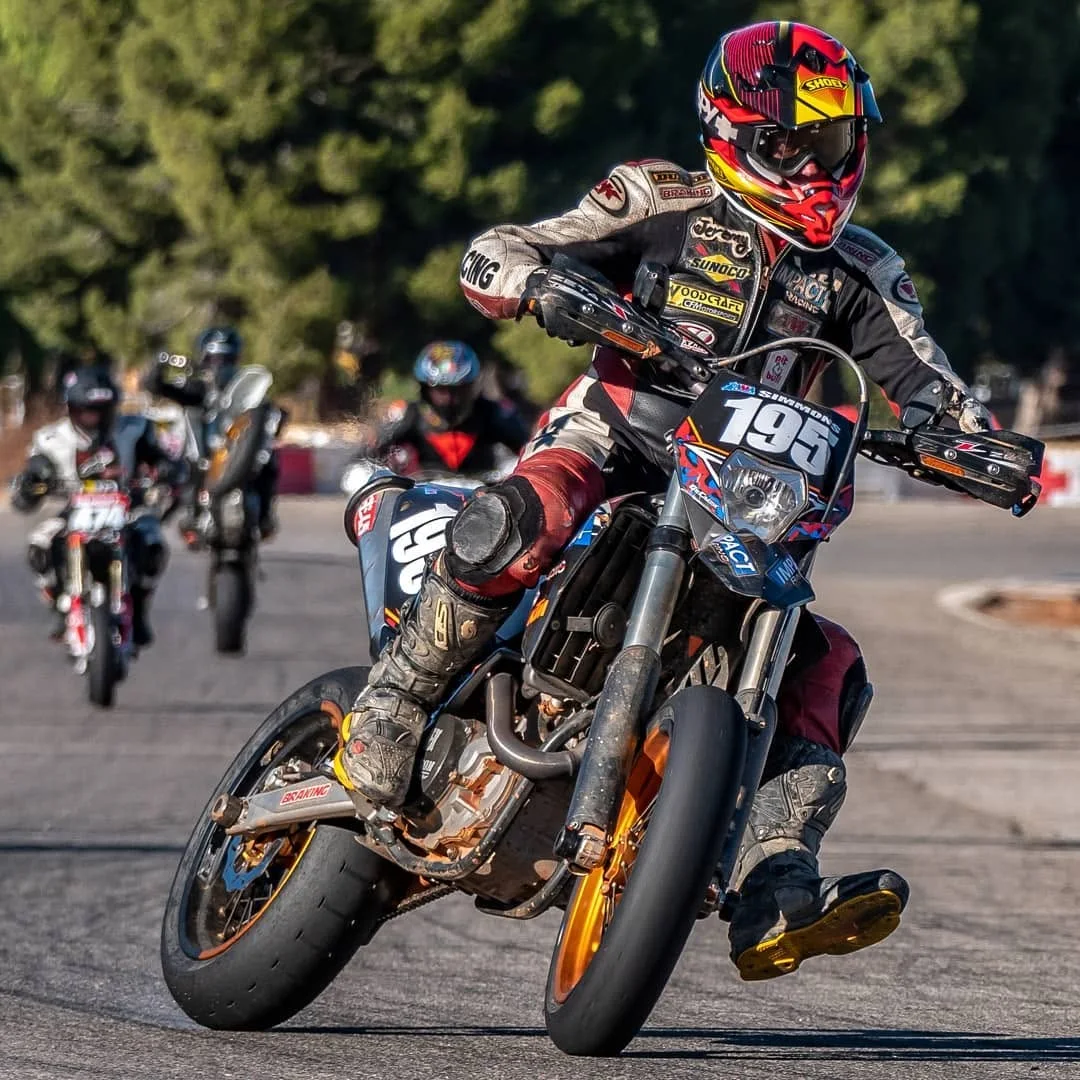
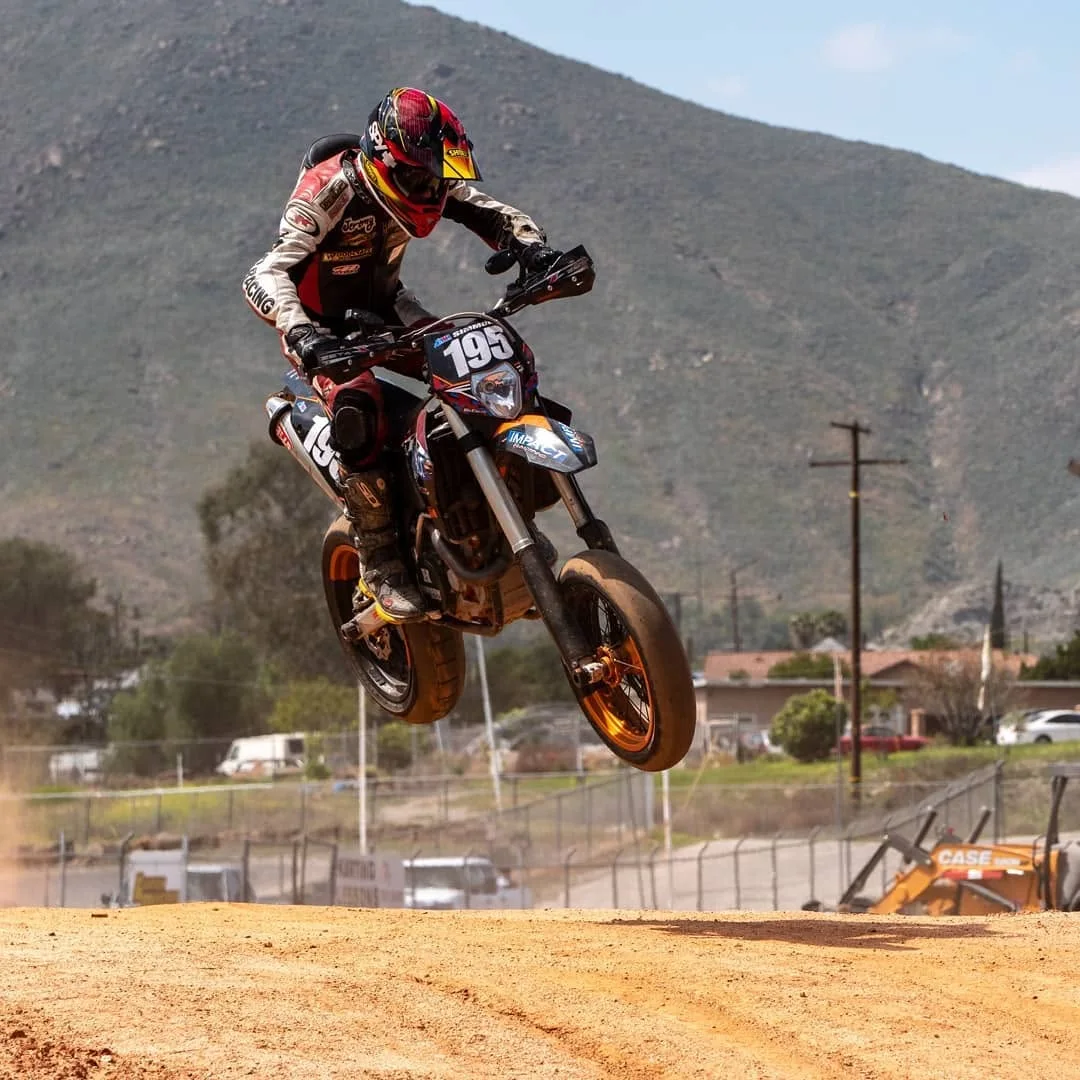
Leading a supermoto event · High flying on the supermoto
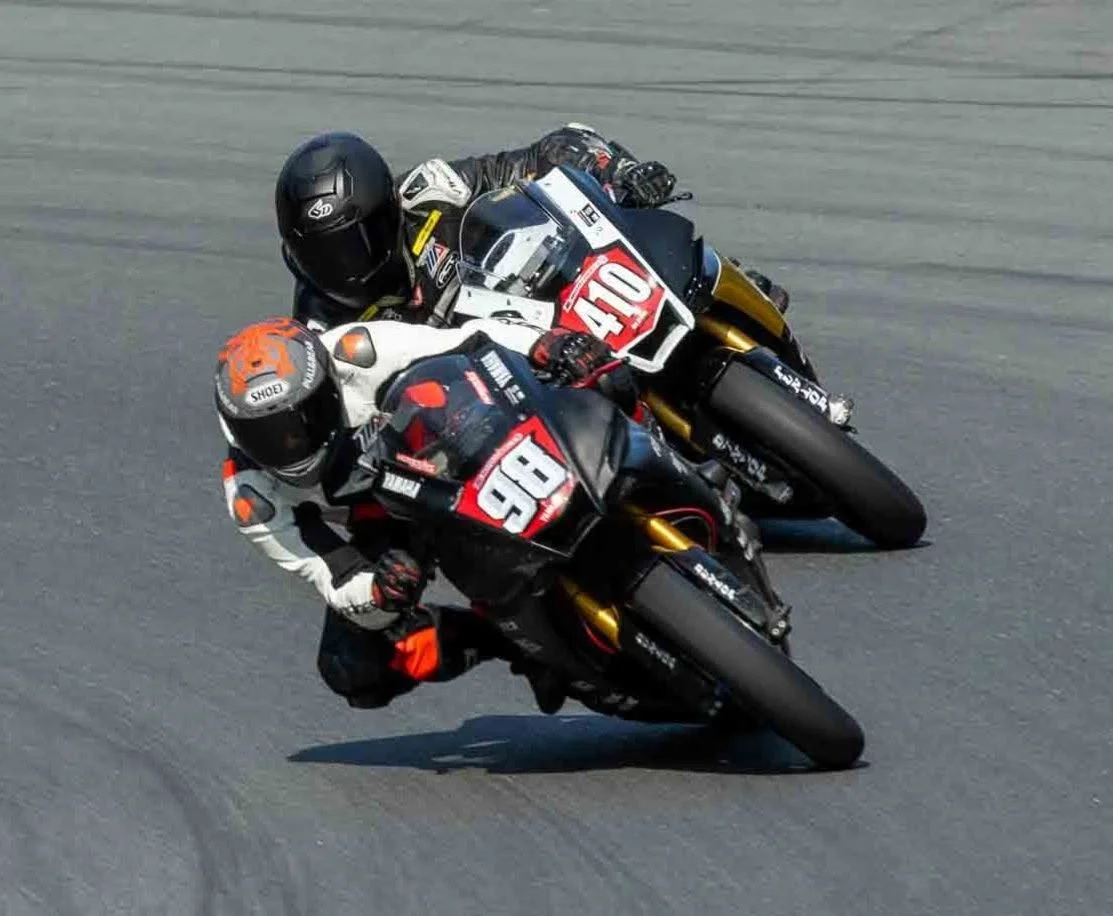
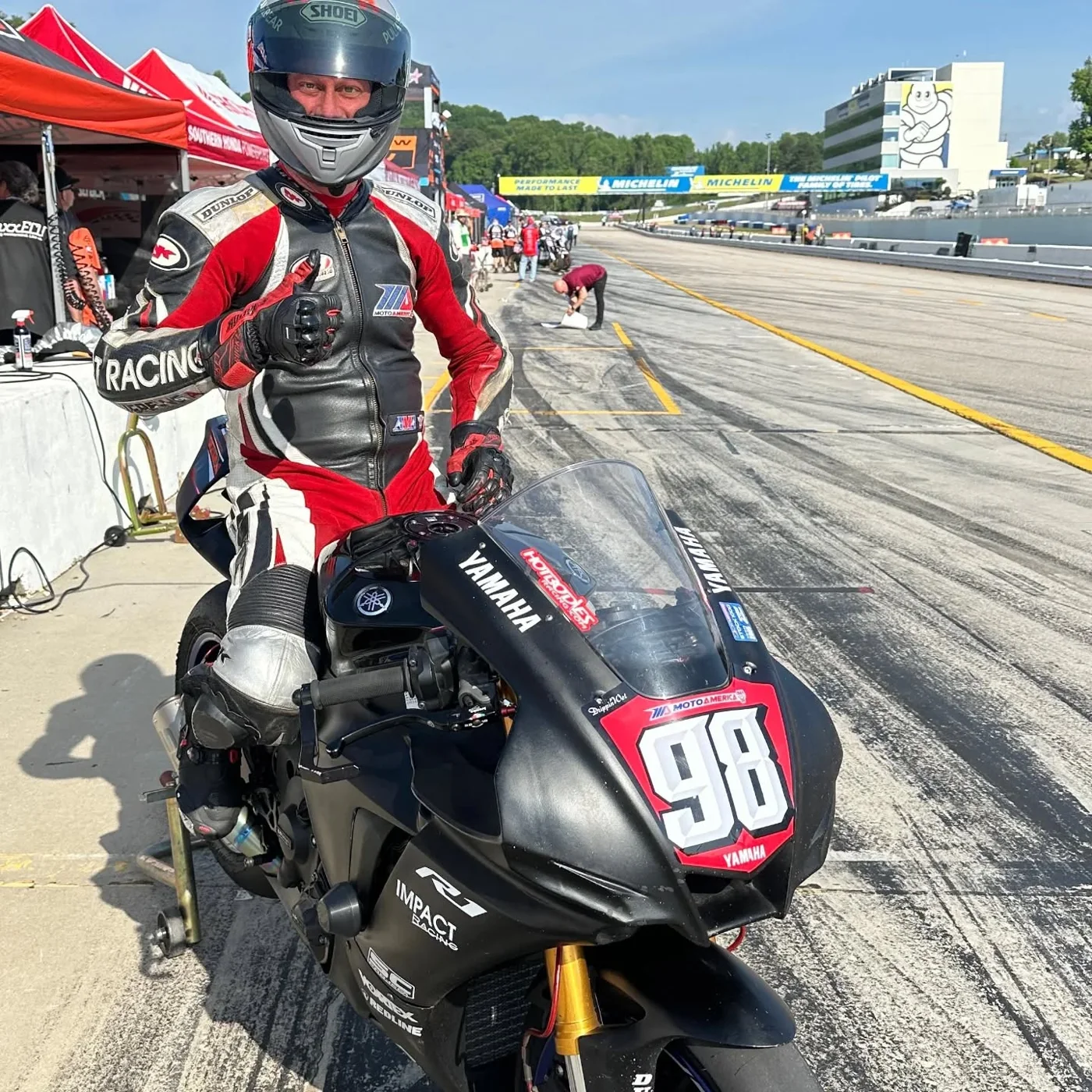
Number 98 ahead in the turn · Another race day for Impact Racing
2. From track to touring
Alan: We've done a lot of kilometres together at a nice brisk pace, but touring is still very different from racing. How does your mindset change when you swap the track for the open road?
Jeremy: A lot of people have a hard time with this, but for me, they are totally separate, distinct disciplines, like being fluent in another language. I can completely turn off the racing when riding on the street, and completely turn off the street mentality when on the track.
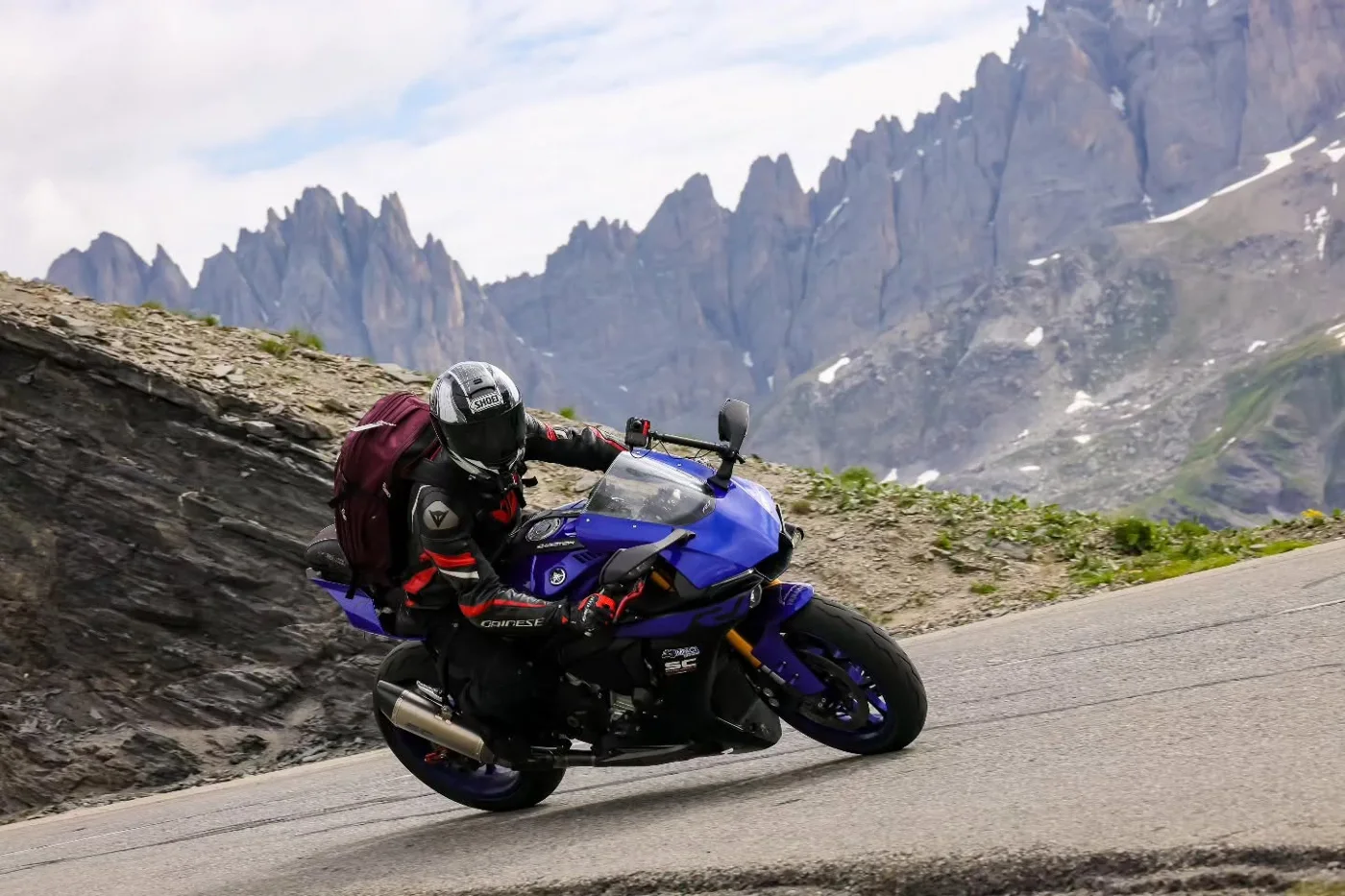
Jeremy on his R1 in the mountains
3. The motocross advantage
Alan: I've watched you ride all over Europe, so I have my own ideas, but does your motocross background really help on public roads, especially when the conditions get rough?
Jeremy: Of course. Motocross skills carry over to every other form of motorcycle riding. If there is one piece of advice I would give to any rider or racer, it's to become proficient at riding dirt bikes. It has saved my life countless times on the street, saved me from a ten-bike pile-up on the track, and has really been the solid foundation for all my riding. It teaches you confidence and how to recognise the limits of your skills and your bike. It trains you how to react in unexpected situations and avoid crashes, and it greatly improves your reaction time.
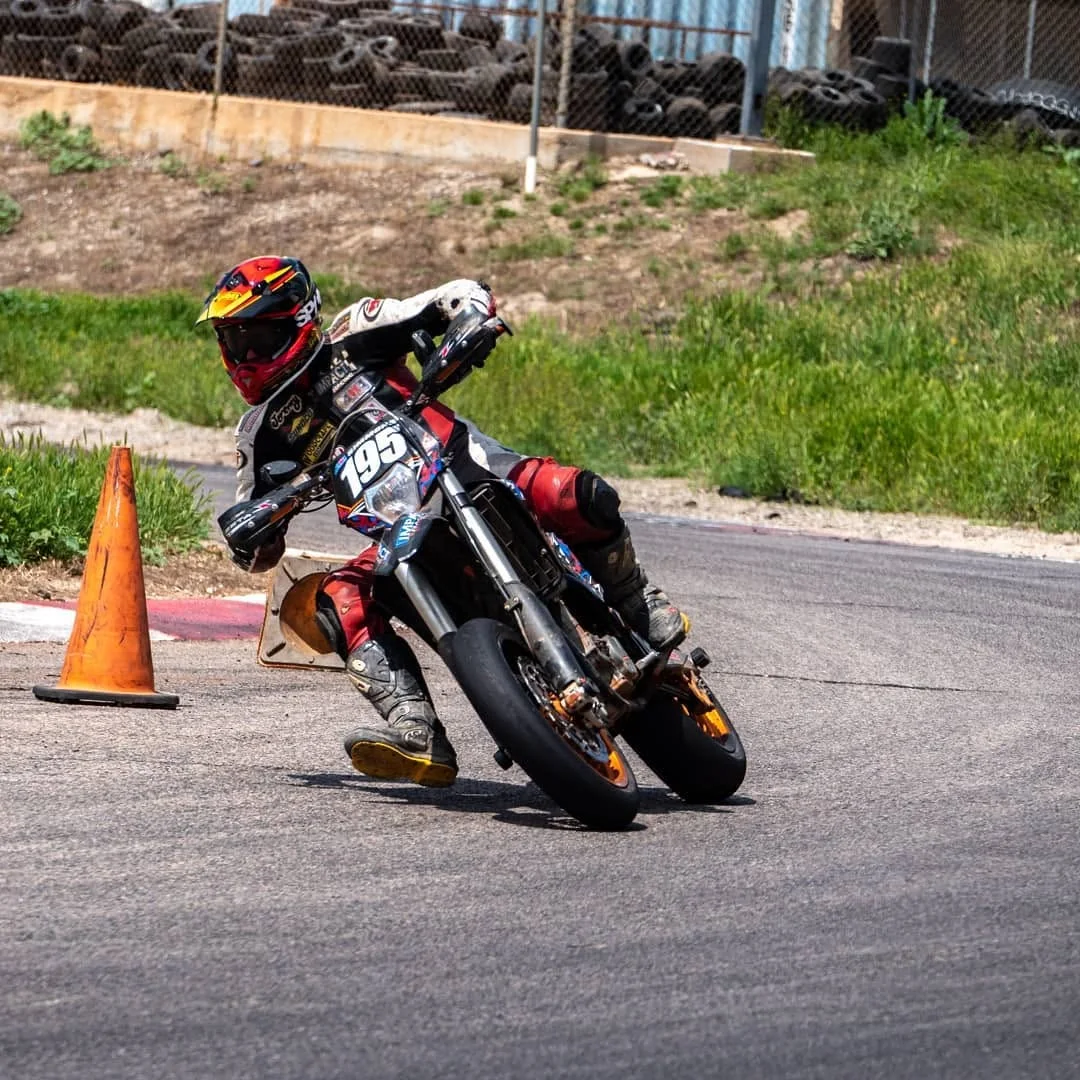
Jeremy ahead of the pack
4. The Cannonball
Alan: Morocco 2011 was my first Cannonball and where we met. What first drew you to the Cannonball, and what's the biggest challenge you've had on one?
Jeremy: I used to promote a large bike meet in California. We were getting 800+ bikes every Wednesday night, mostly sport bikes. I claimed it was the largest weekly sport bike gathering in the country, a claim that probably would still hold true today. I think it was 2007 or 2008 when one of the Cannonball promoters contacted me because of my bike meets, and asked my thoughts about having a Cannonball in the States. I told him absolutely not. With our police system here, it wouldn't last a day.
But that's how I learned of the Cannonball Bike Run. It sounded interesting and fun, and aside from crossing the border and riding in Canada a few times, I had never ridden in another country and I had never travelled overseas. I signed up and did my first Cannonball in Morocco in 2009.
As for my biggest Cannonball challenge? There have been quite a few, mostly delays with shipping my own bikes over, but the biggest was probably just a couple of years ago. My R1 developed an intermittent electrical issue on my way to the Cannonball start and it became so bad and dangerous I couldn't continue. I got a rental, missed the first day of Cannonball riding and had some issues with border crossings. It was definitely my least enjoyable Cannonball ever, and I thought about just getting on a plane and going home several times.
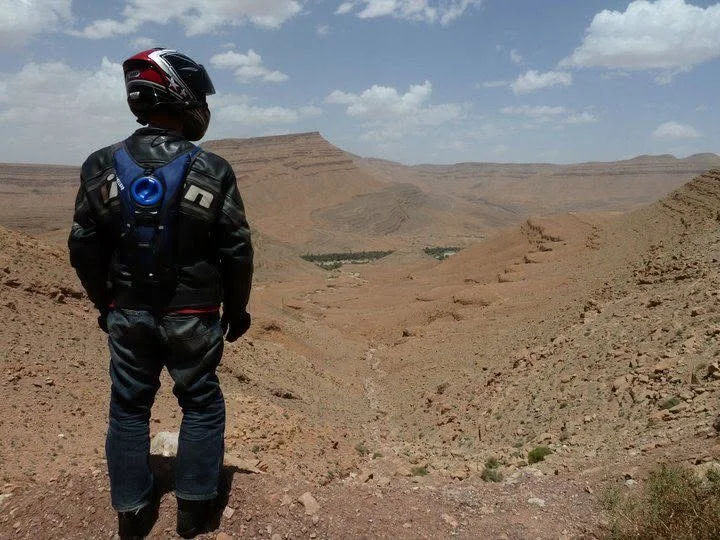
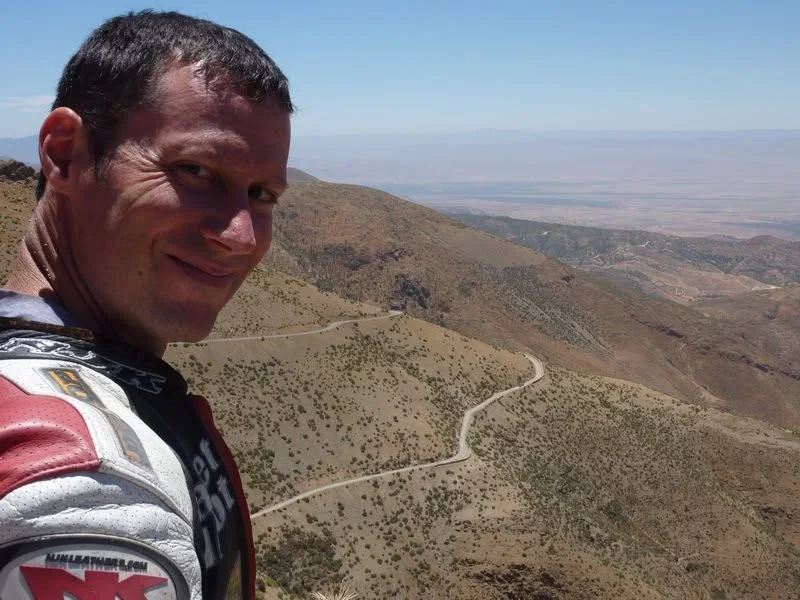
Jeremy enjoying a Morocco view · Morocco on the Cannonball
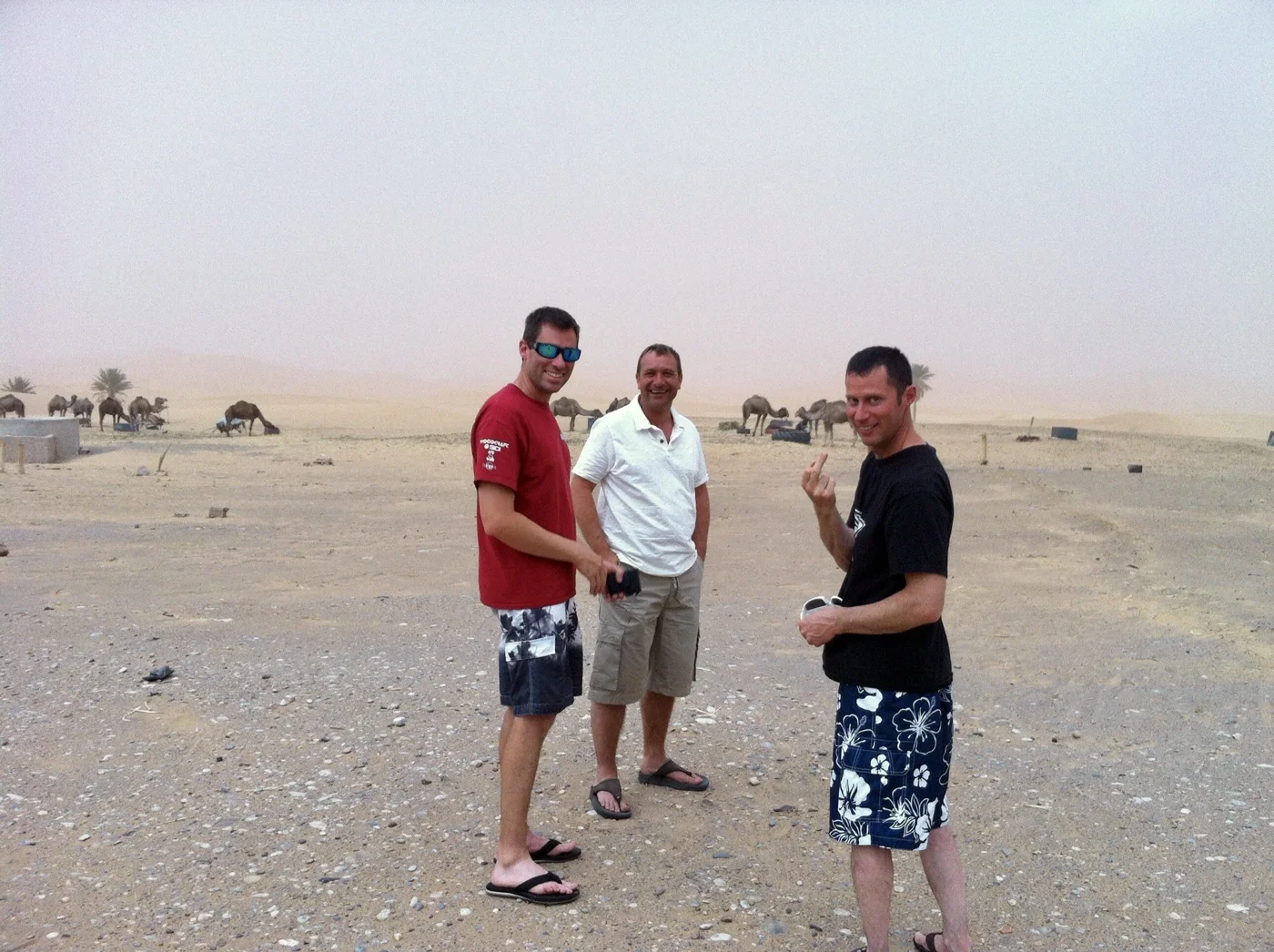
Jeremy issuing the international symbol of approval
5. The Cannonball bike
Alan: Which bikes have you taken on the Cannonball over the years, and which one turned out to be the best for the job?
Jeremy: In the early days it was easier to find sport bikes for hire, so I rented a couple of times. Always the same bike I had at home, so I could bring my own parts to put on it. One year I brought an exhaust with me on the plane for a hire GSX-R600, because I can't stand riding a quiet bike. One year I shipped my own GSX-R750 over and back, and the following year I shipped a 750 over to leave there. I rode that bike on the Cannonball for several years until I got tired of being left in the dust by litre bikes, so then I sent over an R1.
The Cannonball changes every year: not just the places we go and the type of roads we ride, but the riders as well. In my earlier Cannonball days, it was all about the litre bike and fast, open roads. Today, the Cannonball has such a variety of roads that almost any bike is going to do a good job. For me, I just love litre bikes too much to even think about anything else, but it was certainly a challenging bike to ride on the very tight, high mountain switchbacks we rode during Cannonball 21 Cols. The best overall bike for the job would probably have been the 750, but there's a fun factor with the R1 that I can't ignore.
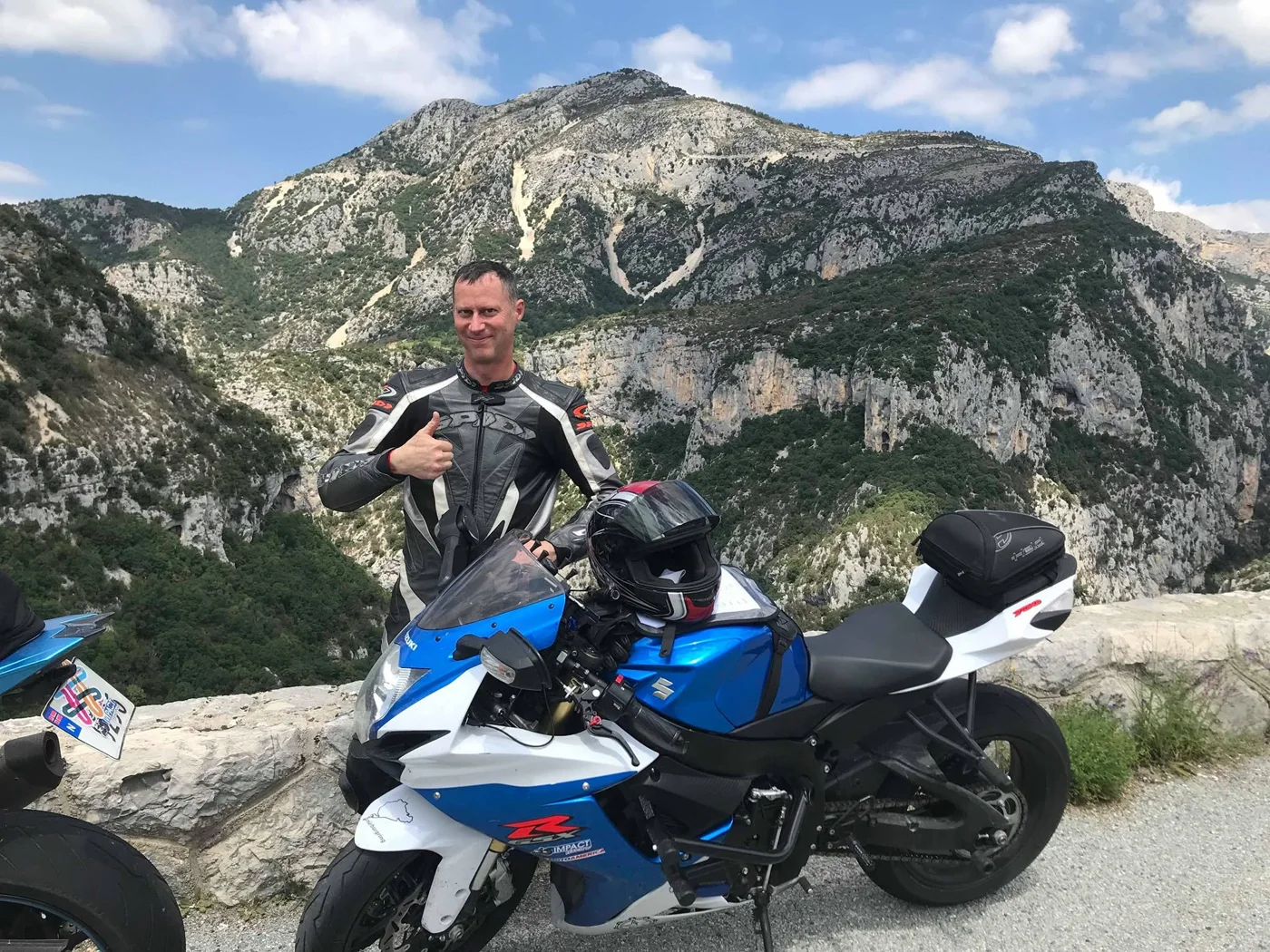
Jeremy with his Suzuki GSX-R750
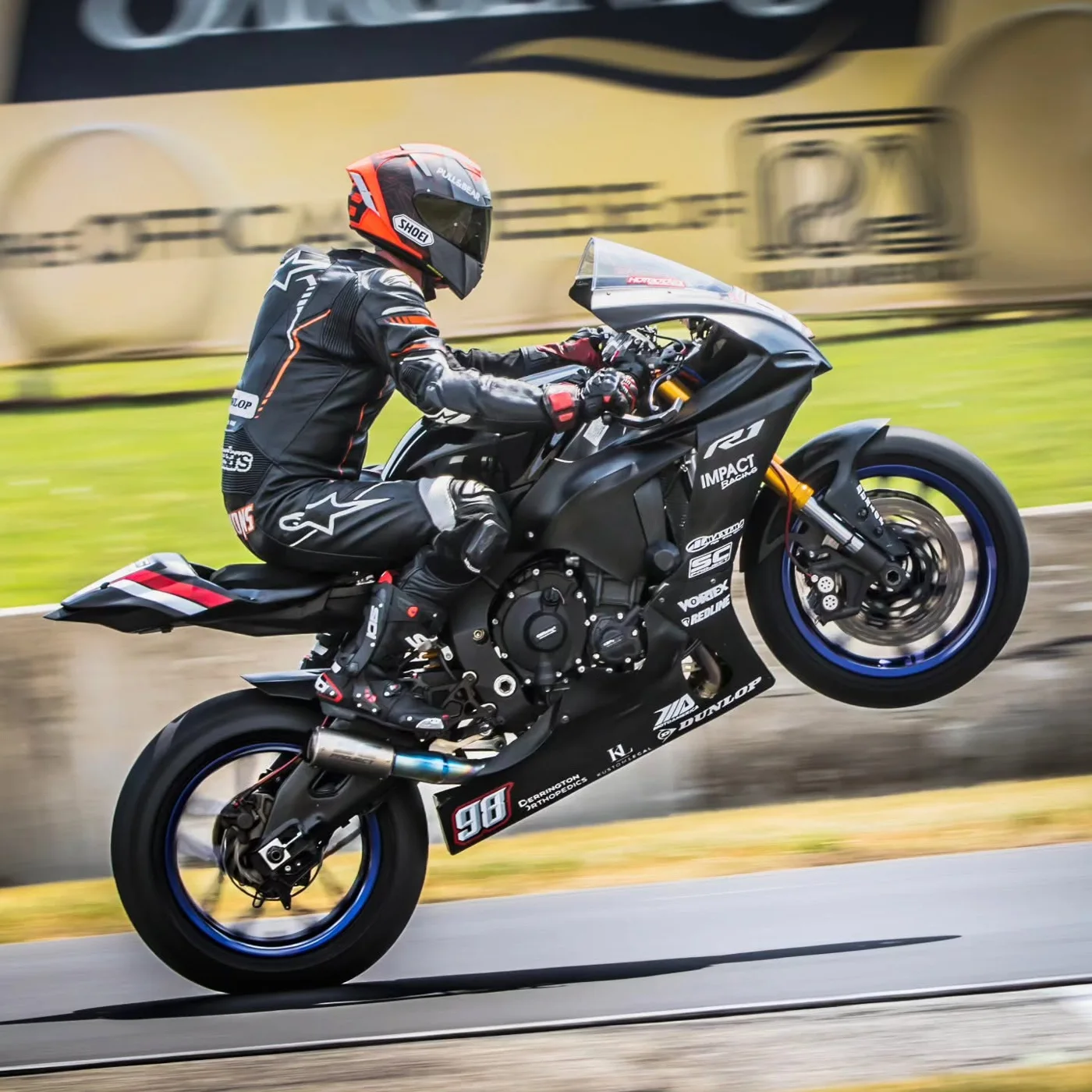
Race day
6. The perfect road
Alan: When you plan a new route, what does a road need to have to make the cut?
Jeremy: Apparently, solid pavement is a requirement, especially for sport bikes. But seriously, I'm looking for off-the-beaten-path roads that offer a great experience. That can include great scenery, switchbacks, fast sweepers, high mountain passes, historic locations and no law enforcement. If it happens to include a, let's say, uniquely challenging section, I'm all for that too, which isn't always popular. My perfect road would include all of that.
7. The Ojai Route
Alan: Tell us about the loop you've shared with us. What made you put it together, and what kind of rider is it best for?
Jeremy: When I promoted the bike meets in California, I also regularly led weekend group rides. The Ojai Route I came up with was an all-day ride that included all the best riding north of Los Angeles. It includes nearly every aspect of my perfect route I mentioned earlier. It was designed for sport bike riders, but any bike could handle the task.
It does have its challenges, so I would not recommend it for a newer rider. Much of it is also a long way from help if something goes wrong, so make sure you and your bike are in good shape and ride appropriately. If you're looking for an all-day route that includes nearly everything you could think of, you will enjoy this route.
Ride it yourself: Jeremy's Ojai Route, with a free GPX file
8. Your favourite spot
Alan: Without giving too much away, is there one section, view or stop on this route that's your absolute favourite?
Jeremy: The Camp Scheideck Lodge as a lunch stop. Unfortunately, I recently learned its lease ended and it closed permanently in 2020, but it's probably still worth stopping by the property. It was a unique and interesting place to grab a burger and a beer. There were swastikas carved into all the wood. It was built by German immigrants in the 1800s, before the swastika was associated with the Nazis. Still, it was something you would never see in America.
With the Lodge closed, my favourite would be a section of road on Lockwood Valley Road. It's a rather unique road that takes an interesting path and is located in an area that can experience sudden, extreme weather, from heavy thunderstorms to blinding snowstorms.
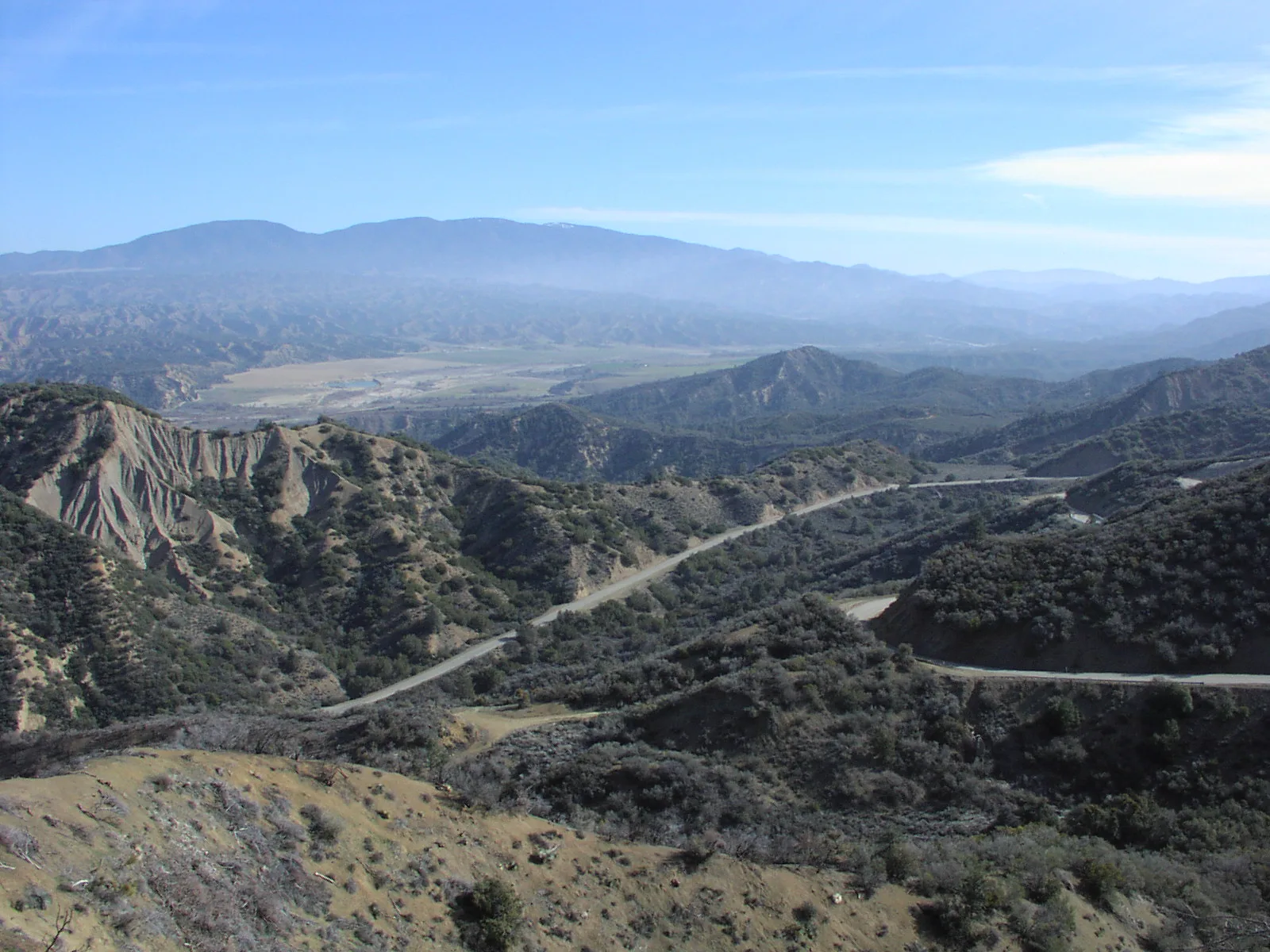
Highway 33 in the Los Padres National Forest, on the way to Lockwood Valley. Photo: Antandrus, CC BY-SA 3.0, via Wikimedia Commons
9. Roadside fixes
Alan: After all those years of racing and touring, you must have had a few breakdowns. What's the most memorable one you've had to fix at the side of the road?
Jeremy: Knock on wood, aside from that R1's unrepairable electrical issue, I haven't had too many issues. I did have the rental GSX-R600 that broke down after the Cannonball in the middle of Morocco and had to find its way all the way back up to London. A mate we rode with in Morocco got a radiator leak. A local garage was able to fix it with spices you would find in your kitchen cupboard, and it finished the Cannonball and the ride home.
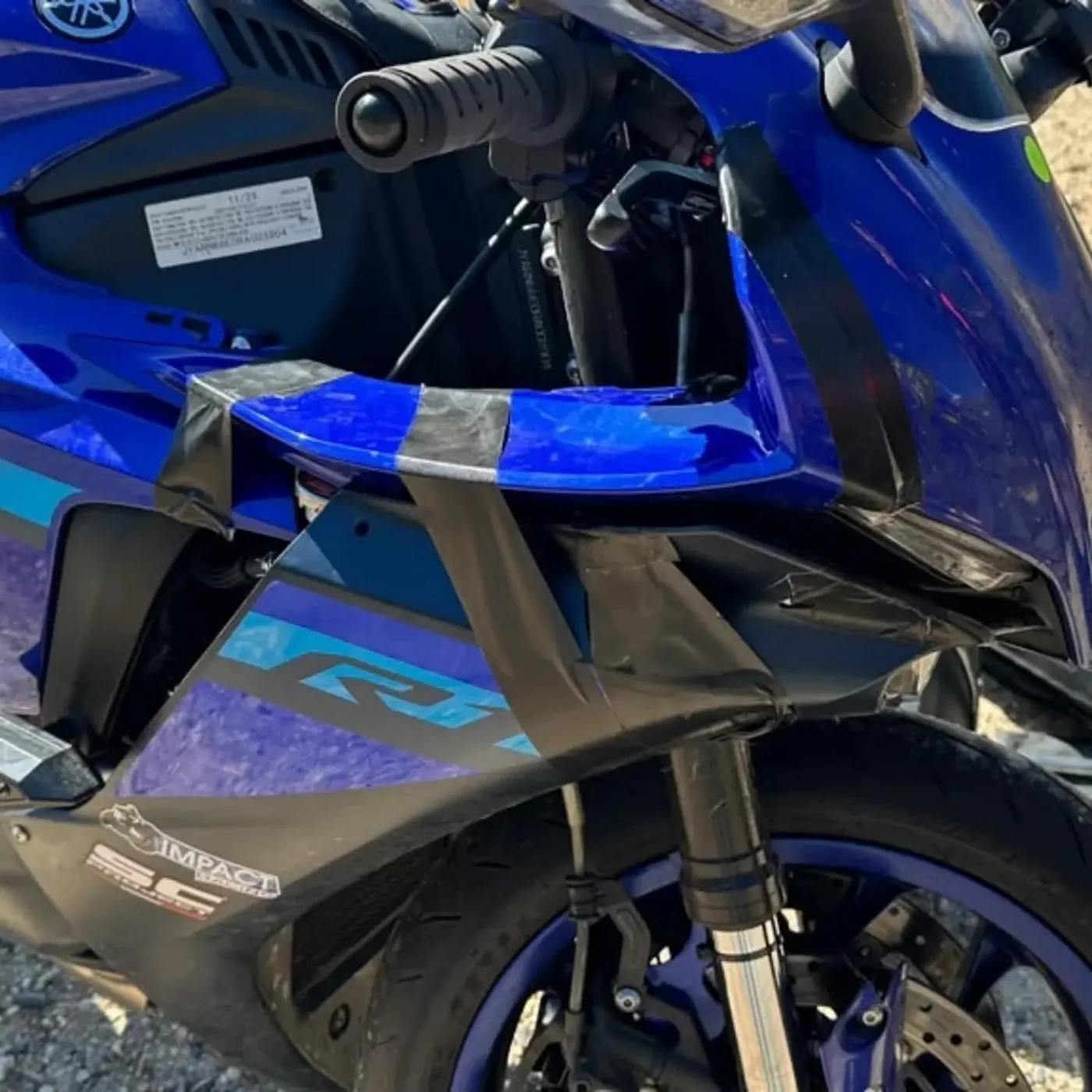
One of Jeremy's roadside repairs on his beloved R1
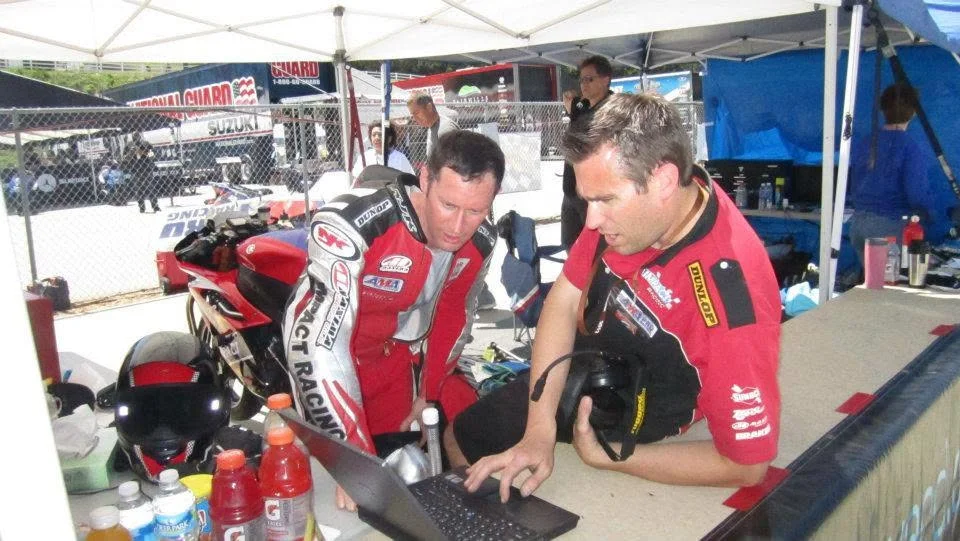
Jeremy and his life support, Corey, checking the data
10. What's next
Alan: You've done pro racing and plenty of Cannonballs. What's still on your motorcycle bucket list, and is there a road in Europe you still want us to ride together?
Jeremy: Everything. I watch these videos of people riding around the world on a motorcycle and I would absolutely love to take a couple of years away from life to do that. I think that's a bit unlikely, but I would certainly like to ride in as many parts of the world as I possibly can on a sport bike… in separate trips. Ride as many race tracks as I can, and throw a bunch of dirt bike adventures on that list too. I may have been riding for nearly 35 years, but my motorcycle adventures are just beginning.
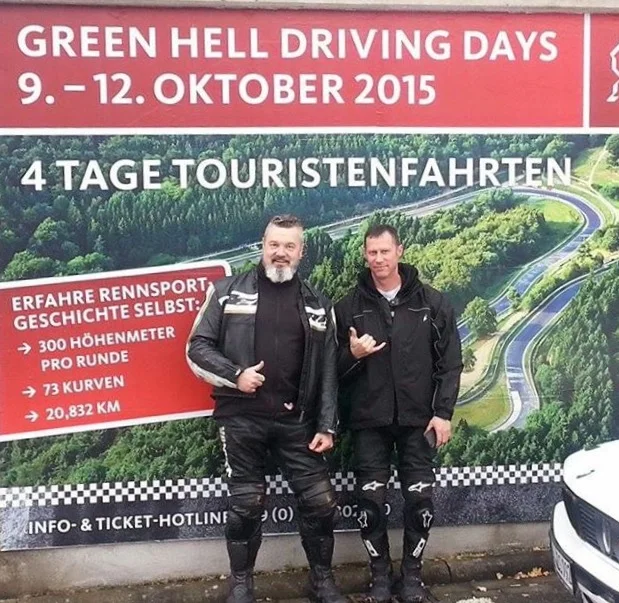
Me and Jeremy at the Nürburgring
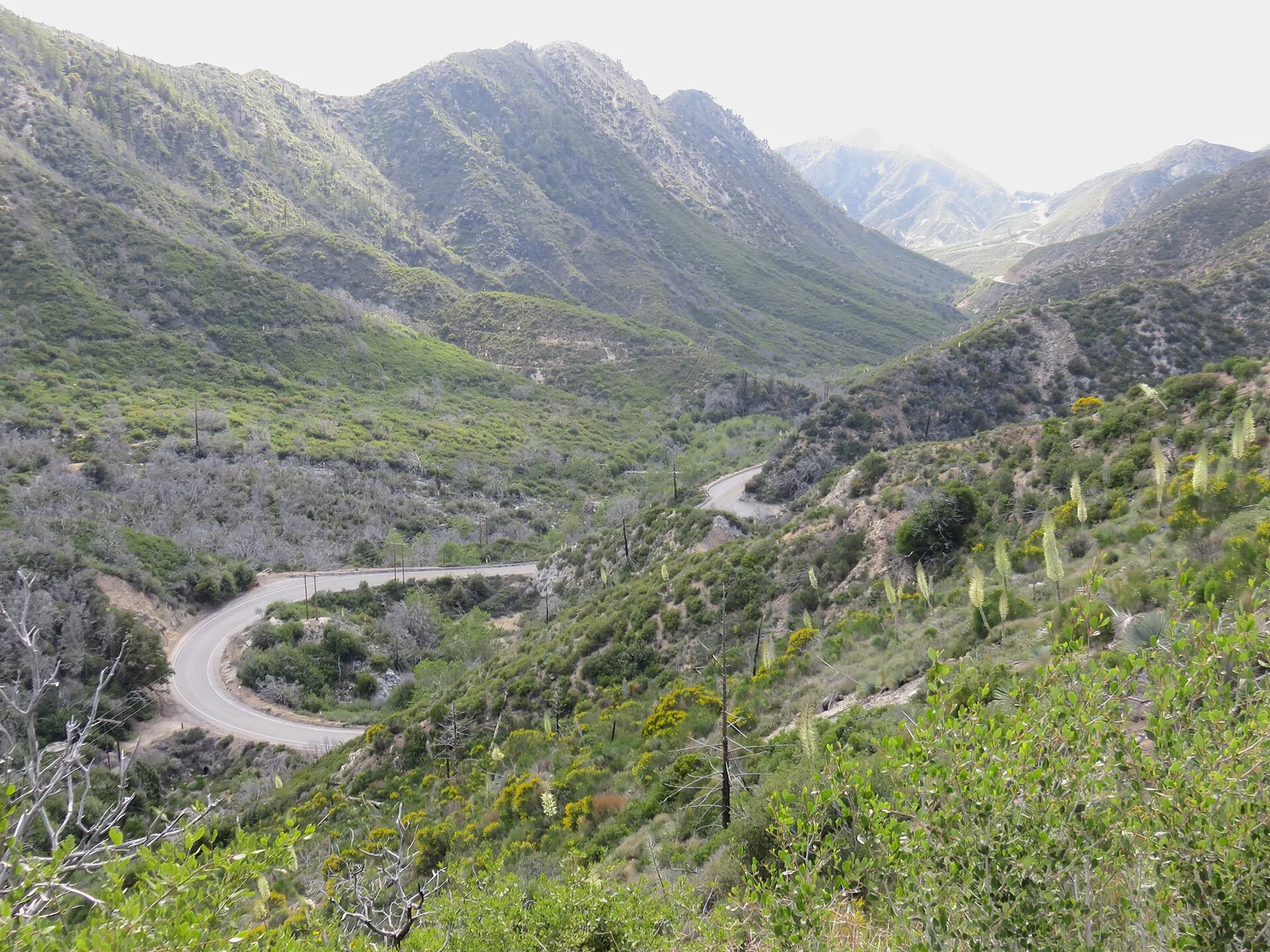
The Angeles Crest Highway, the last big climb on the Ojai Route. Photo: Antony-22, CC BY-SA 4.0, via Wikimedia Commons
Jeremy's Route
More riders in the Real Riders, Real Routes series, including Cannonball legend Jim Horne.